








Why Your Feet Overheat in Summer (And Why It Matters)
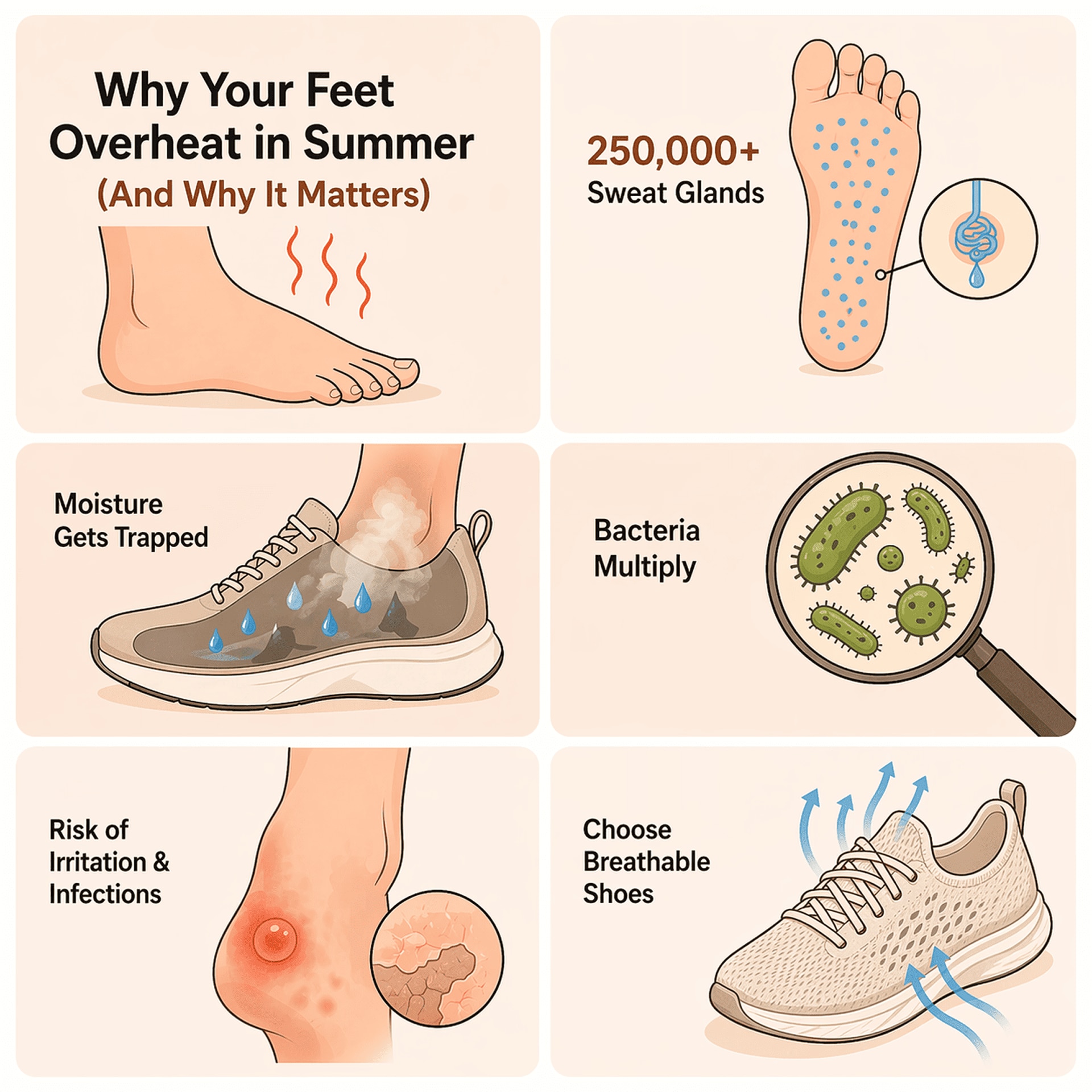
Feet are one of the sweatiest parts of the body. According to research from the Rochester Institute of Technology, the feet contain around 250,000 sweat glands, which can produce significant moisture throughout the day, especially in enclosed footwear.
When shoes trap that moisture inside, problems follow quickly.
A warm, damp shoe interior is where bacteria multiply. Those bacteria are the main cause of foot odor. Left unchecked, poor airflow can also lead to skin irritation, blisters, and fungal issues that don't go away once the weather cools.
Choosing breathable shoes actively protects your foot health. For anyone searching for summer shoes for sweaty feet, what your shoes are made of is the first thing to evaluate.
Which Shoe Materials Actually Breathe? A Ranked Guide
The material your shoe is made from determines how much heat escapes and how fast moisture clears. Research shows that footwear with a highly permeable mesh upper produces significantly smaller changes in foot skin temperature (between 2.3°F and 5.9°F / 1.3°C and 3.3°C) and relative humidity compared to shoes made from synthetic leather.
Here's how common shoe materials stack up, from most breathable to least:
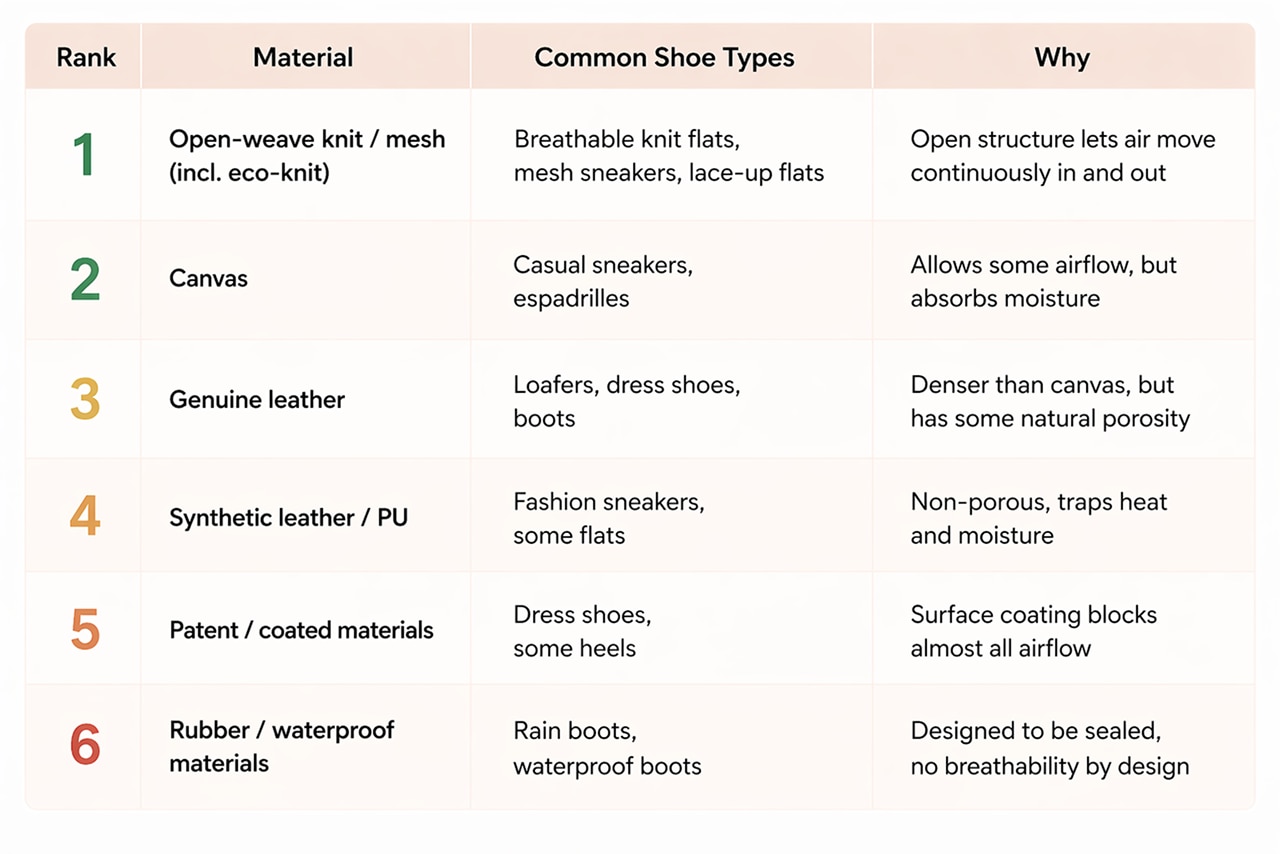
Why does structure matter?
An open-weave knit has actual gaps in the fabric, letting air pass through continuously, the same way a window screen lets a breeze in.
A solid material like synthetic leather, no matter how thin, acts more like a sealed wall. Studies show that in-shoe temperatures can reach 99°F (37°C) under moderate conditions, which is exactly the temperature at which odor-causing bacteria thrive. The faster heat and moisture escape through the upper, the less time bacteria have to take hold.
The Hidden Fix for Sweaty, Smelly Feet: It Starts with the Insole
Most people look at the outside of a shoe when thinking about breathability. But the insole, the surface your foot presses against all day, is where odor actually starts.
A standard foam or EVA insole absorbs sweat without doing anything to neutralize it. Moisture accumulates over hours of wear, and bacteria settle in. Even a shoe with a breathable upper can develop a persistent odor problem if the insole isn't up to the job.
A better insole does two things: wicks moisture away from the skin, and inhibits the bacteria that cause odor. Some are infused with natural antimicrobial materials — Artemisia Argyi, a traditional herb with documented antibacterial properties, is one example used in certain shoe insoles, including VIVAIA's.
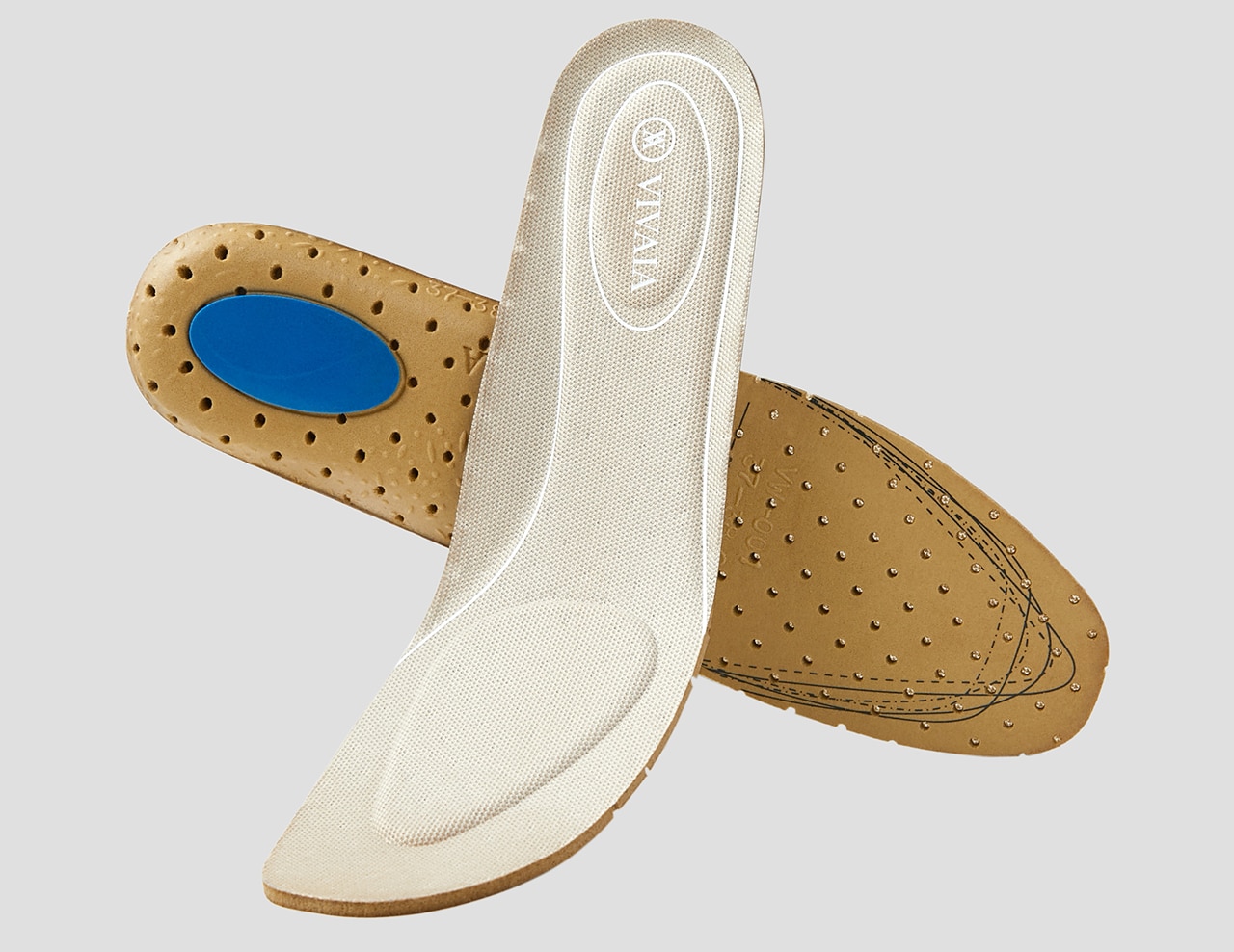
It's also worth checking whether your shoes can be fully washed. Surface cleaning doesn't reach the bacteria that build up inside the insole over time. For genuinely odor-resistant women's shoes, machine-washable construction makes a meaningful difference across a full season of wear.
Quick tips to keep summer shoes fresh:
● Alternate between two pairs to let each one dry fully between wears
● Remove insoles after long days to air them out separately
● Wash shoes regularly, especially after high-sweat activities
Best Breathable Shoe Styles for Summer 2026
Breathable materials and a good insole are the foundation. But style matters too, especially in summer, when your shoes are as visible as the rest of your outfit. Here are three silhouettes that handle the heat well, each with a different look and feel.
The Knit Flat
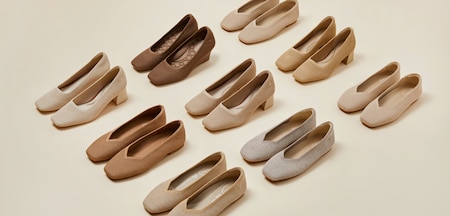
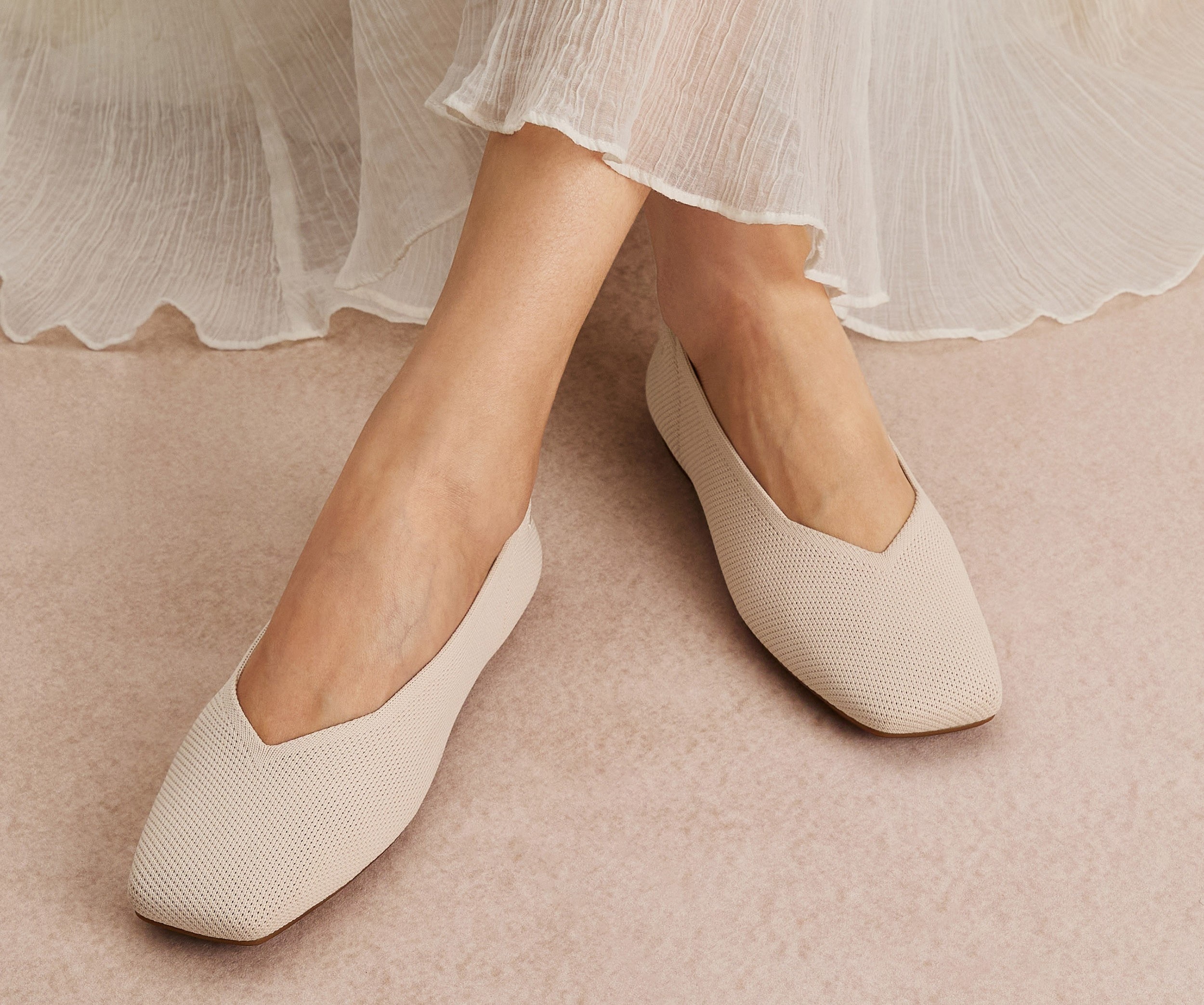
A flat with an open-weave knit upper is one of the most wearable summer options: low to the ground, easy to style, and genuinely breathable from the moment you put it on. The mesh structure lets air circulate continuously, and the flexible fit means no breaking-in period. It's the kind of shoe that works with a linen dress on a Saturday and straight-leg trousers on a Monday.
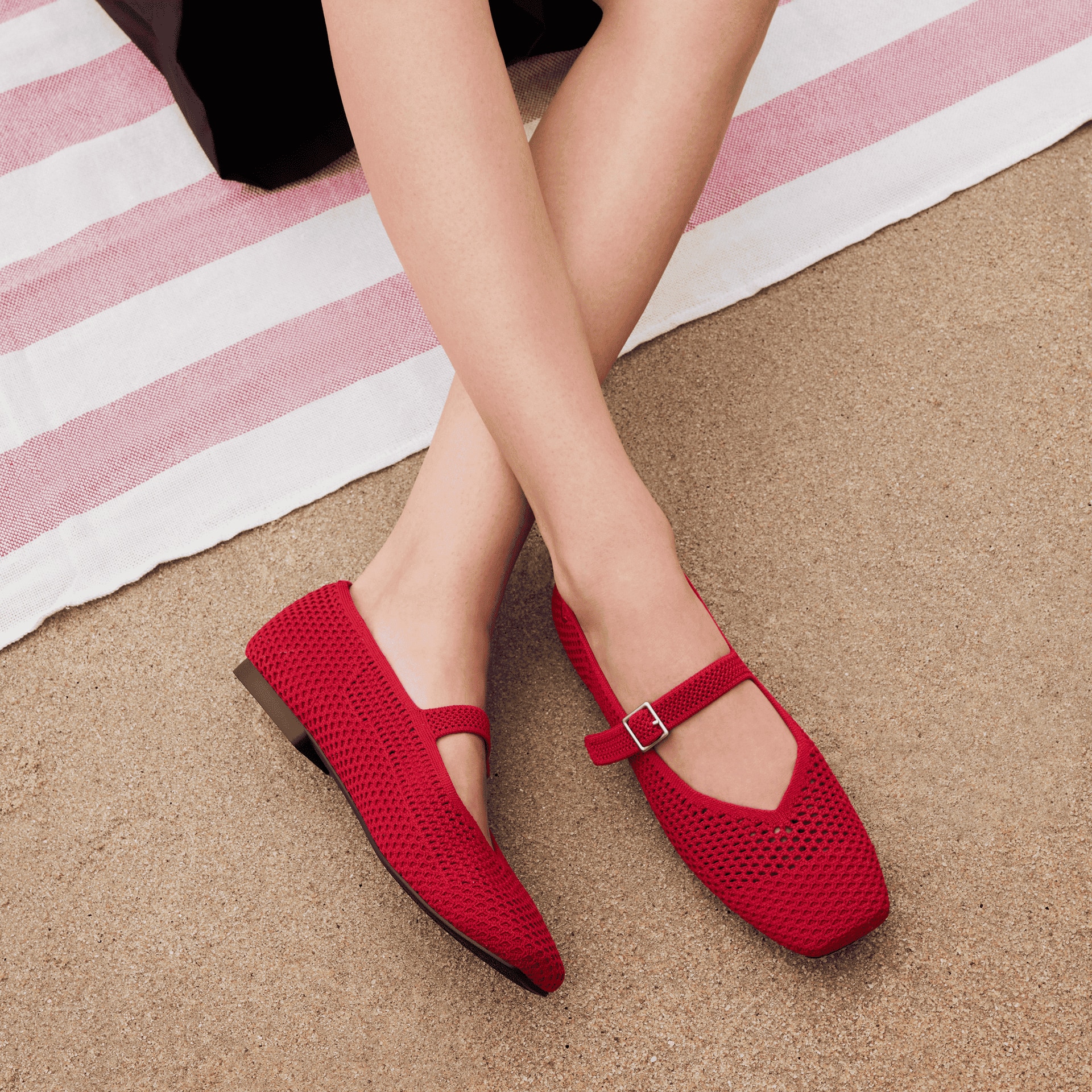
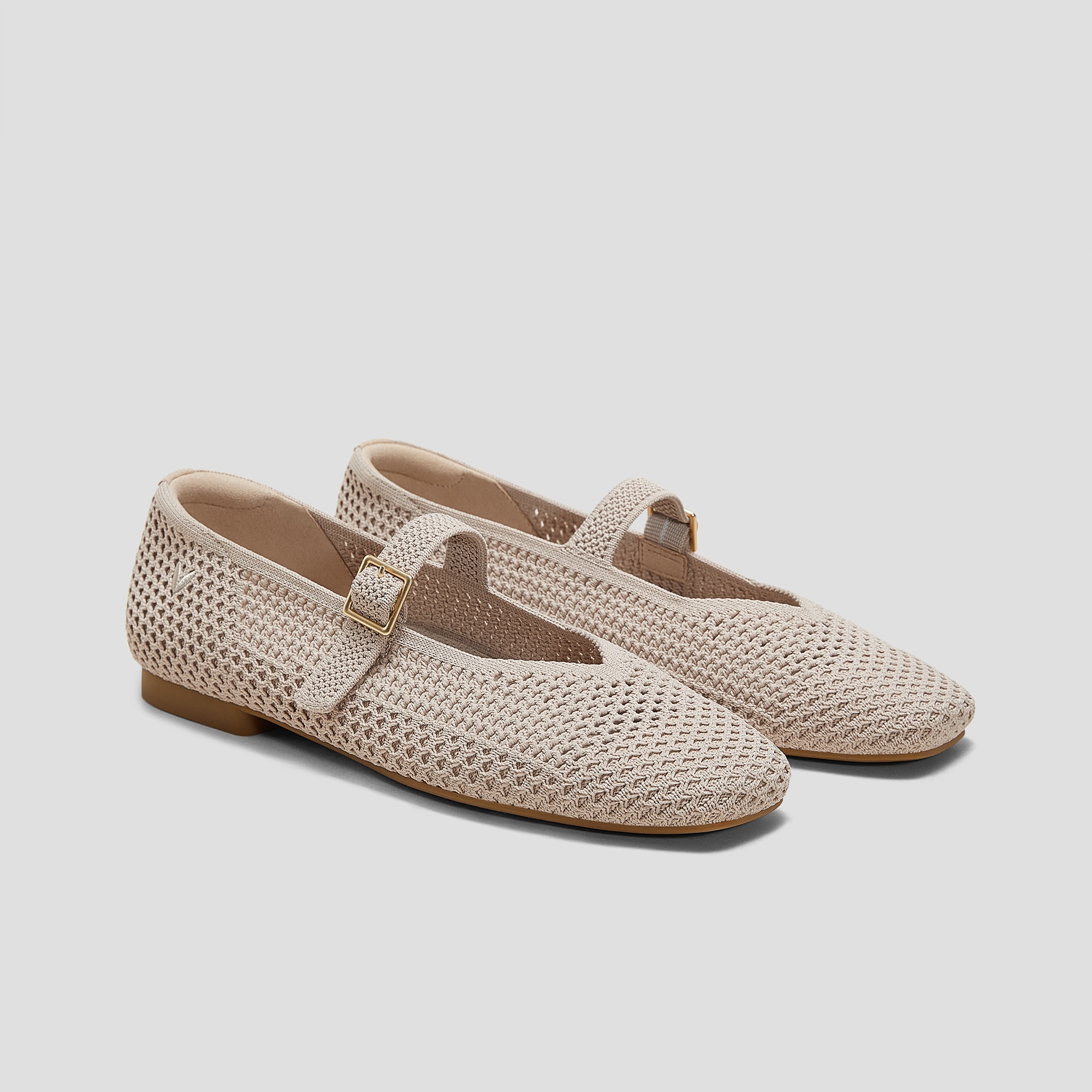
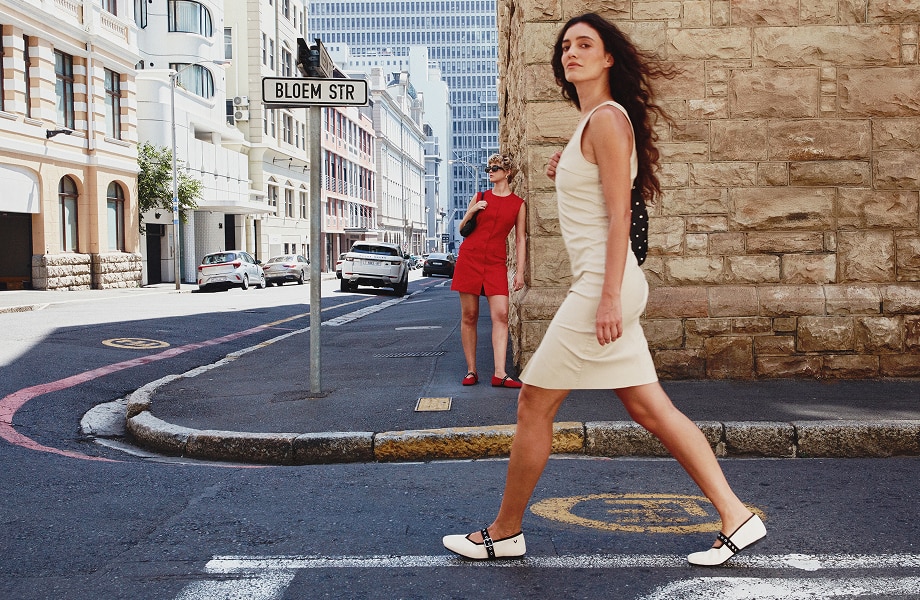
VIVAIA's Margot™ Mary Jane is a good example. The adjustable buckle strap gives it a more intentional, put-together look than a plain flat, and the 0.4" (1 cm) heel keeps it comfortable across long days. The Artemisia Argyi herbal insole and machine-washable construction mean it stays fresh through the whole season.
Best for: everyday wear, office-to-evening transitions, anyone who wants a breathable knit flat that reads as a style choice
Mesh Flat Sandals
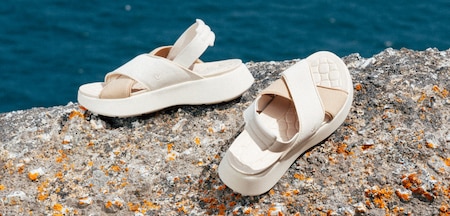
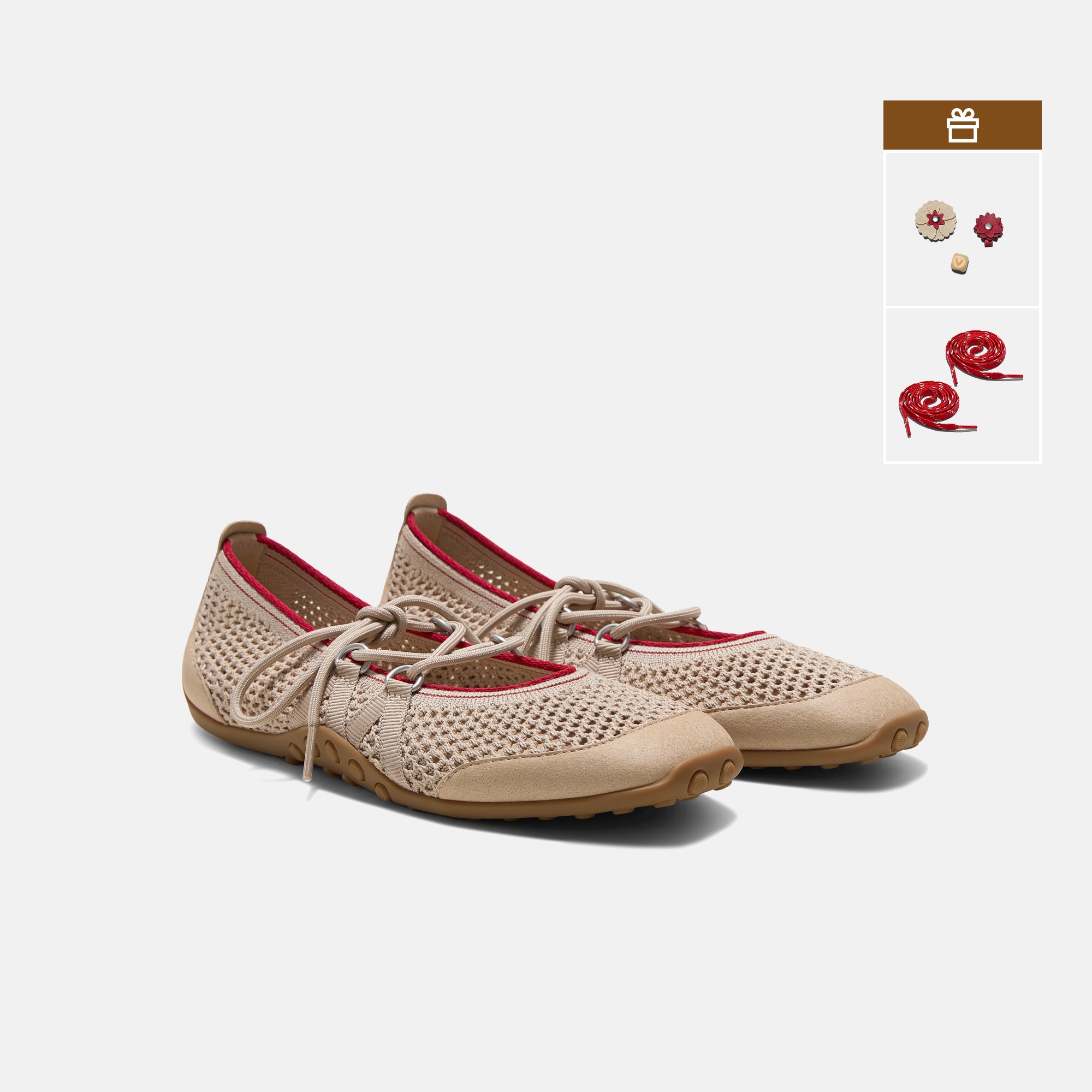
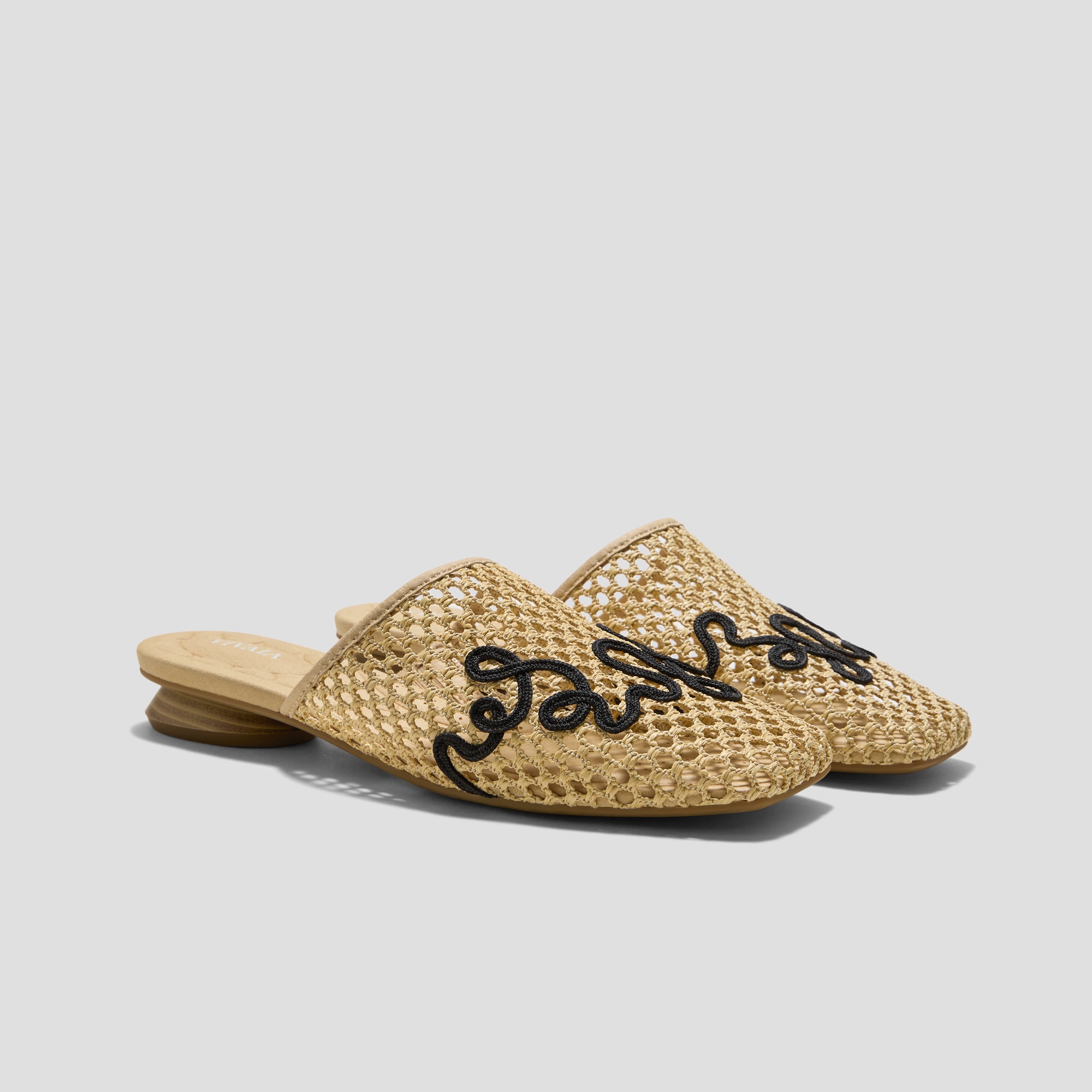
When you want maximum breathability with a touch of style, summer sandals with knit or mesh uppers are an ideal choice. Inspired by the natural texture of raffia, Maura reinterprets this seasonal element through lightweight knit, striking a balance between relaxed ease and refined design. The airy mesh structure allows continuous airflow, reducing heat buildup while adding an effortless, elevated feel to your look.
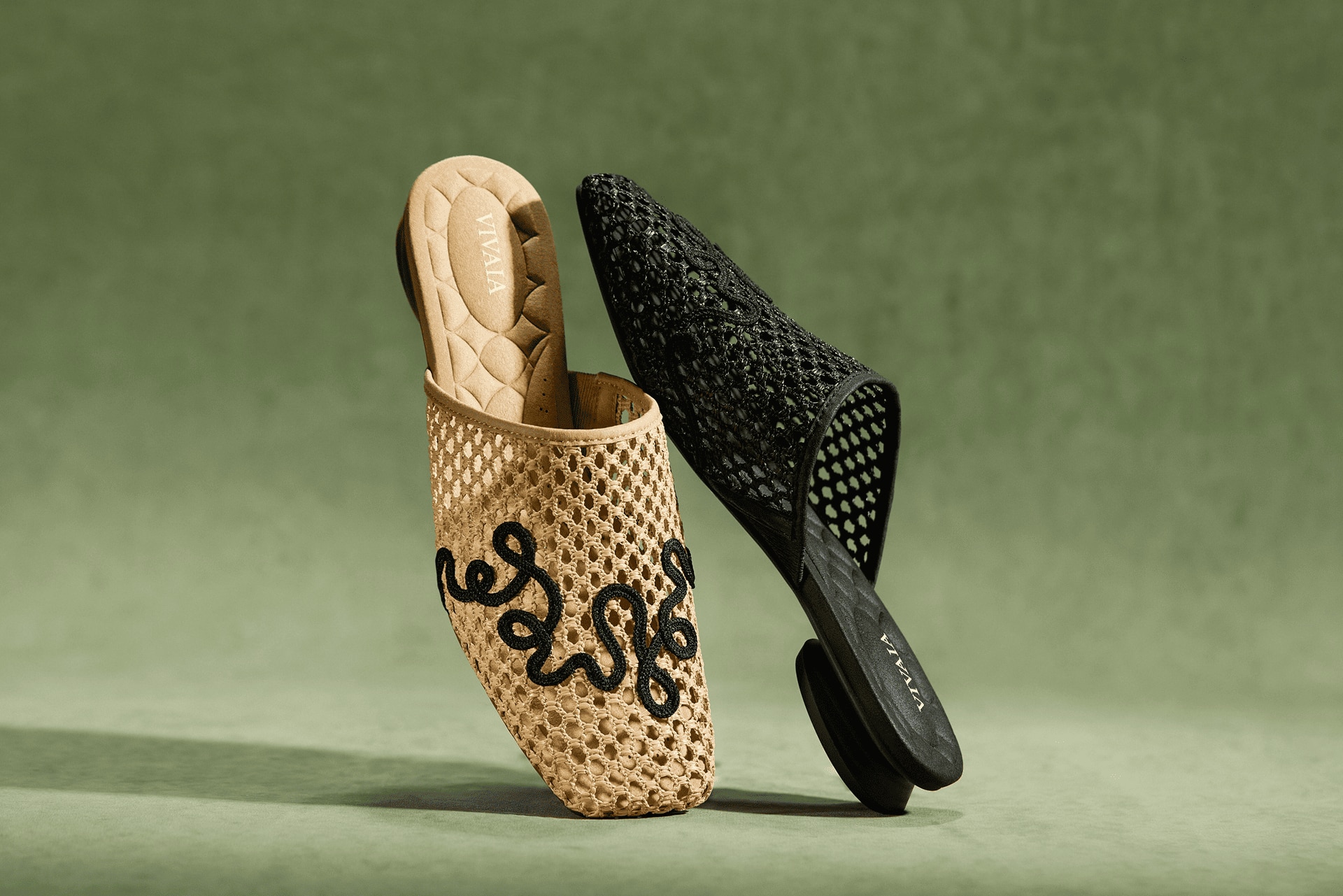
Crafted with eco-friendly stretchy knit (made from recycled plastic), it adapts to your foot for a flexible, comfortable fit. Paired with a moisture-wicking insole and a stable anti-slip outsole, it keeps you cool and supported throughout the day.
Available in natural tones and classic black, it’s easy to style for both everyday wear and getaways, adding depth to any summer outfit.
Best for: daily commuting, city outings, summer gatherings, and vacations
The Lace-Up Mesh Sneaker
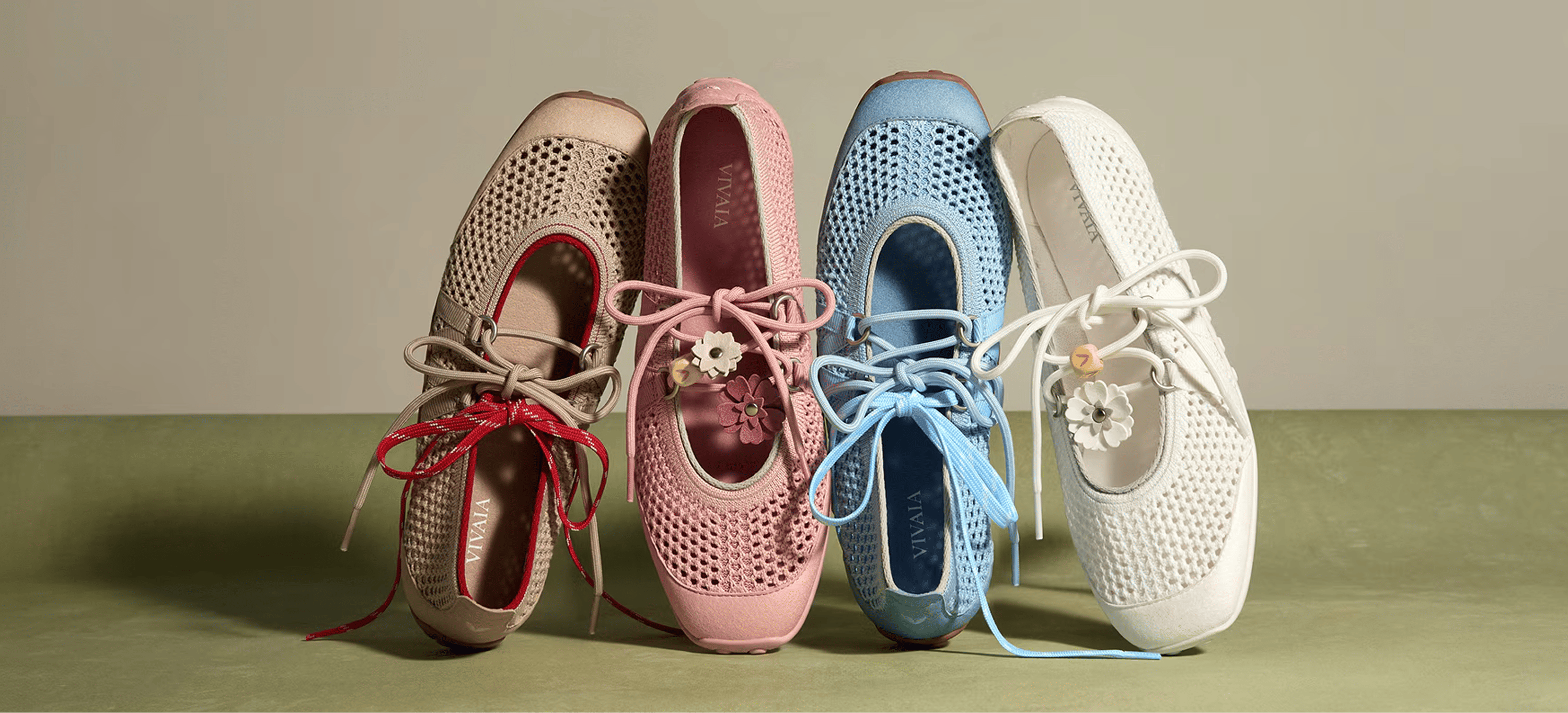
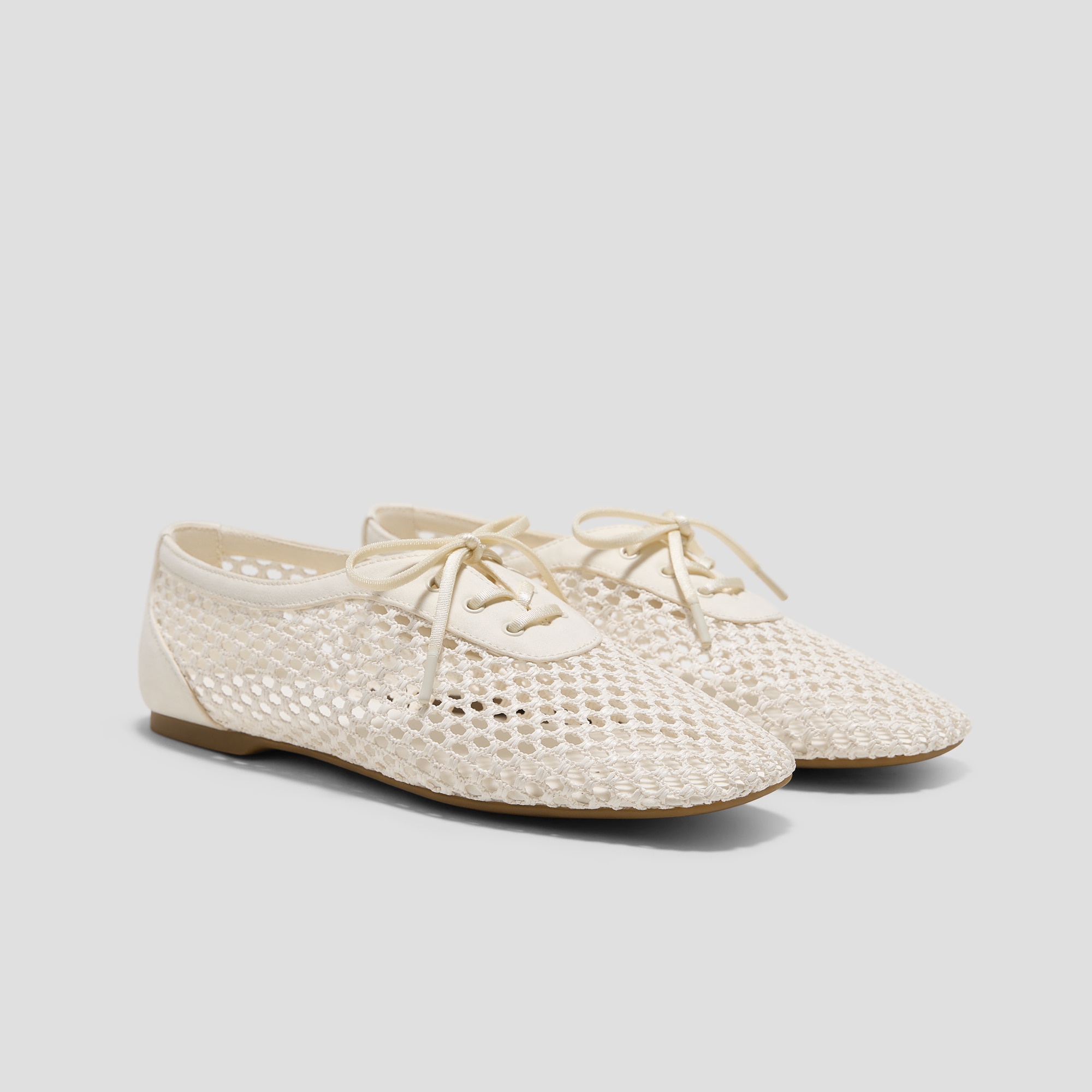
For days with more movement — travel, long walks, back-to-back plans — a lace-up with a mesh upper tends to outperform both flats and sandals on pure ventilation. The structure keeps the shoe secure on the foot, while the mesh lets air move freely throughout. It has the ease of a casual shoe but with more coverage and grip.
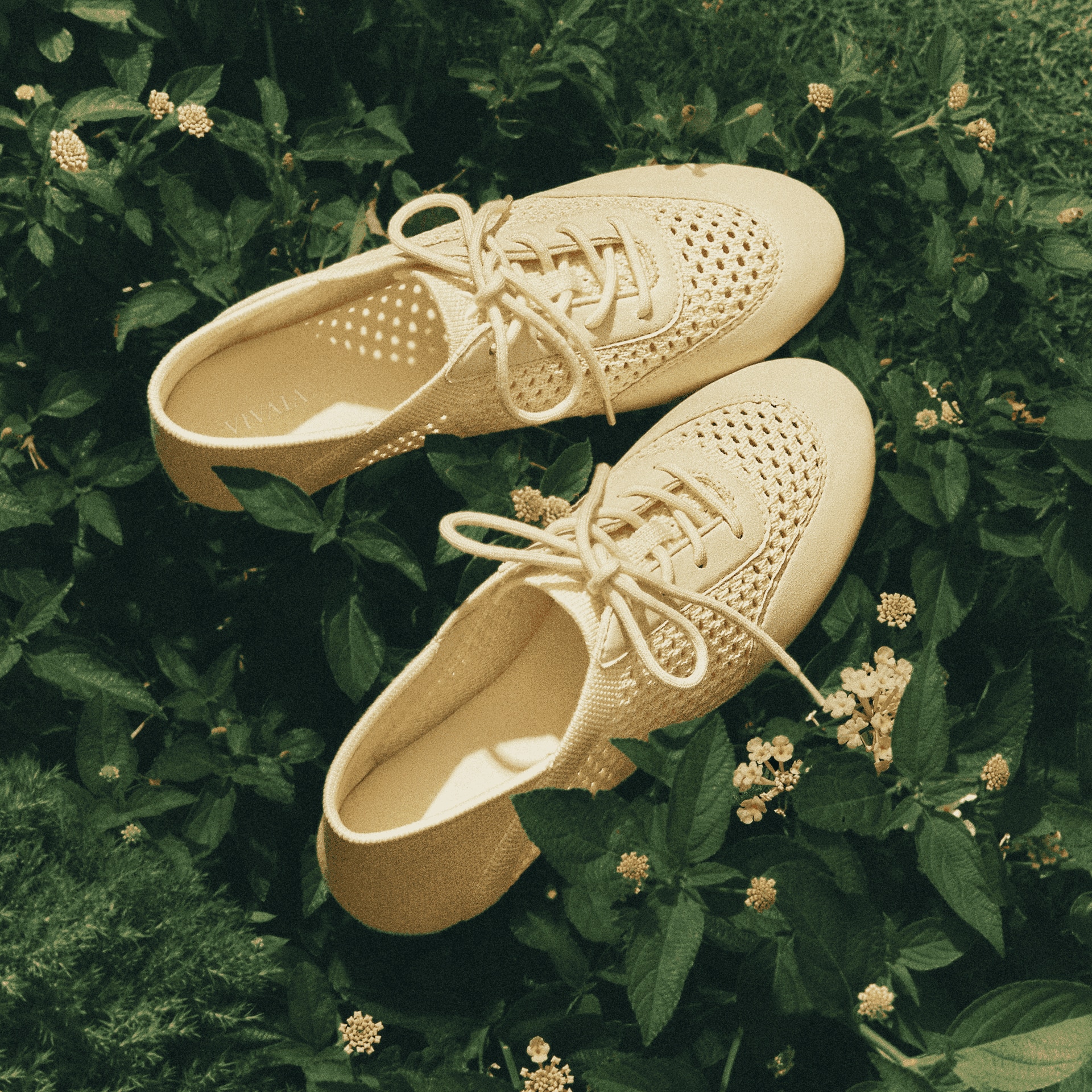
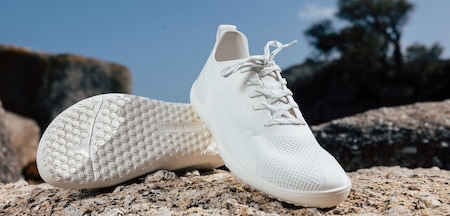
VIVAIA's Yara is a well-made version of this: a round-toe lace-up sneaker built from lightweight breathable mesh, weighing just under ~5.5 oz (156 g) per shoe. The wide toe box gives feet room to breathe and expand naturally in the heat, and the collapsible heel counter makes it easy to slip on and off. Machine washable, too.
Best for: travel days, active weekends, anyone who wants the ventilation of a breathable shoe without sacrificing a clean, wearable look
What to Avoid: Shoes That Make Sweaty Feet Worse
Of course, picking the right shoe also means knowing which ones to skip.
● Synthetic leather or patent uppers. They look sleek, but they don't breathe. Heat and moisture stay trapped inside with nowhere to go.
● Thick, unventilated soles. The thicker the sole, the more heat builds up from the ground — especially on hot pavement.
● Shoes that fit too snug. Feet swell slightly in warm weather. A shoe that feels fine in the morning can turn uncomfortable by afternoon. A roomier toe box makes a noticeable difference on warm days.
● Fully synthetic linings. A breathable outer fabric doesn't mean much if the inside of the shoe is lined with non-wicking material. The lining is what your foot actually touches.
● Shoes you can't properly wash. Odor builds up inside the insole over time. If you can only wipe the outside, you're never really cleaning the part that matters.
Find Your Summer Shoe
Breathable summer shoes come down to two things: a material that moves air, and an insole that handles moisture. Get both right, and your feet will feel much more comfortable through the hottest days. If you're ready to make the switch, you can find breathable shoes at VIVAIA across a range of styles — flats, sandals, and lace-ups — all built with airflow and comfort in mind.
Frequently Asked Questions
Q1: What makes a shoe truly breathable?
A breathable shoe has an upper made from open, porous material, like knit or mesh, that allows air to move through while you walk. It also needs a moisture-wicking insole that pulls sweat away from the skin. The upper and the insole work together: one lets air in, the other manages what the foot releases.
Q2: Are knit flats good for sweaty feet?
Yes. The open-weave structure of knit fabric promotes consistent airflow around the foot. It's also flexible, so it moves naturally without creating friction points. For sweaty feet in summer, look for breathable knit flats that also include a moisture-wicking insole. The combination handles both heat and dampness well.
Q3: How do I stop my feet from smelling in summer shoes?
Start with the shoe itself. Choose odor-resistant women's shoes that have antimicrobial insoles and are made from breathable materials. Rotate pairs so each one has time to dry between wears. When possible, pick shoes that are machine washable. Surface cleaning alone doesn't reach the bacteria that build up inside the insole.
Q4: Can I wash breathable shoes to remove odor?
It depends on the shoe. Many knit and mesh styles are machine washable, which allows a full clean of the insole and lining, not just the exterior. VIVAIA shoes are designed to be machine washed. Check the washing guide for your specific pair before washing to get the best results without damaging the shoe.
Q5: What type of shoes should I avoid in summer?
Avoid non-porous materials like synthetic leather, thick rubber, or treated PU. These block airflow and keep heat locked inside the shoe. Fully enclosed designs with no mesh or knit sections tend to trap moisture fastest. Dense insoles that absorb rather than wick sweat also accelerate odor buildup.
Generally speaking, the more visible texture or open weave, the better the airflow.

© VIVAIA All Rights ReservedTerms of Service - Privacy Policy -