









Most sandals that hurt your feet were never comfortable to begin with. The problem is usually structural: a strap in the wrong place, a sole with no give, a footbed that looks fine but does nothing.
Here's what matters when choosing comfortable sandals for women.
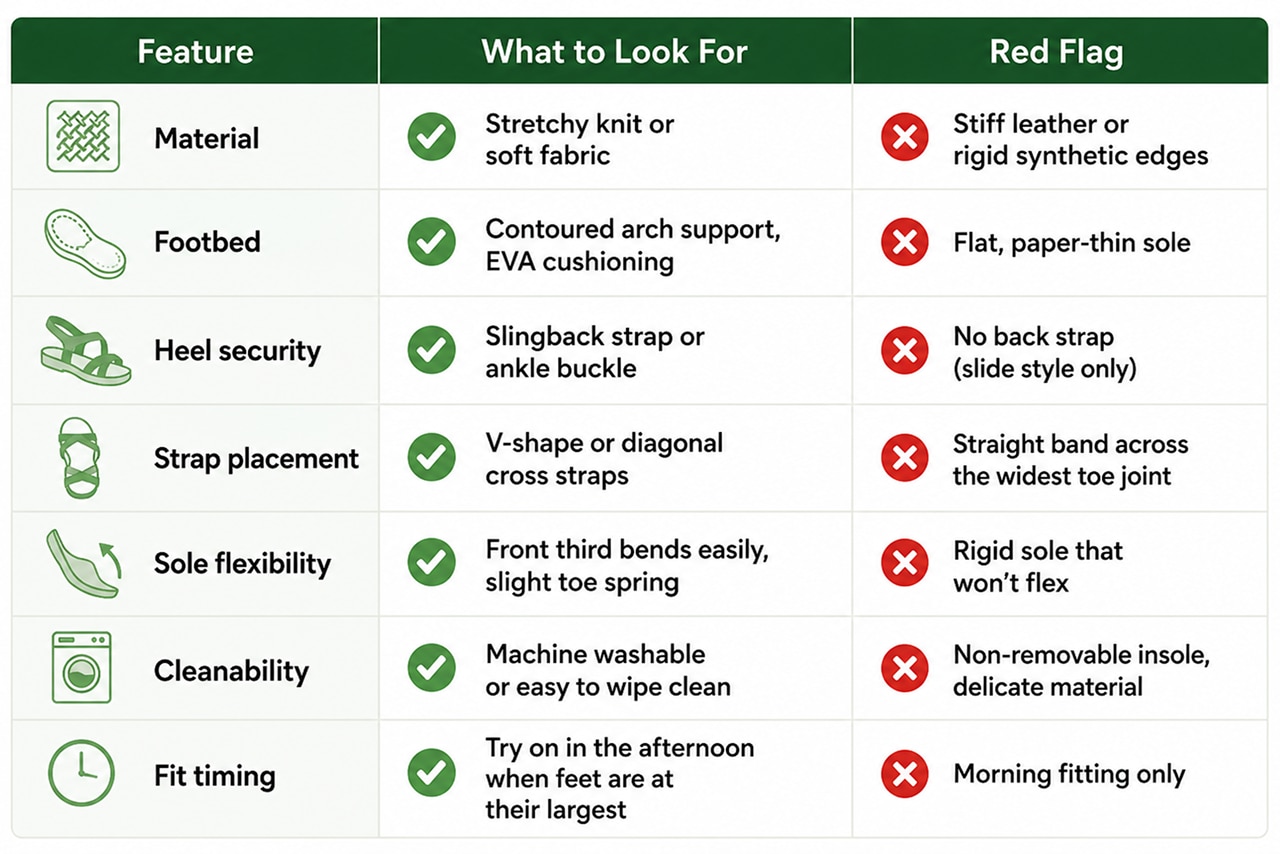
Quick Reference: What to Check Before You Buy
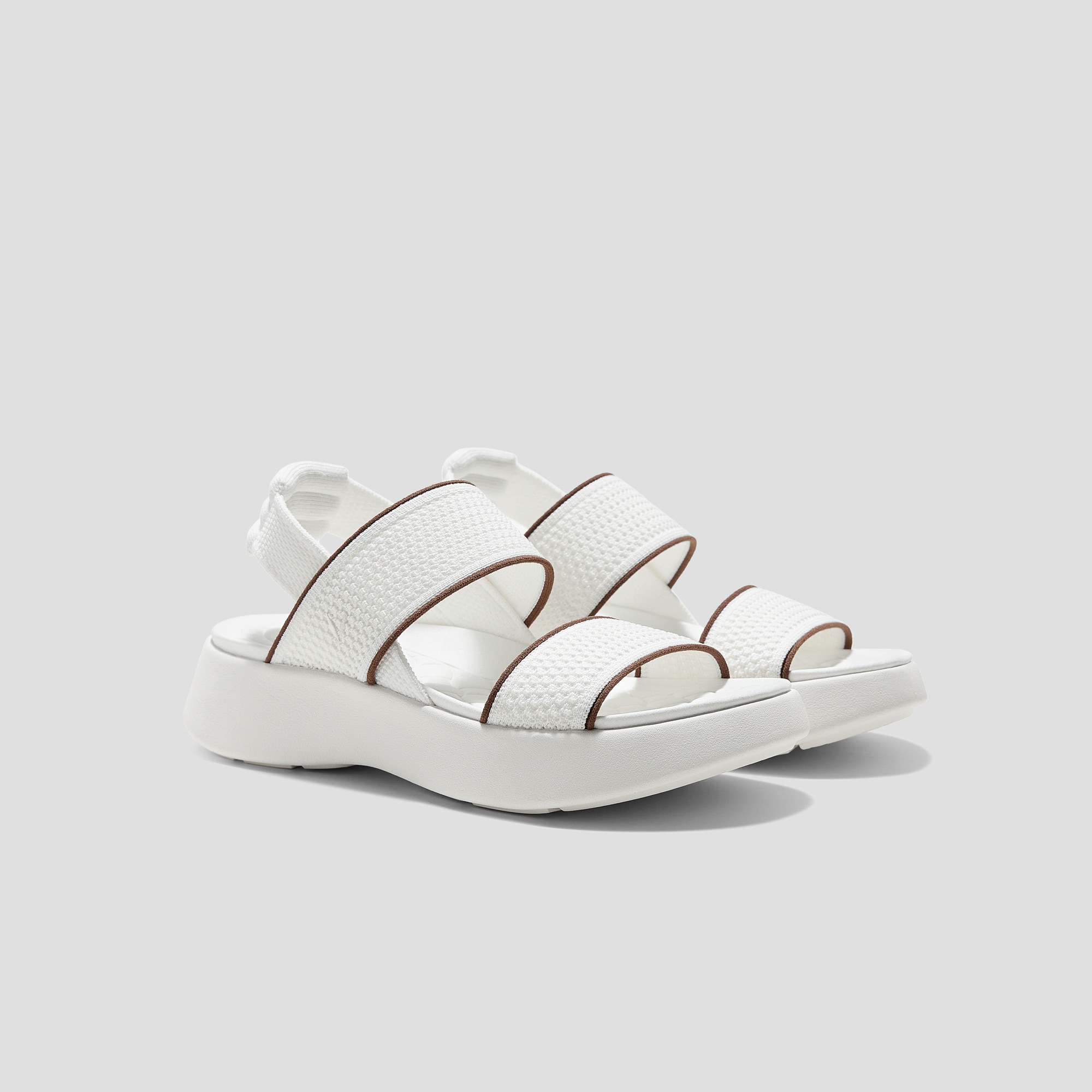
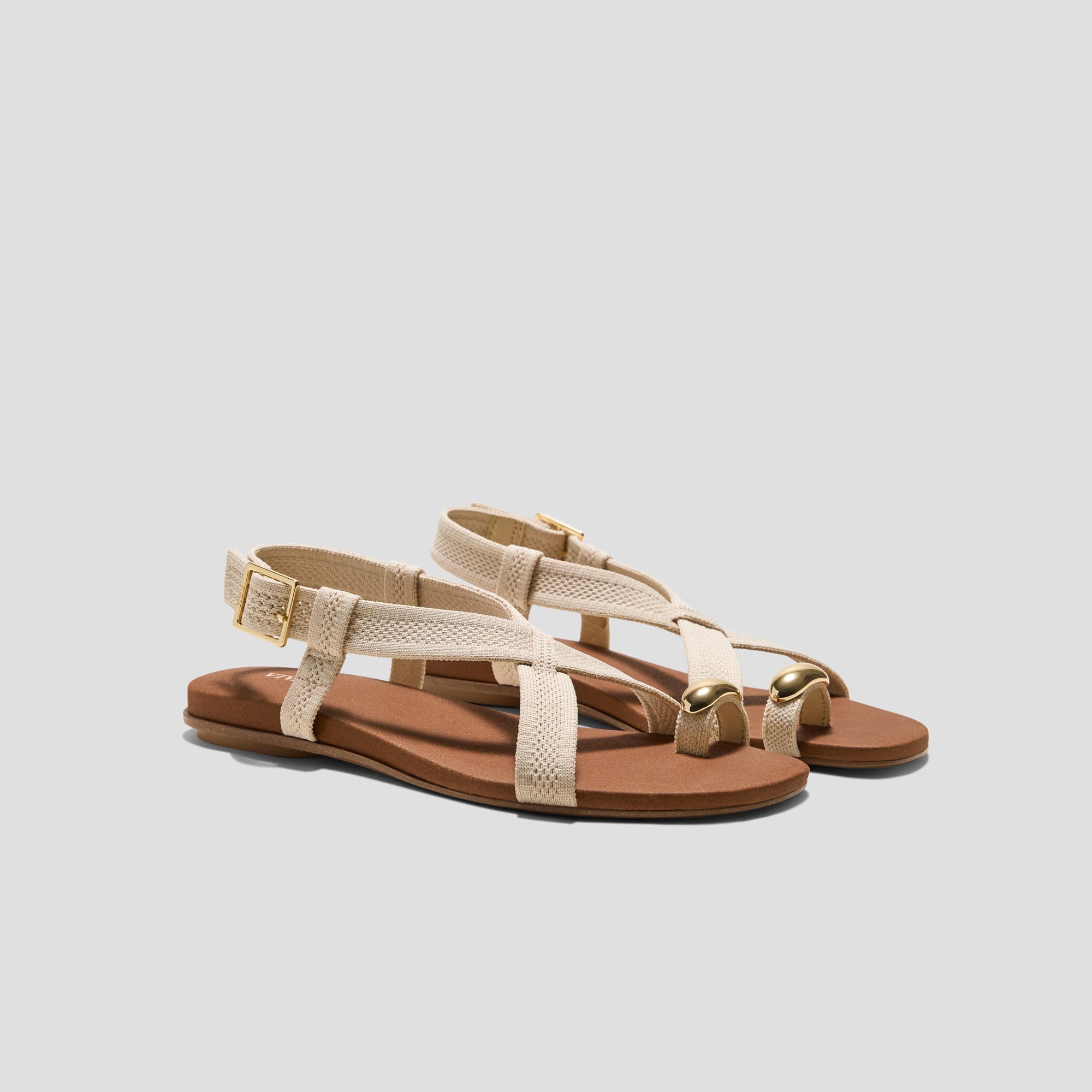
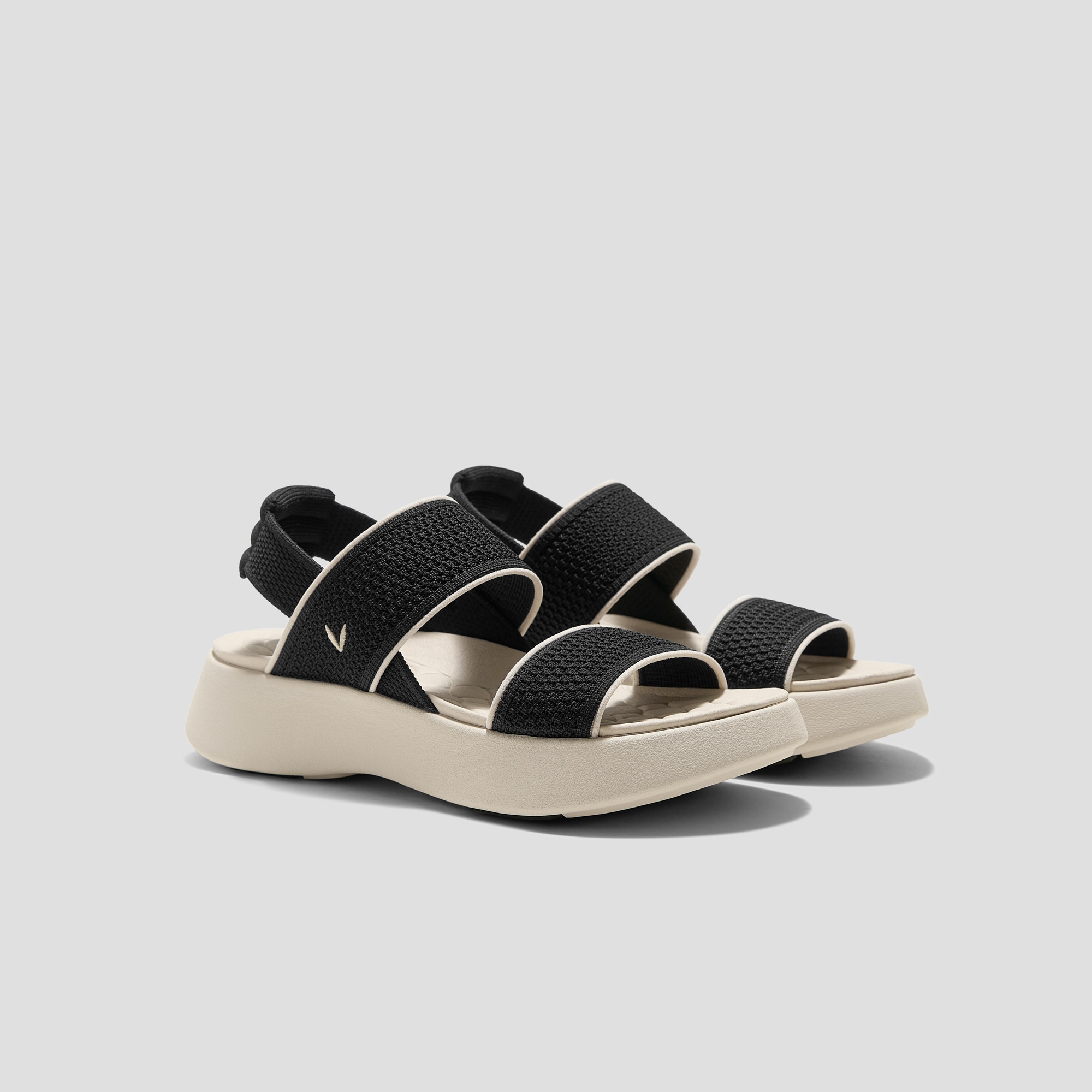
Does Sandal Material Really Affect Comfort?
Yes. Feet swell in heat, so a material with no stretch digs in harder as the day goes on. Here's how the most common options compare:
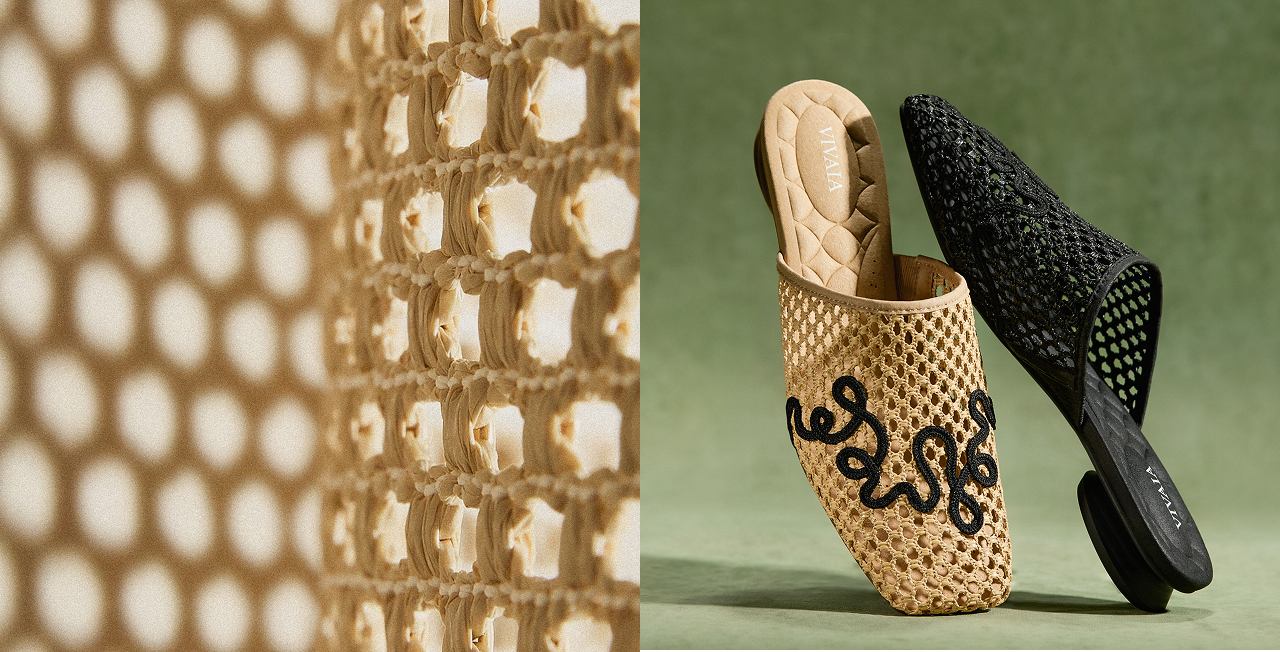
Knit / Stretch Fabric
l Stretch:High
l Breathability:High
l Durability:Medium
l Notes:Moves with foot as it swells; least likely to cause friction.
Soft Leather
l Stretch:Low–Medium
l Breathability:Medium
l Durability:High
l Notes:Molds over time but stiff at first; doesn't give on hot days.
Synthetic (PU/Faux Leather)
l Stretch:Low
l Breathability:Low
l Durability:Medium
l Notes:Holds its shape regardless of heat; friction risk stays constant.
Cork / EVA Footbed
l Stretch:N/A
l Breathability:Medium
l Durability:Medium
l Notes:Relevant for the insole layer; EVA cushions, cork contours.
Rubber / Jelly
l Stretch:Low
l Breathability:Very Low
l Durability:High
l Notes:Waterproof but traps heat; edges stay rigid all day.
Woven Textile
l Stretch:Medium
l Breathability:High
l Durability:Medium
l Notes:Similar to knit; breathable but less elastic.
For all-day wear, knit or woven fabric uppers outperform rigid materials because they accommodate swelling without creating new pressure points.
Why Do Flat Sandals Hurt After a Few Hours?
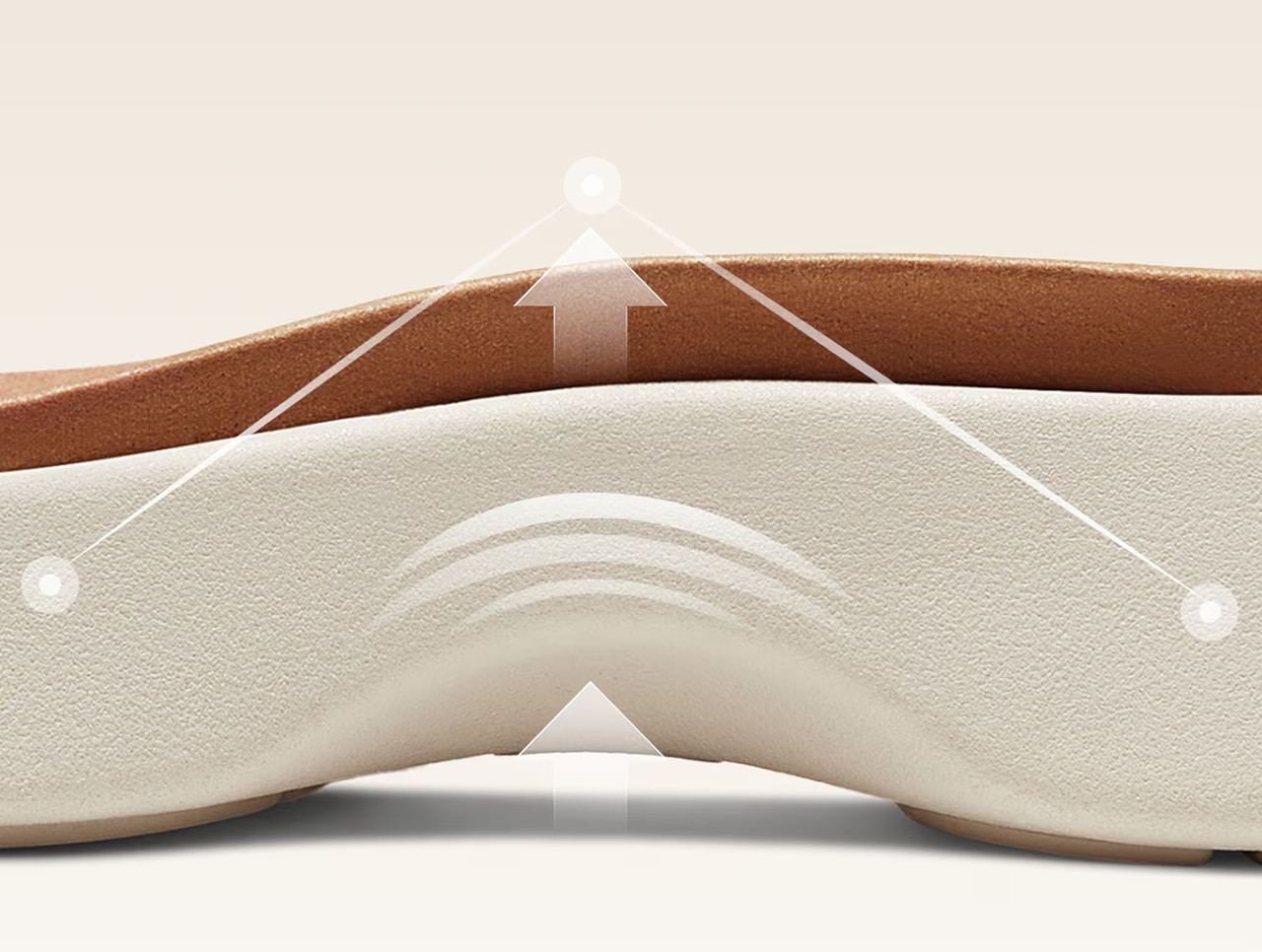
Flat doesn't mean comfortable. A sandal with no footbed structure puts the full force of each step directly on the heel and arch, which causes cumulative strain, especially over long distances.
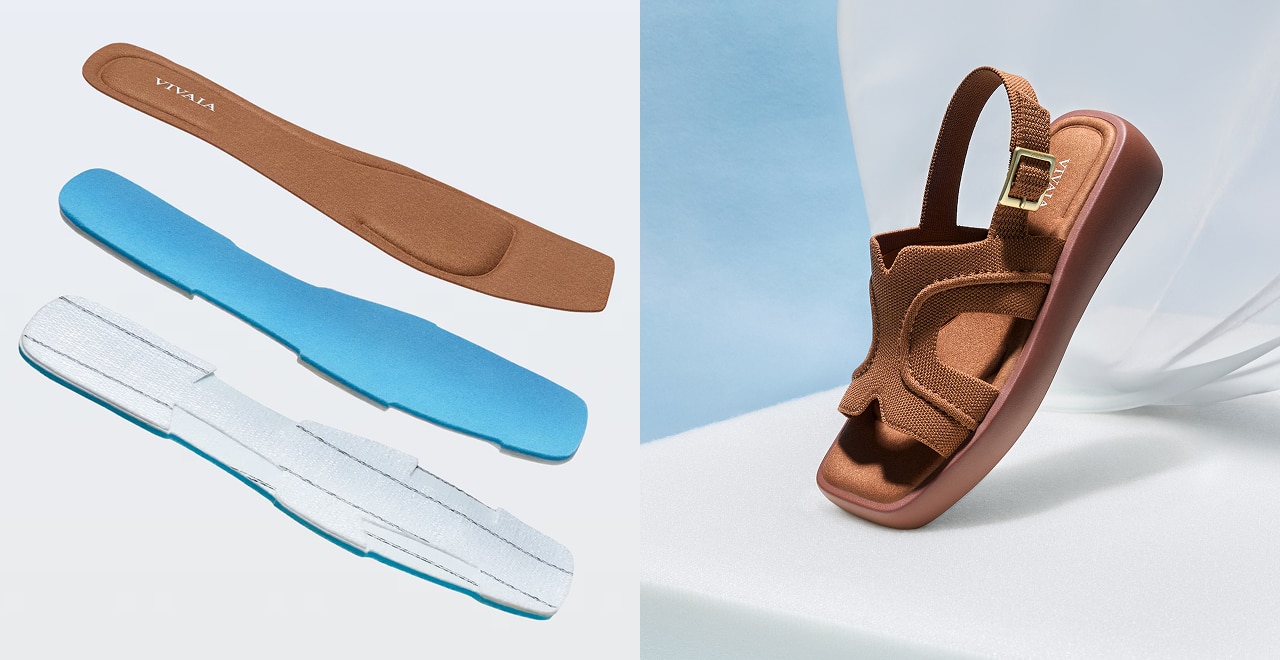
A sandal with a contoured footbed has a slight raised curve under the arch and a recessed heel cup. This distributes your body weight more evenly across the foot rather than concentrating it at the heel landing point. The APMA recommends
How Do You Tell If a Sandal Sole Is Good for Walking?
Pick up the sandal and bend the front third toward the toe. A sole built for walking flexes at that point without resistance. The tip of the toe box should have a slight upward curve (toe spring) rather than sitting completely flat.
Why This Matters
Human walking follows a heel-to-toe rolling motion. A sole that doesn't flex at the forefoot forces the foot to push off flat, transferring extra strain to the calf and arch. Over several thousand steps, that adds up to foot fatigue and soreness.
The Stiffness Test
A sole whose front third bends easily and has a slightly curved-up toe is generally the best choice for long-distance walking, as it allows the foot to move naturally through each step. If the front third bends but with some resistance, the sandal is usually suitable for light daily use, such as short walks or everyday errands. If the sole barely flexes and the toe sits completely flat, it is better suited to standing still than walking for extended periods.
A rocker sole, which curves slightly at the heel and toe, also encourages this natural rolling motion.
Can You Wash Summer Sandals?
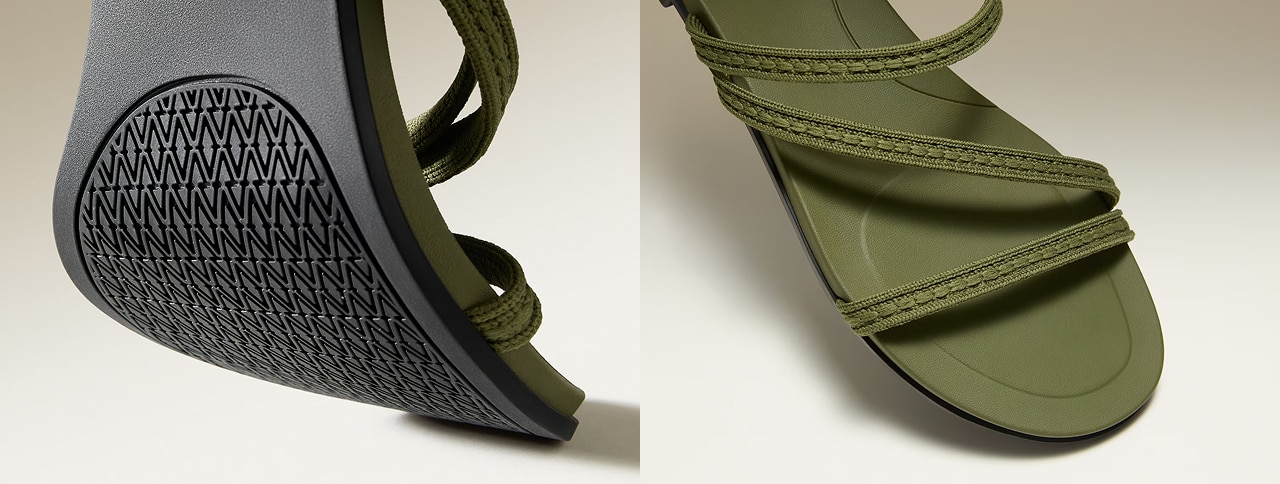
Many sandals can't be fully cleaned, which becomes a real problem in summer. Sweat and sunscreen residue on the insole create a slippery surface that increases friction and can cause blisters even in sandals that normally fit well.
Why Cleanliness Affects Comfort
When the footbed gets coated in sweat and sunscreen residue, your foot slides forward with each step. That sliding creates friction at the toe edge and heel, the exact areas most prone to blistering.
What to Look For
- Machine-washable construction means you can clean the sandal fully, insole included
- Moisture-wicking insoles pull sweat away from the skin surface during wear
- Anti-slip outsoles prevent sliding on wet surfaces like pool decks
How Do You Try On Sandals to Get the Right Fit?
Follow these three steps in order for an accurate fit test.
Step 1: Try on in the Afternoon
Feet are at their largest in the late afternoon or evening due to natural swelling from daily activity. A sandal that fits in the morning may feel tight by 3 PM. Test your sandals when your feet are at their largest. A study in Scientific Reports confirms that duration of wear is a primary driver of foot discomfort — fitting at the end of the day accounts for this natural progression.
Step 2: Check Toe Clearance
Stand in the sandal and look at your longest toe. There should be roughly 0.5 cm (about a quarter inch) of space between that toe and the edge of the footbed. If any toe overhangs the sole, the sandal is too short.
Step 3: Walk 50 Steps Indoors
Take a full walk inside the store or around the house. Check for:
1. Heel slipping up with each step (strap is too loose or wrongly placed)
2. Pressure cutting into the top of the foot (strap is too tight or misaligned)
3. Foot sliding forward until toes reach the front edge (sandal is too large or footbed is too slippery)
A sandal that passes all three checks at the end of the day will hold up through any full-day wear.
Feet First This Summer
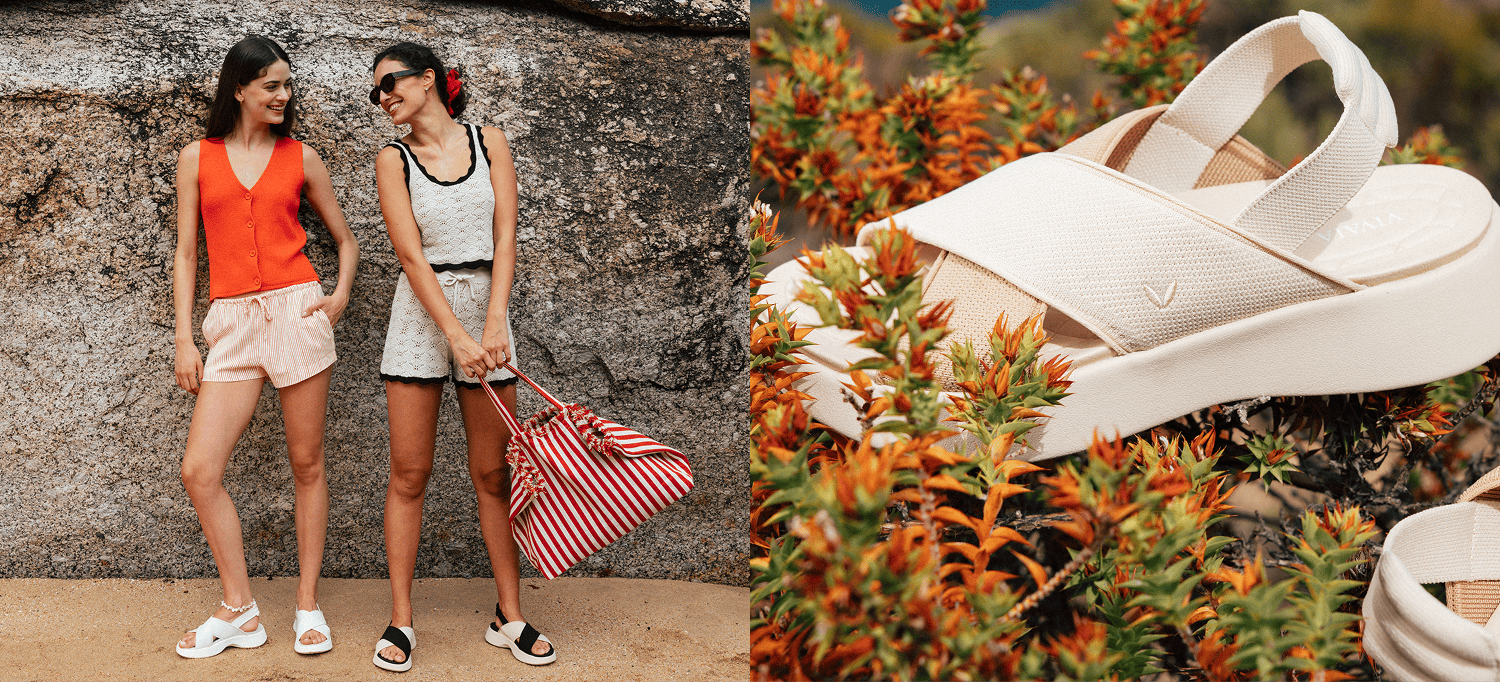
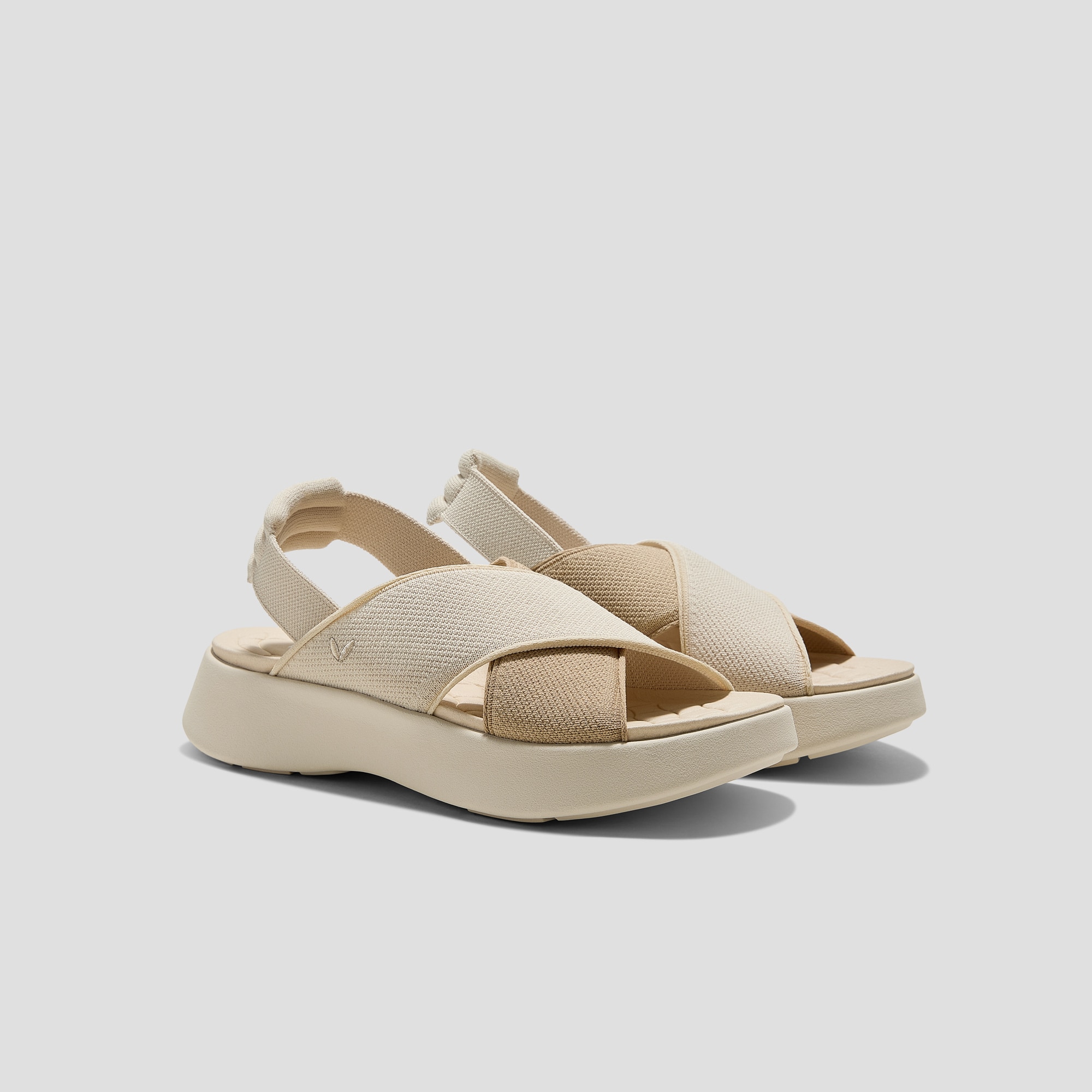
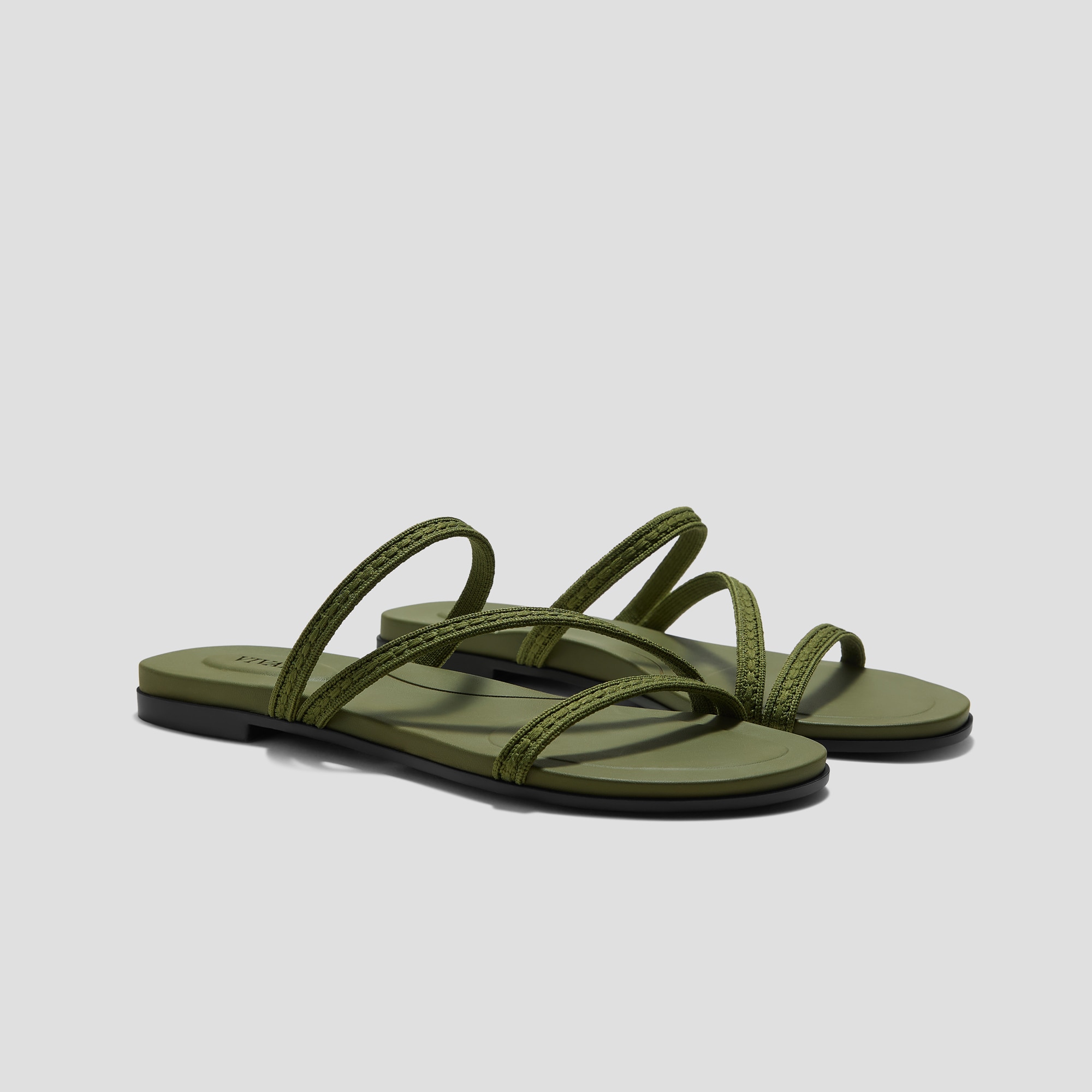
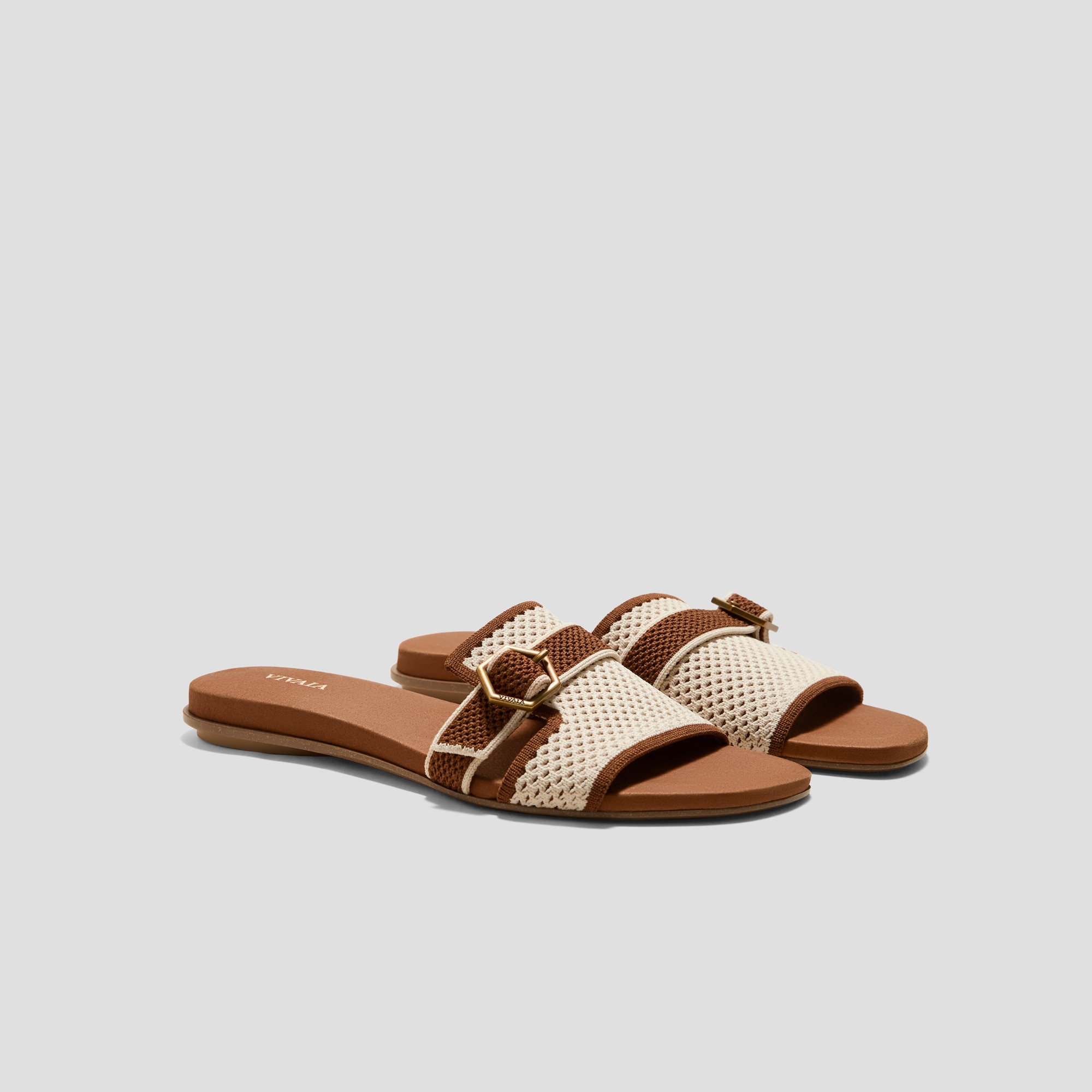
Warm pavements, slow lunches that stretch into afternoon, markets and coastlines and evenings that don't want to end — summer asks a lot of your feet. The difference between sandals that work and sandals that don't usually comes down to a few structural details: a stretch-knit upper, a contoured footbed, a secure back strap, straps that clear the bony toe joints. When they come together, you stop thinking about your feet entirely. That's the point.
VIVAIA designs around exactly that idea: that comfort and looking good shouldn't require a trade-off, and that a sandal should still feel like itself at the end of a long day. If that sounds like what you've been looking for, VIVAIA is a good place to start.
FAQs
Q1: Should you buy sandals a size bigger or smaller?
Neither as a rule. Size up by half a size if you have wide feet or if your feet swell noticeably by the end of the day. Size down only if the footbed is unusually long for the stated size. The most reliable approach is to try sandals on in the afternoon and confirm there's 0.5 cm of space past your longest toe.
Q2: How do you stop feet from sweating and slipping in sandals?
Choose sandals with a moisture-wicking insole and a machine-washable construction so the footbed stays clean and grippy over time. A secure heel strap also prevents the forward sliding that sweat causes. Keeping the sandal clean between wears, rather than letting oils build up on the insole, makes a noticeable difference in slip resistance.
Q3: Are block heel sandals better for your feet than flats?
Not necessarily. Heel height alone doesn't determine comfort. A flat sandal with a contoured footbed and dual-arch support is better for all-day walking than a block heel sandals with no cushioning. Block heels do reduce ankle instability compared to stiletto heels, but the footbed structure matters more than heel height for long-distance comfort.
Q4: Can I wear sandals comfortably if I have flat feet?
Yes, with the right footbed. Flat feet need arch support built into the sandal itself, not just a flat insole. Look for sandals labeled with contoured footbed, enhanced arch support, or dual-density midsole. Avoid fully flat slides with no structure. The APMA Seal of Acceptance is a reliable indicator that a shoe's design has been evaluated for foot health benefit. VIVAIA's Arch Pro sandal line is designed for this, with enhanced arch support and a moisture-wicking insole that accommodates flat foot profiles.

© VIVAIA All Rights ReservedTerms of Service - Privacy Policy -