







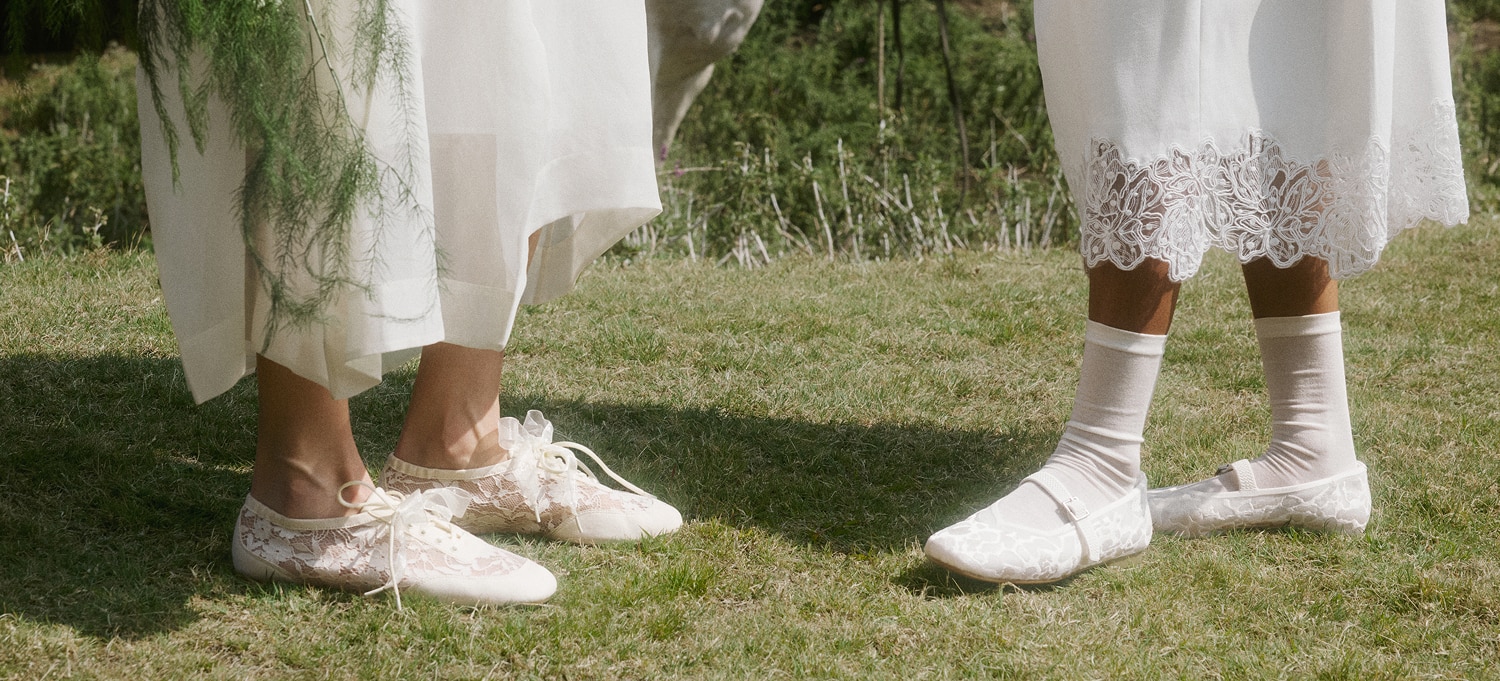
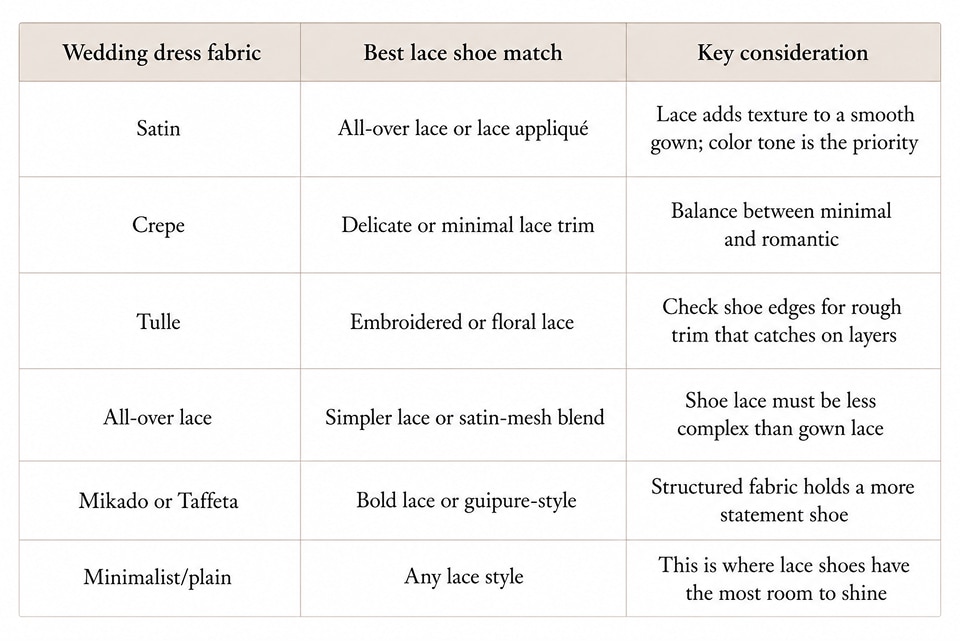
Quick Reference: Lace Shoes by Dress Fabric
Can You Wear Lace Shoes with a Lace Dress?
Yes, with one guiding principle: the shoe should complement the dress, not compete with it.
The issue that trips most brides up is pattern scale and lace family. Wedding gown lace falls into distinct types: Chantilly (delicate, sheer, fine-mesh base), Guipure (bold, raised, no mesh background), embroidered lace (stitched onto a fabric base), and Alençon (corded, dimensional). A shoe with heavy Guipure next to a fine Chantilly gown creates visual noise because the two laces belong to completely different design families. The contrast reads in person and more clearly in photographs.
Three rules that cover most combinations:
● Complex gown lace calls for a simpler lace shoe. The dress carries the detail; the shoe's role is to stay in the same tonal family without adding visual competition.
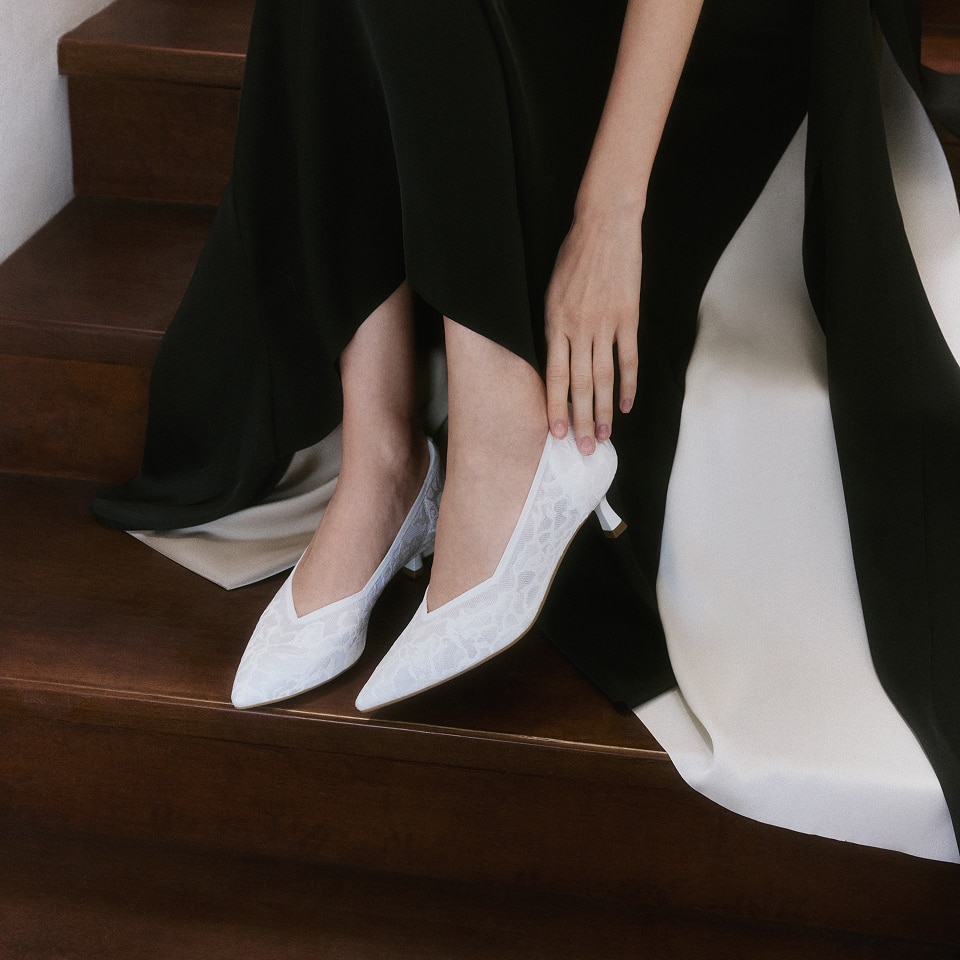
● A smooth gown is the strongest setting for a detailed lace shoe. Satin, crepe, or mikado let the shoe become the focal point.
● If both shoe and gown have lace, keep the styles in the same spirit. Delicate with delicate, bold with bold. Chantilly next to heavy Guipure does not resolve well visually.
If the dress lace is busy, choose a quieter shoe. If the dress is plain, the shoe can carry more detail.
Lace Wedding Shoes and Dress Fabric Pairing Guide
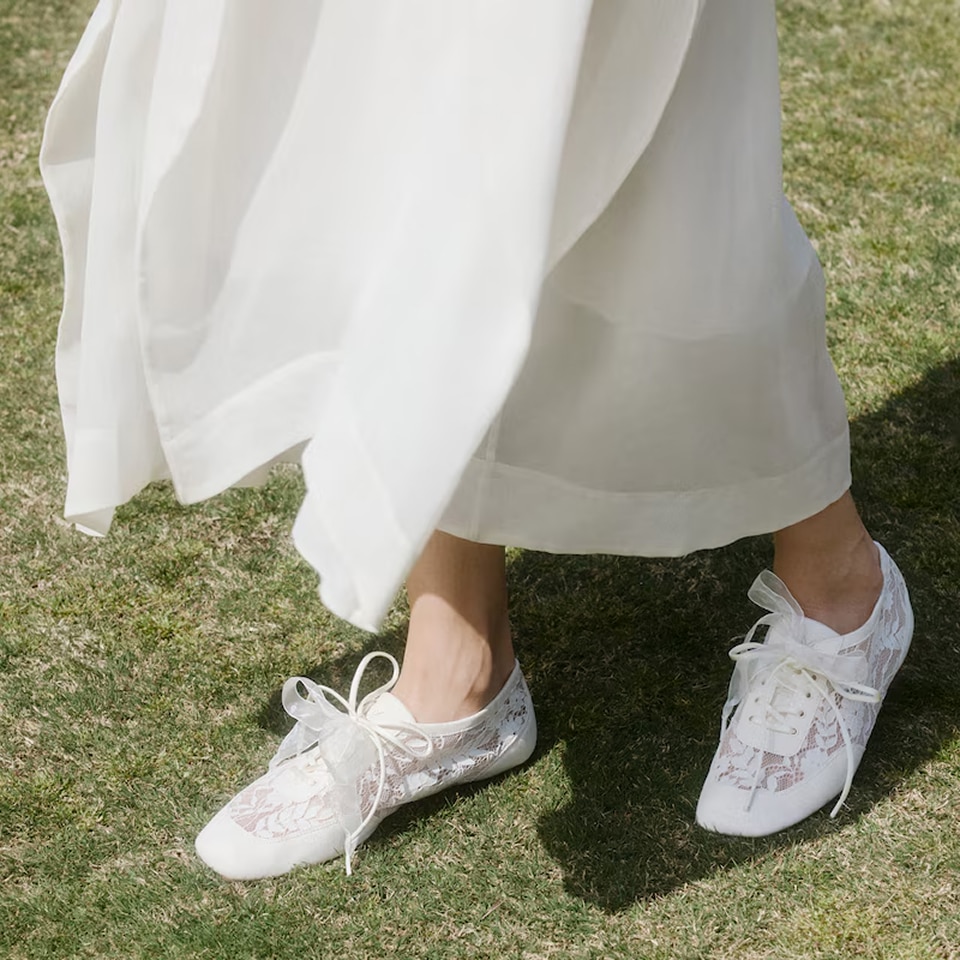
Choosing lace shoes for a wedding dress becomes more straightforward when you pair by fabric type rather than guessing by eye.
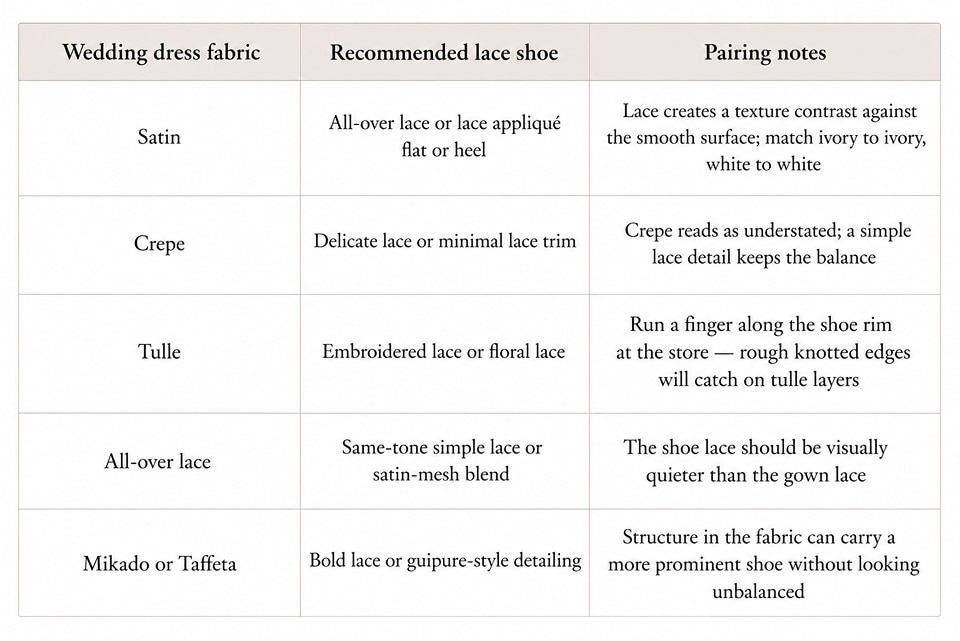
The consistent rule: simpler dress, bolder shoe; more detailed dress, quieter shoe. Color tone matters as much as pattern. Ivory lace on an ivory satin gown reads as intentional. Ivory lace on a pure white gown reads as a mismatch, even when each piece is beautiful alone.
How to Pick the Right Heel Height by Venue
Venue determines not just comfort but the structural demands on your shoes. Lace uppers are less forgiving than leather on rough terrain, so the heel choice needs to account for the surface you are walking on.
Indoor Ceremony
A stiletto or kitten heel works well in a controlled indoor setting. The main practical consideration is heel-to-hemline coordination: the dress hem is fitted to a specific heel height during alterations, so bring the actual shoes — or shoes at the exact same height — to every fitting.
Garden or Lawn
Block heels and wedges offer the most stability on grass and uneven ground. A thin stiletto sinks into soft soil, which is both uncomfortable and risks damaging the shoe and the lawn surface. Lace flats are a practical and visually grounded option for garden and boho-style ceremonies, especially with A-line or relaxed silhouettes.
Beach or Destination
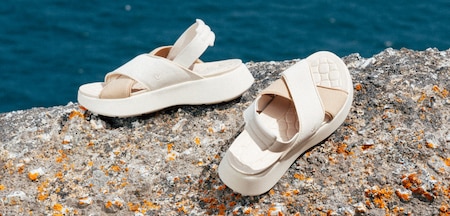
Lace flats or lace sandals with a rubber outsole are the strongest choice. Sand creates friction on fine materials, and a flat with a secure fit around the foot gives the most consistent performance. Avoid open-back styles with no ankle strap on sandy or unstable surfaces.
Three Mistakes That Make Lace Wedding Shoes Look Wrong
These three issues appear consistently in bridal forums and fitting room conversations. All of them are avoidable with a small amount of preparation.
Mismatched Ivory and White
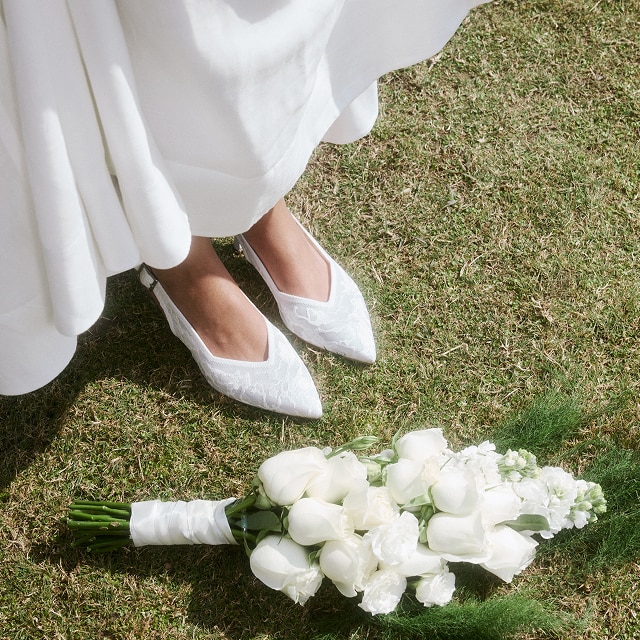
Ivory and pure white look similar in product photos and bright store lighting. Under ceremony candles or flash photography, the gap becomes clearly visible. If your gown is ivory and your shoes are pure white, the contrast draws attention at the wrong moment.
Request a fabric swatch prior to ordering and compare it to the gown in both natural daylight and indoor artificial light.
Lace Snagging on the Hem
Lace shoe edges with rough knotted borders or exposed thread loops can catch on tulle or chiffon hemlines as you walk. A single snag can pull fibers from either the shoe or the dress.
Check the shoe's upper edge at the store: run a finger along the lace border. Shoes with a mesh-backed lace upper are far less likely to snag because the lace is anchored to a smooth backing rather than sitting as a loose surface layer.
Not Breaking Them In
Lace and fabric shoes are more flexible than leather, which shortens the break-in window. You still need two or three wearings to confirm toe box fit and spot any friction points. Walk at home for 30 minutes per session on different surfaces. The back seam and elastic sections are the most common problem areas even in soft-soled styles.
What to Check Before You Buy Lace Wedding Shoes
Running through this checklist prior to purchase covers the most common ways a lace wedding shoe disappoints on the day.
● Cushioning. Hours of standing and movement require more than a flat insole. Look for a contoured footbed with cushioning at the heel and ball of foot, not just a thin fabric layer.
● Lace backing. Lace anchored to a mesh or fabric backing is more durable, more comfortable against skin, and less likely to snag on dress fabric than exposed-edge lace.
● Color match. Always compare the shoe to your gown in person before committing, in both natural and artificial light.
● Return policy. Lace shoes can fit differently than expected. Confirm the brand's exchange window prior to ordering, especially when buying online.
● Rewearability. A shoe that works in non-bridal settings gives you more value over time. Look for styles in cleanable materials that hold up past the wedding day.
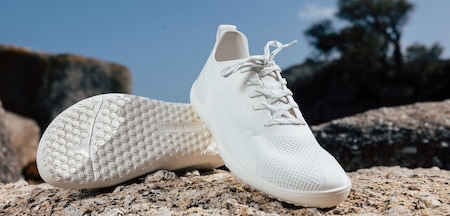
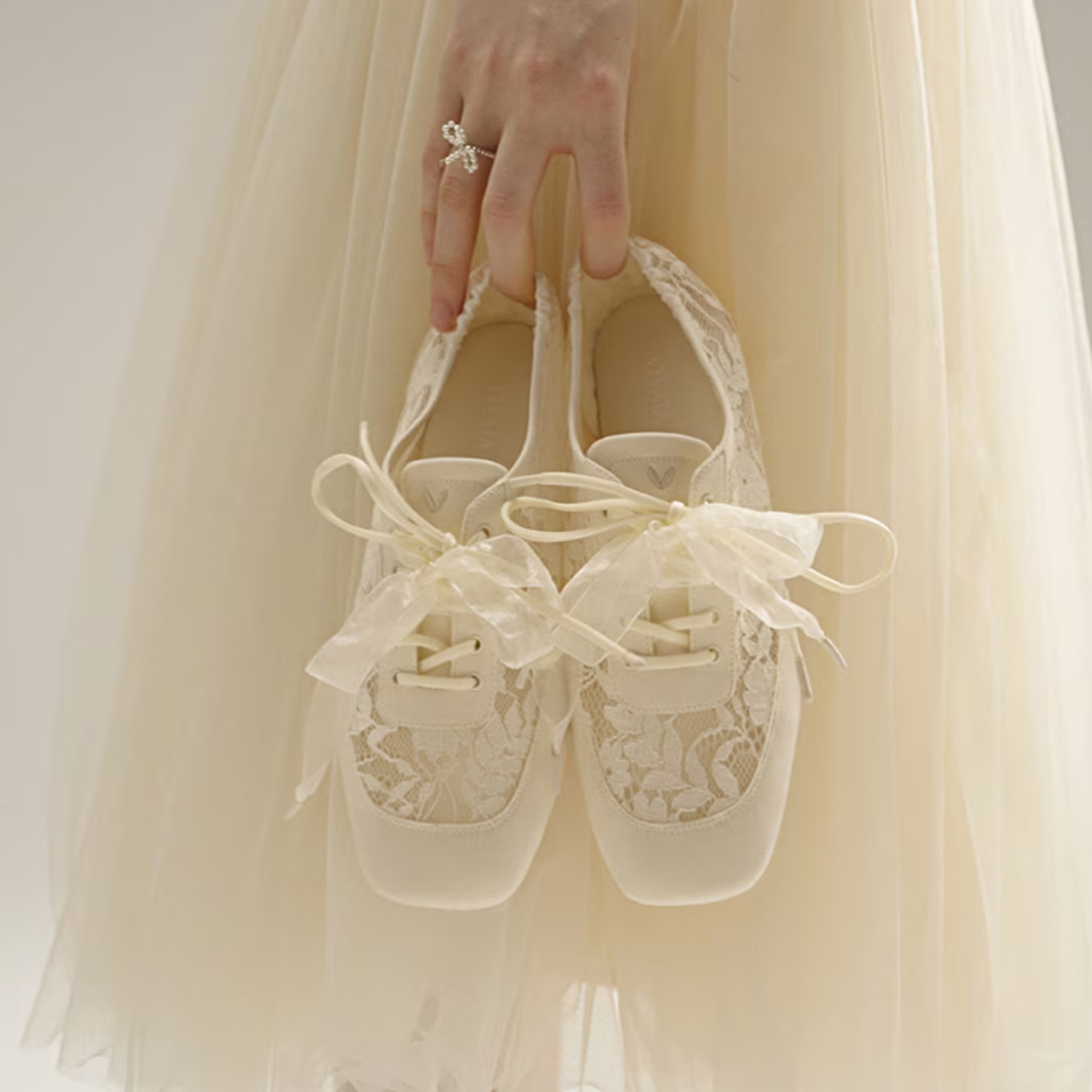
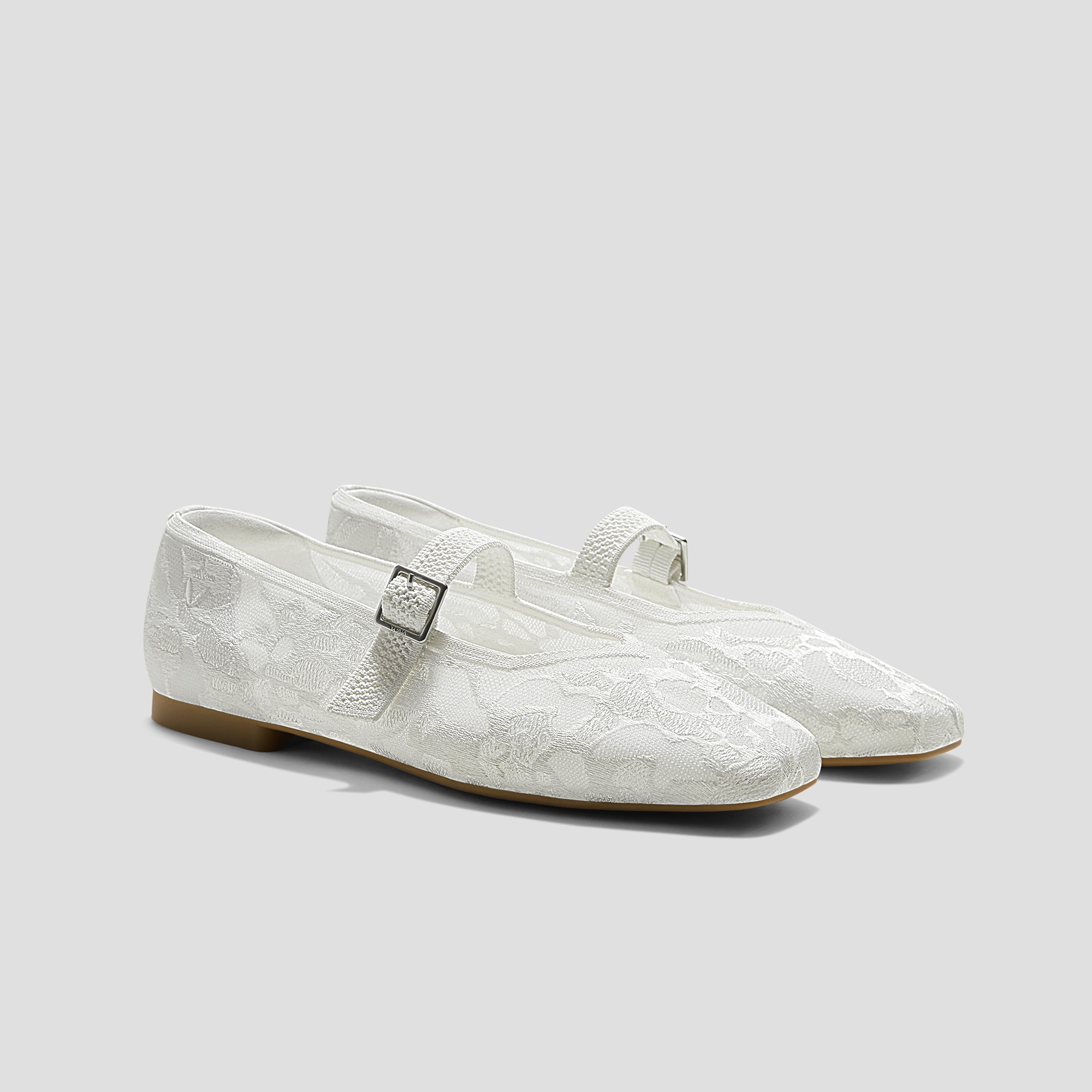
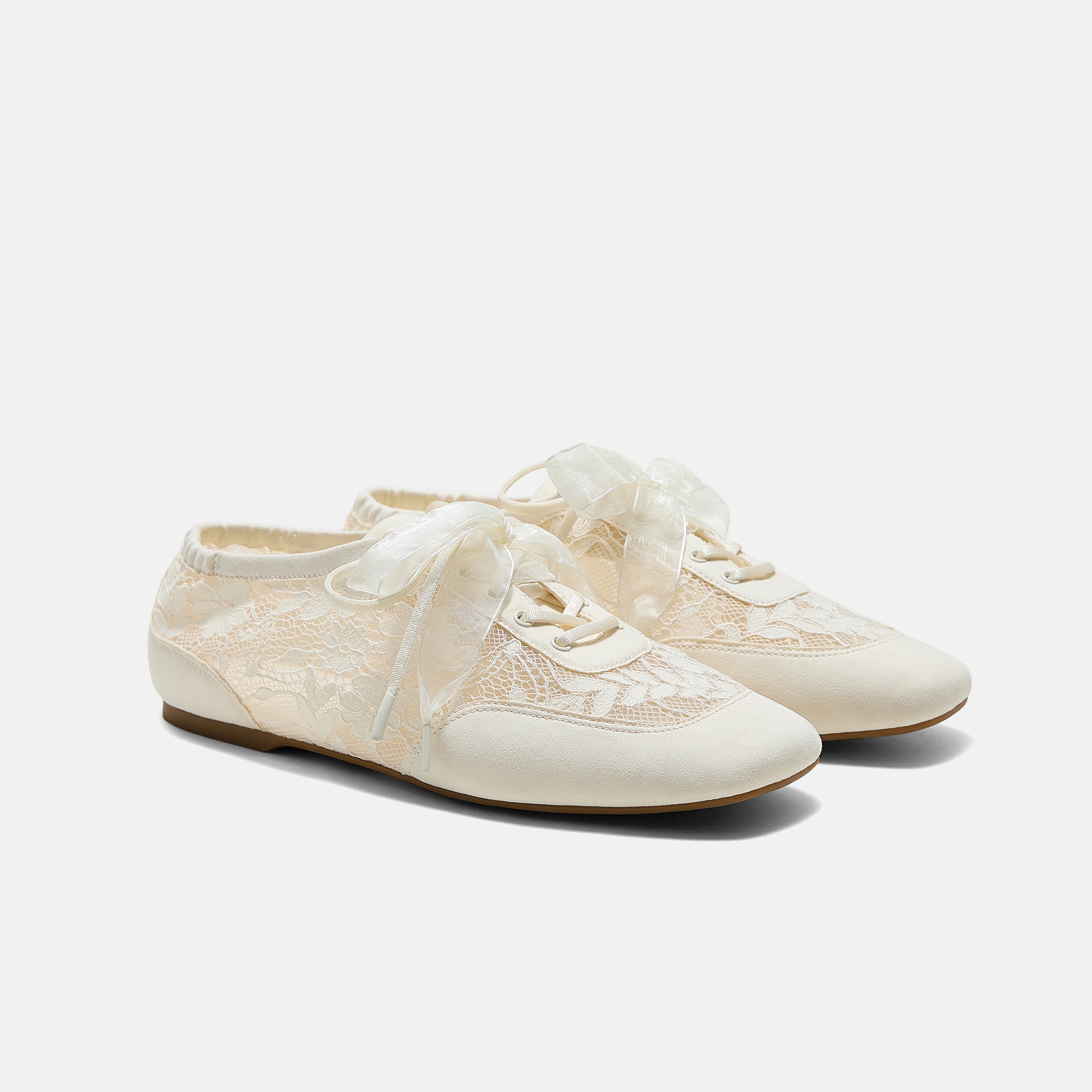
VIVAIA's Eco-Lace Sneakerina addresses several of these points directly: the upper is soft breathable lace crafted from recyclable materials with a smooth backing, the suede-like cushioned insole supports all-day wear, and the construction is fully machine washable — which makes post-wedding care straightforward rather than a separate project.
Find Your Lace Wedding Shoes
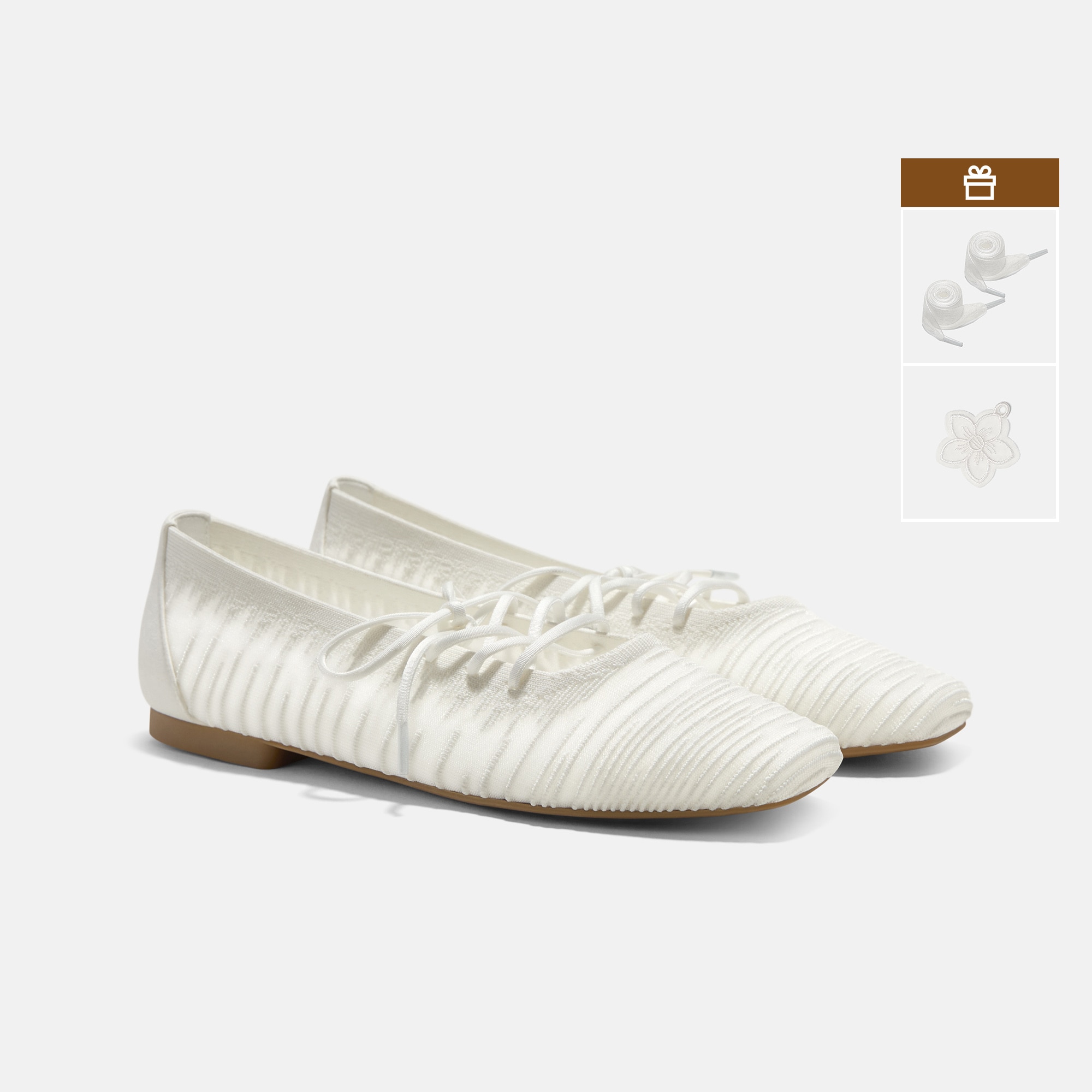
Lace wedding shoes work when the lace scale matches the dress complexity, the heel suits the venue surface, and the shoe has been tested ahead of the wedding day. Ivory and champagne tones carry the fewest color risks across gown fabrics. VIVAIA's Eco-Lace styles offer lace flats built for all-day comfort, made from sustainable materials, and designed to wear long after the reception. Find them at VIVAIA.
FAQs
Q1: Can you wear lace shoes with a non-lace wedding dress?
Yes, and a plain gown is often the strongest setting for them. Lace shoes add texture and a romantic detail to satin, crepe, or chiffon without competing with the dress fabric. Match the shoe tone to the gown — ivory with ivory, white with white — and the pairing reads as deliberate rather than accidental.
Q2: Are lace wedding shoes comfortable for all-day wear?
It depends on construction, not the lace itself. The upper material rarely causes discomfort; the insole, heel height, and toe box fit matter more. A cushioned footbed and a secure heel back make the biggest practical difference. Lace flats with proper arch support are a reliable all-day option across most wedding venues.
Q3: How do you clean lace wedding shoes after the wedding?
For spot cleaning, use a soft damp cloth with mild soap and work gently without rubbing. If the shoe has a mesh-backed lace upper and is labeled machine washable, a gentle cold cycle in a mesh laundry bag works well. Air dry flat and away from direct heat, which can damage lace fibers. VIVAIA's Eco-Lace styles are machine washable.
Q4: Do lace wedding shoes work for outdoor ceremonies?
Yes, with the right sole and heel. Lace flats or sandals with a rubber outsole perform well on grass and garden surfaces. Avoid stiletto heels on soft ground, and look for a shoe with a secure back strap on any uneven surface. The lace upper is not the issue outdoors; traction and stability are.
Q5: What color lace wedding shoes should I choose?
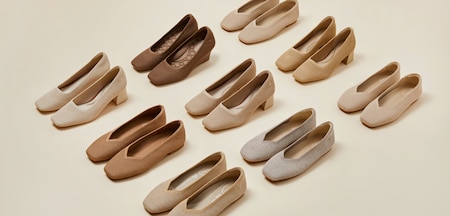
Ivory matches most gowns and is the safest starting point. Pure white only works when your gown is also pure white. Champagne and blush lace tones add warmth and photograph well under most lighting. Nude or skin-tone lace elongates the leg visually. Always compare the shoe color to your gown in natural light prior to purchasing.

© VIVAIA All Rights ReservedTerms of Service - Privacy Policy -