








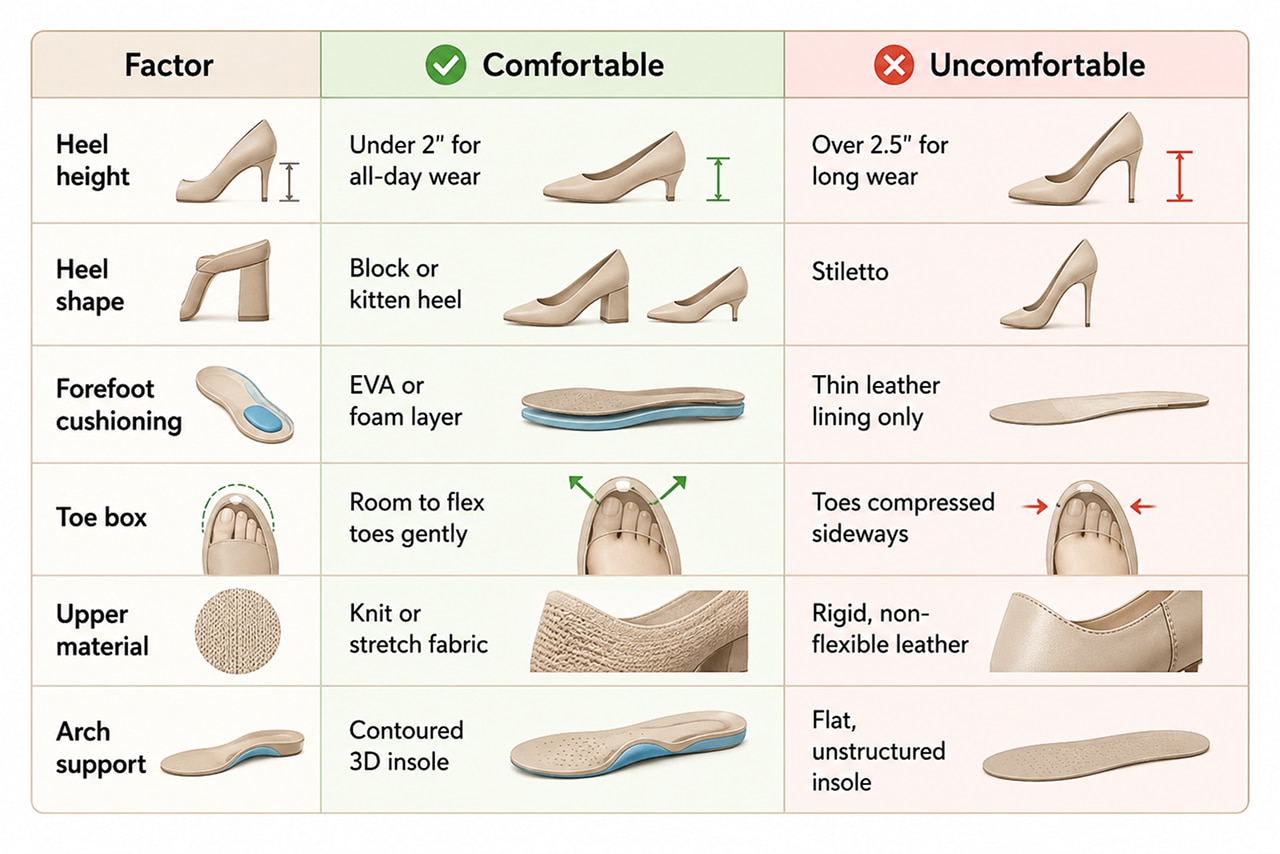
Quick Reference: What Makes a Heel Comfortable
Why Some Heels Hurt and Others Don't
Three physical things happen the moment you put on a heel, each affecting how long you can wear it.
The Front of Your Foot Takes Most of the Weight
In normal stance, body weight spreads roughly evenly between the heel and the ball of the foot. Biomechanics research shows that in heels, up to 90% of that load shifts to the front of the foot. That imbalance is why two to three hours in heels often ends with burning pain in the forefoot. Mayo Clinic also notes that high heels can put extra weight on the front of the foot in cases of metatarsalgia.
Your Calf Never Fully Resets
A raised heel holds your calf in a shortened position all day. Wear heels regularly, and the calf gradually adapts to that position — research shows the muscle can shorten by around 13%. That's why switching to flats after a day in heels can actually make your heel hurt: the muscle is forced to stretch back out. APMA explains that shoe pressure and construction can aggravate certain forms of metatarsalgia
Thin Heels Turn Balance Into Constant Work
A stiletto's ground contact point is tiny, requiring constant ankle and calf micro-adjustments with each step. That ongoing stabilization creates cumulative muscle fatigue. The longer you wear them, the more pronounced it gets. APMA-related reporting also notes that heels three inches or higher shift body weight forward and increase pressure on the ball of the foot and toes, especially in high heels and foot pain.
Heel height, heel shape, and forefoot cushioning are three separate variables, all improvable through design.
The Heel Height That Changes Everything
Heel discomfort doesn't scale evenly with height. There are real thresholds where the experience shifts.
Under 1.2 Inches
Forefoot pressure increase is minimal. Most people feel no meaningful difference from flat shoes, and ankle stability is essentially unchanged.
1.2 to 2 Inches
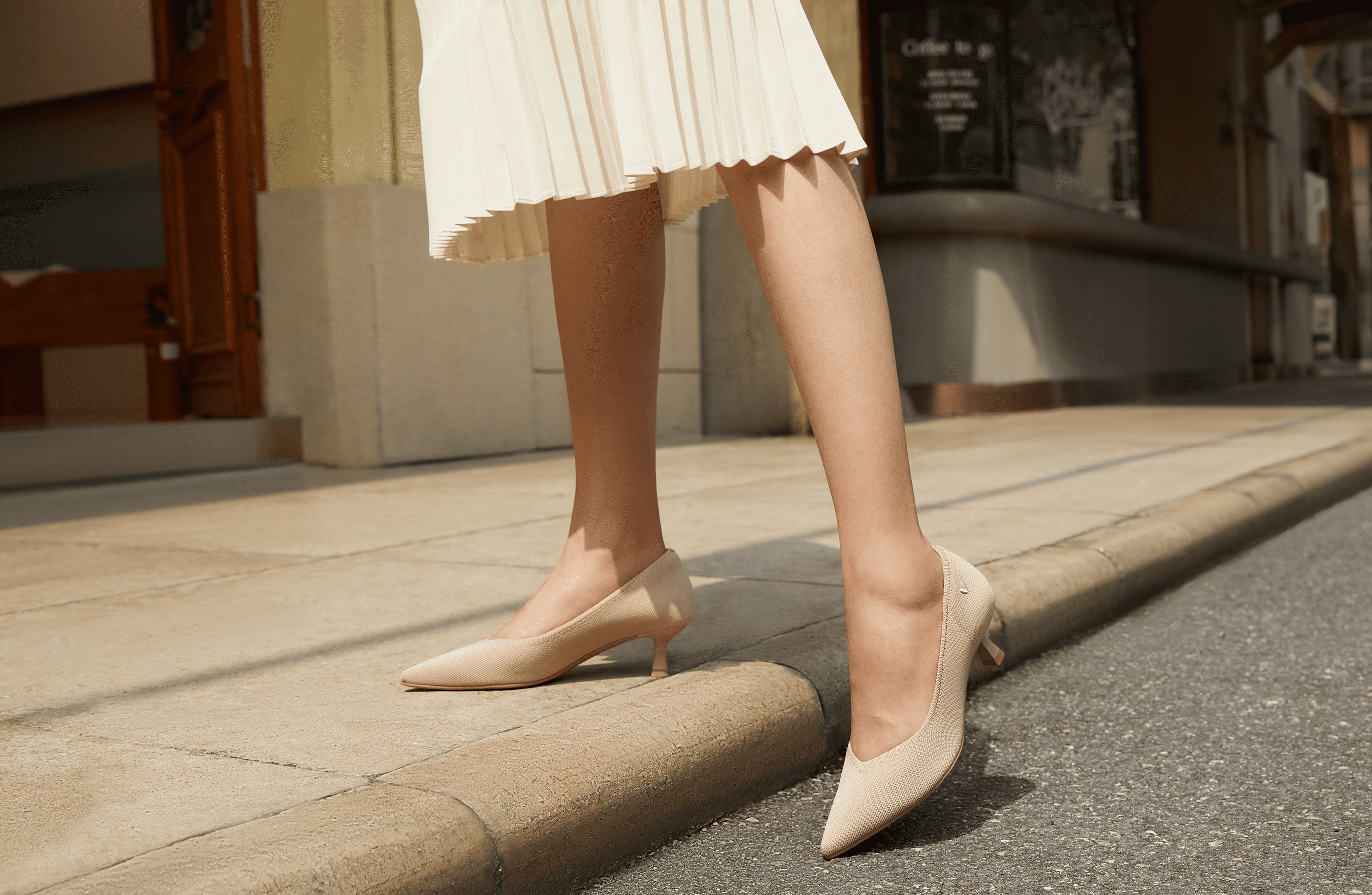
This is the kitten heel range. Forefoot pressure rises moderately but stays manageable for most people over a full workday. Achilles tension at this height tends to self-correct overnight.
2 to 2.75 Inches
Forefoot pressure increases noticeably. Most people start feeling discomfort after three to four hours of sustained wear.
Above 2.75 Inches
Forefoot load is near maximum, and the Achilles stays shortened throughout wear. The comfortable window is typically one to two hours.
Why Heel Shape Matters as Much as Heel Height
Two heels at the same height can feel completely different to walk in, based on how much ground contact the heel base provides.
Stiletto
A stiletto's contact area is typically under 0.1 square inches. Every step requires constant ankle micro-adjustments, and on uneven surfaces the instability compounds fast. Most people feel calf and ankle fatigue within two hours.
Block Heel
A wider base means significantly less active balancing per step. The trade-off is visual weight: block heels pair better with tailored pieces than with delicate dresswear.
Kitten Heel
The short heel keeps stability demand low; the slender base keeps the silhouette refined. Both qualities make it the practical choice for all-day wear.
Rubber outsoles grip better than leather on smooth or damp surfaces. A stable heel is one you walk more naturally in, which reduces fatigue regardless of cushioning.
The Other Factors That Determine Heel Comfort
Beyond height and shape, four things determine whether a specific pair works for your foot:
● Forefoot cushioning. The insole under the ball of your foot determines how long a heel stays wearable. Press your thumb into the forefoot section: springback means real foam cushioning; no response means minimal protection.
● Toe box shape. A pointed toe that compresses toes sideways creates friction and uneven forefoot load. A square or rounded toe lets toes sit flat and spreads pressure more evenly.
● Upper material. A rigid upper creates a pressure point wherever it contacts the skin and holds it there. Knit or stretch fabric gives slightly as the foot moves and swells through the day.
● Arch support. A raised heel shifts foot load forward onto the metatarsals. A contoured insole redistributes that load across the whole foot.
How to Test a Heel Before You Commit
Five In-Store Tests
1. Single-leg stand. Put on the heel and stand on one foot for five seconds. If staying balanced takes active concentration, the heel will fatigue your calves in under two hours.
2. Insole press. Press your thumb firmly into the forefoot section. Springback equals real foam cushioning; no response means the insole is mostly decorative.
3. Toe flex. Try to gently curl your toes inside the shoe. If they immediately meet the front, the toe box is too short for extended wear.
4. Walk 50 steps. Walking reveals heel slip that standing doesn't. If the back of your foot lifts with each step, that friction creates blisters faster than a tight upper would.
5. Shop in the afternoon. Feet swell as the day progresses. A heel that fits at 9 AM may feel tight by 3 PM.
Buying Online
Search reviews for actual wear duration: "wore these to a wedding," "stood all day," "walked for six hours." Also confirm the return policy: free exchanges are the standard to look for when buying heels online.
5 Comfortable Heels Worth Trying
A good heel is one you stop thinking about halfway through the day. These six get there through different routes.
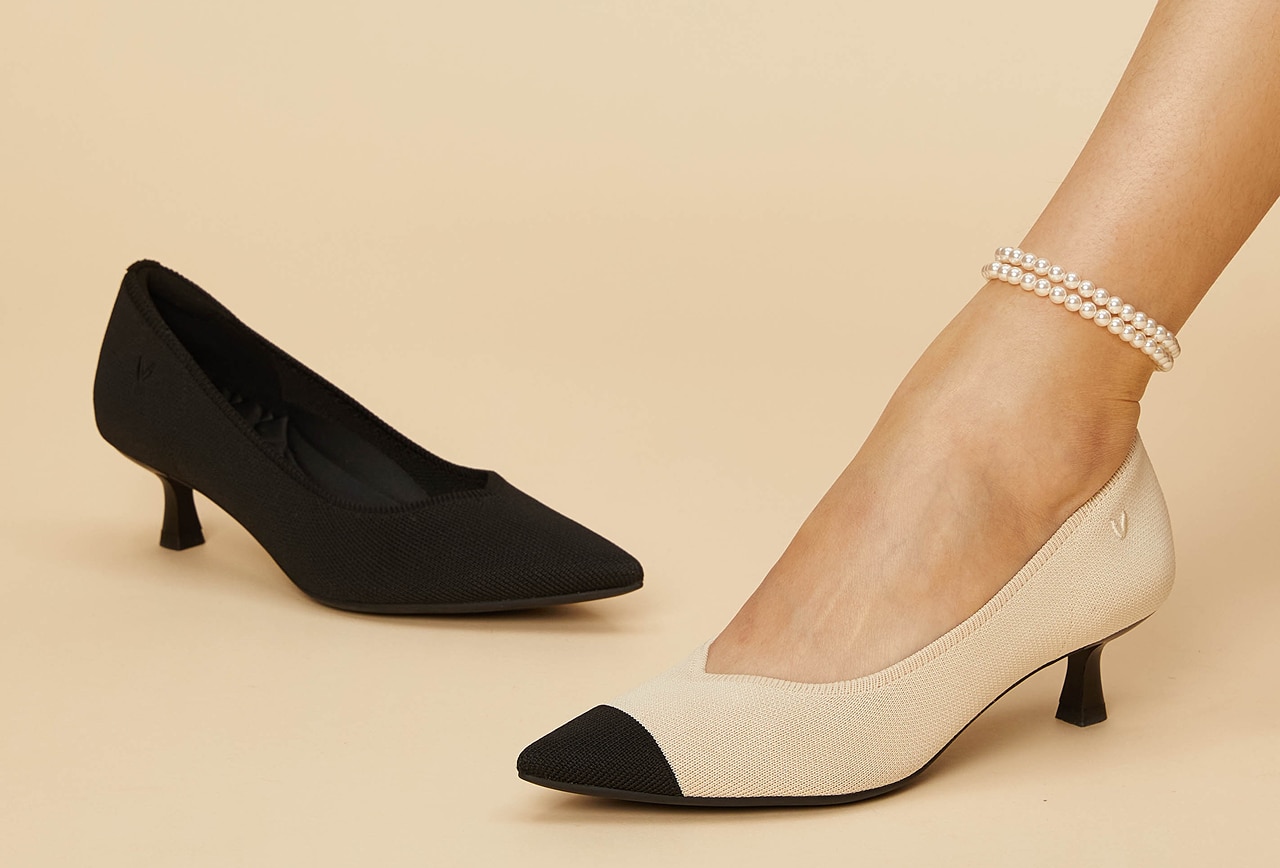
1. Scarlett
Scarlett features an insole that supports the heel, arch, and forefoot as three separate zones, each tuned to where the foot takes pressure. At 1.96 inches with a knit upper that moves with the foot, it wears easily from a workday through the evening. No break-in required.
2. Mikko
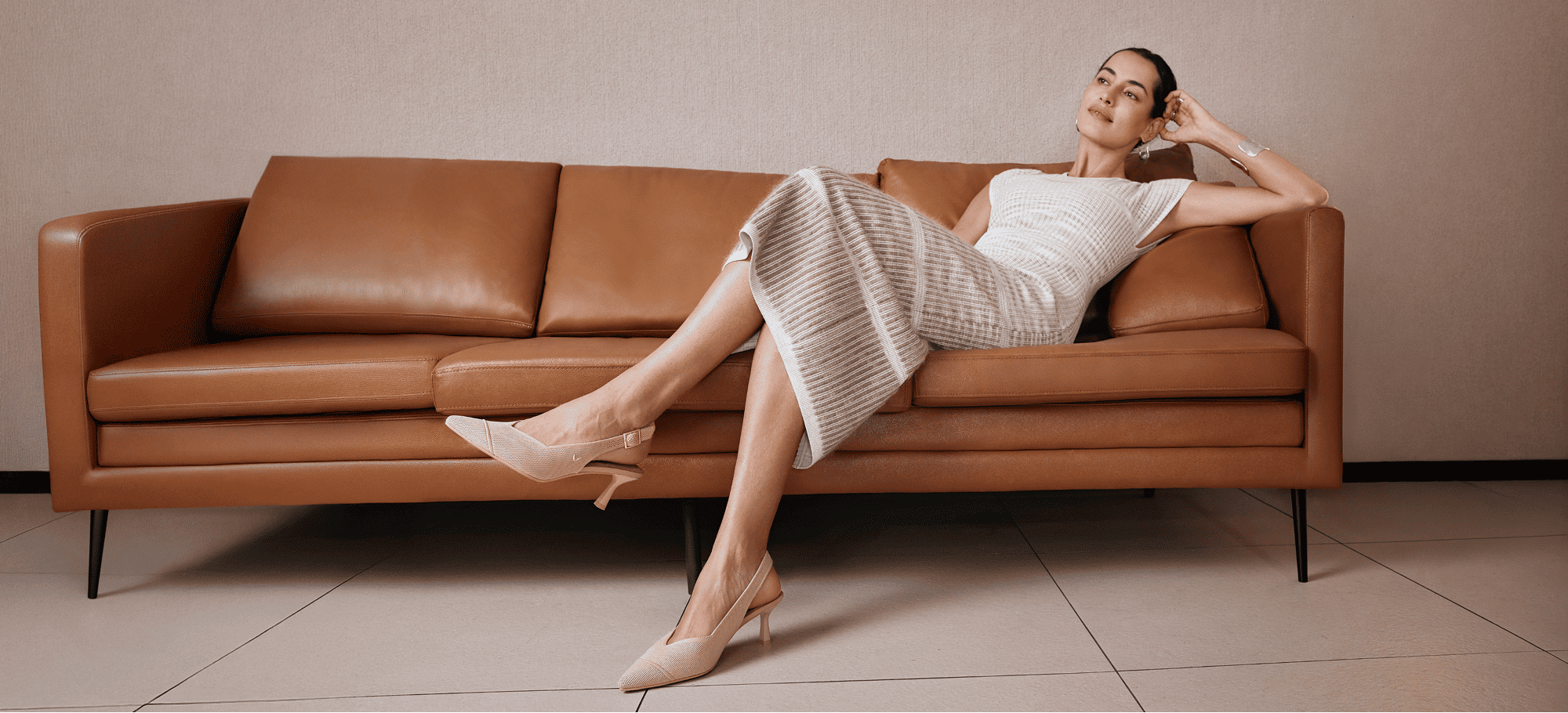
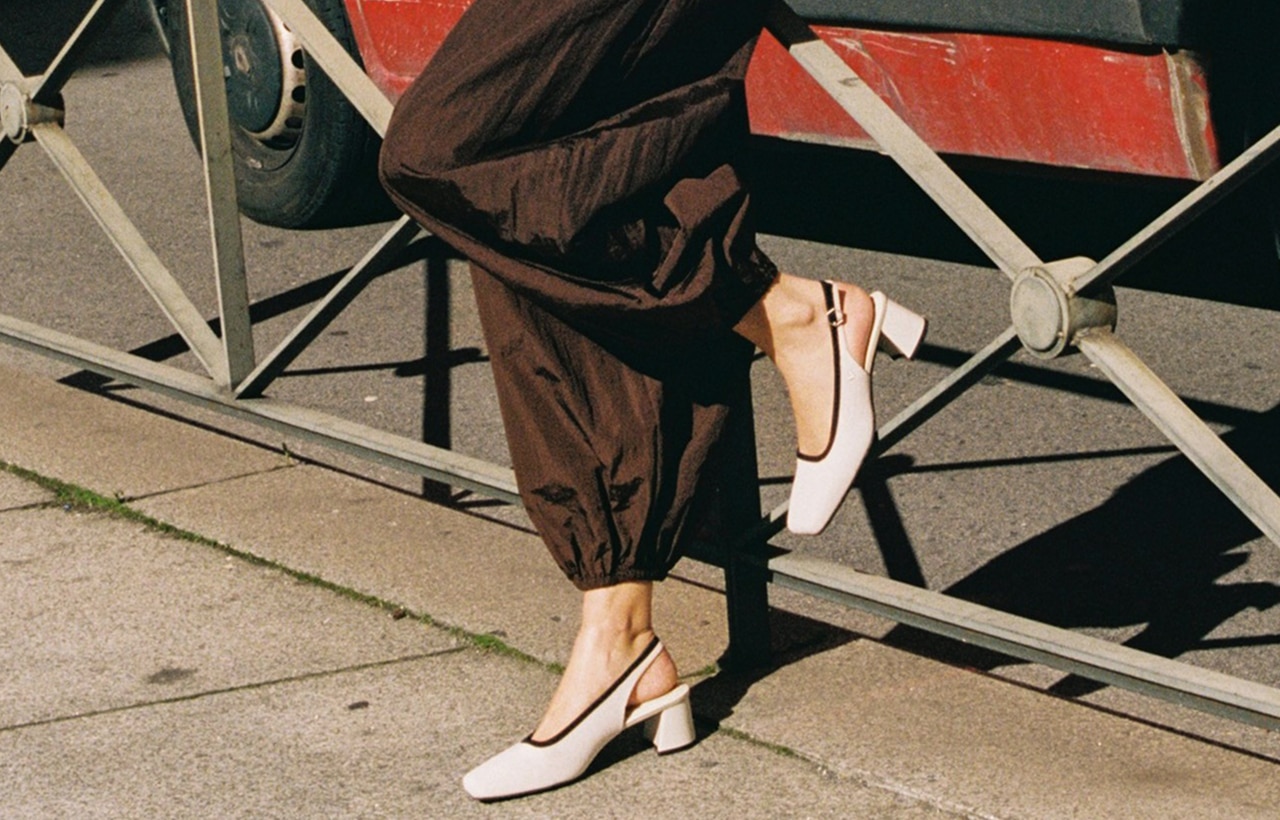
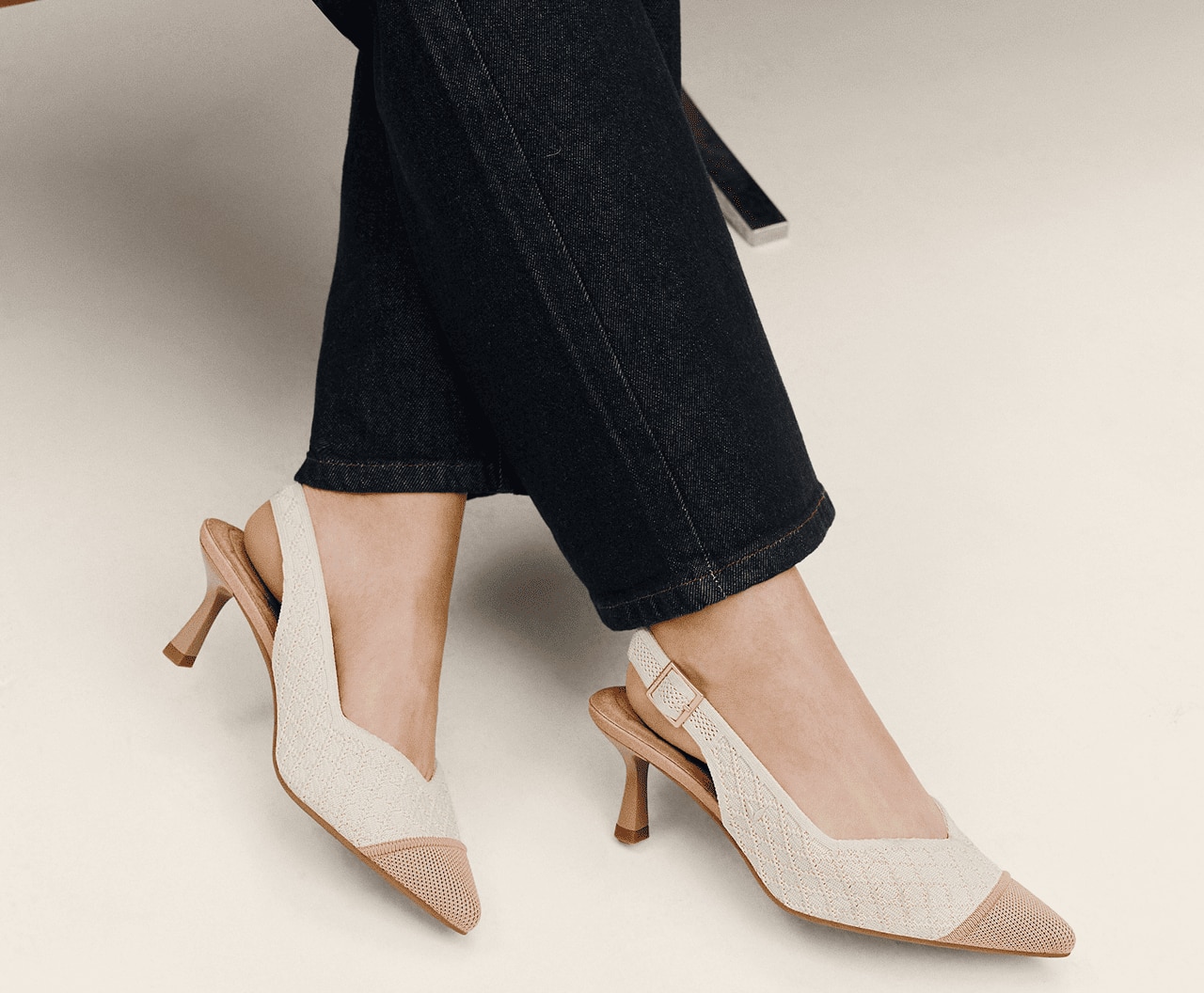
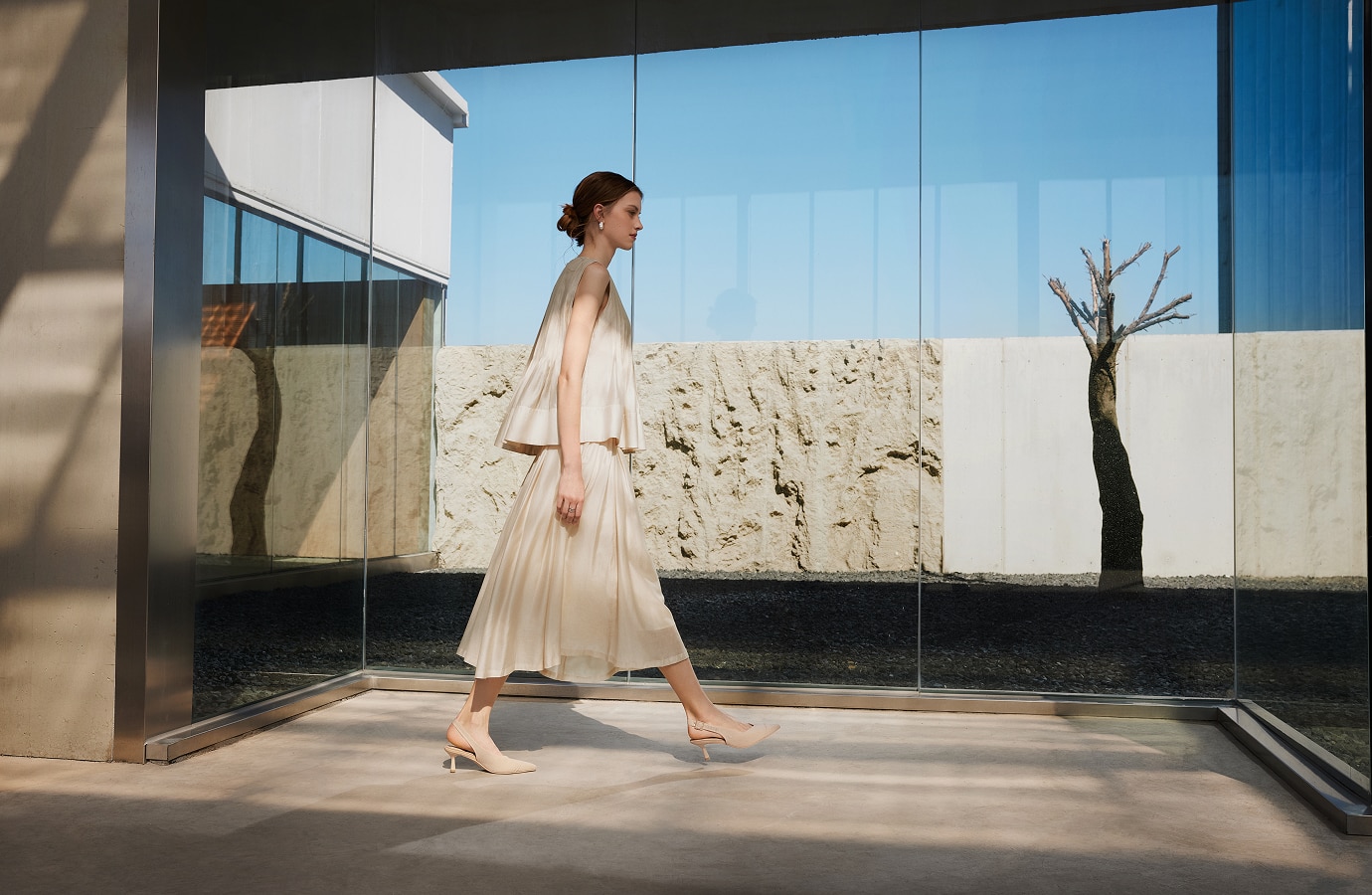
At 2 inches, Mikko sits right at the sweet spot between height and wearability. The pressure-relief platform helps offset forefoot load, making it feel easier on the foot than many heels in the same category. A wide square toe box provides extra room where it matters most, while the AdaptAll™ slingback strap adjusts for a secure, personalized fit. Finished with a soft knit upper that moves naturally with the foot, Mikko transitions effortlessly from workdays to evenings out without asking you to think twice about comfort.
3. Emeline
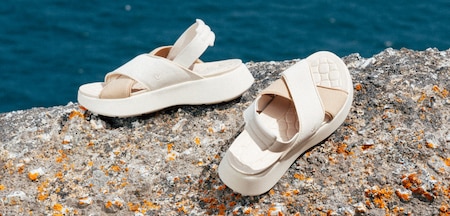
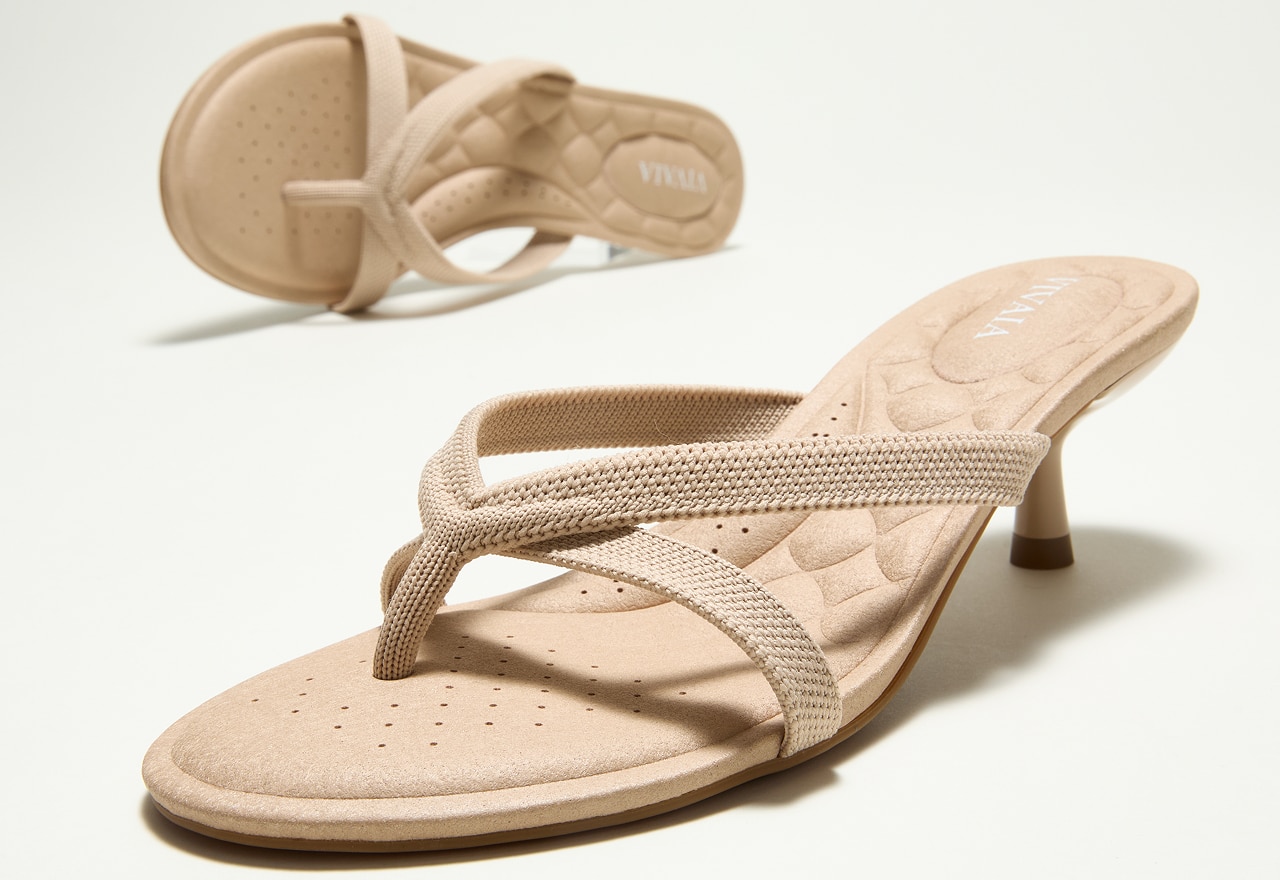
The Emeline isn't trying to be a work shoe, and that's exactly the point. A kitten-heeled thong sandal for days that need a little height but no formality. Pack it for a trip, wear it on a Sunday, pair it with a linen dress.
4. Alina
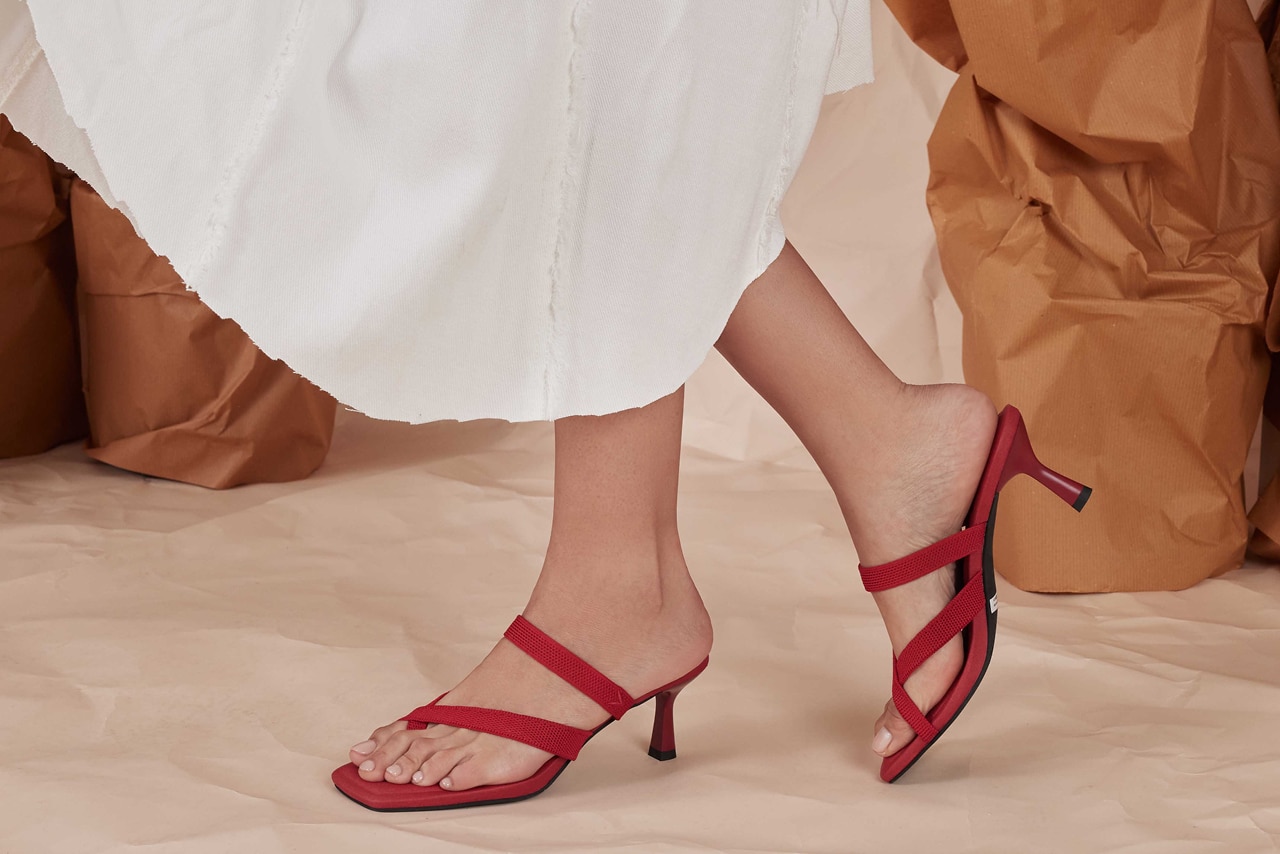
Alina and Addison share the same heel height, but the square toe changes how it feels. More forefoot room means more even pressure distribution at a height that already asks more from the foot. It looks dressed up and wears more gently than the specs suggest.
5. Addison
Addison sits at 2.56 inches, where fit matters more than at lower heights. The AdaptAll™ strap adjusts to the shape of your heel, eliminating the slip that causes friction and blisters. The soft knit upper has no rigid edge or pressure point. A Celeb Fave for reasons that are mostly about comfort.
Ready to Find Your Fit
The goal is a heel you're still wearing when you get home: height under 2 inches, a stable base, real forefoot cushioning, enough toe room, and a flexible upper. VIVAIA designs heels for the steps that take you through the day, and the ones that take you further. Comfortable enough to keep up with your schedule, refined enough to show up for what matters. Find your fit at VIVAIA.
FAQs
Q1: Do heels get more comfortable after you break them in?
Yes, partially. Leather uppers soften with wear and can ease localized pressure points. But insole cushioning, heel height, and toe box width don't change: if the ball of your foot hurts from day one, no break-in period will fix it.
Q2: Are platform heels more comfortable than regular heels?
Often, yes. A 3" heel with a 1" platform has an actual heel-to-toe differential of 2", which creates the same forefoot load as a 2" heel.
Q3: Can insoles make heels more comfortable?
Yes, with limits. A forefoot silicone pad adds real cushioning to the ball of the foot and is the most practical fix for heels with thin insoles. A full-length orthotic needs enough interior depth to fit, which most heels don't provide.
Q4: Why do heels hurt less when wearing thicker socks?
Two reasons: the extra layer reduces friction between the upper and skin, and the added volume fills excess space inside the shoe. Both effects reduce the foot slip that causes blisters. Slipping inside the shoe is a bigger blister trigger than a tight fit.
© VIVAIA All Rights ReservedTerms of Service - Privacy Policy -