







At a Glance
What Kitten Heels Are and Where the Name Comes From
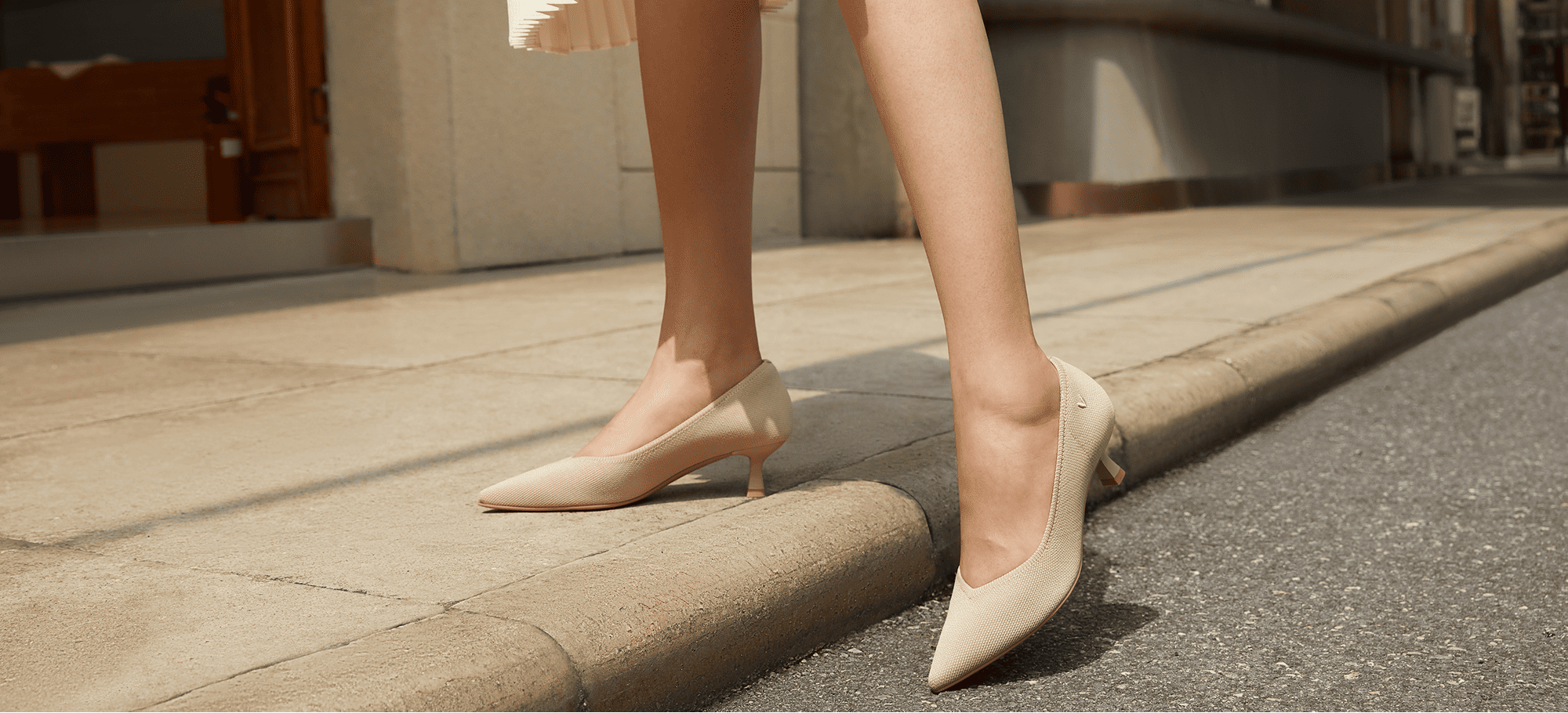
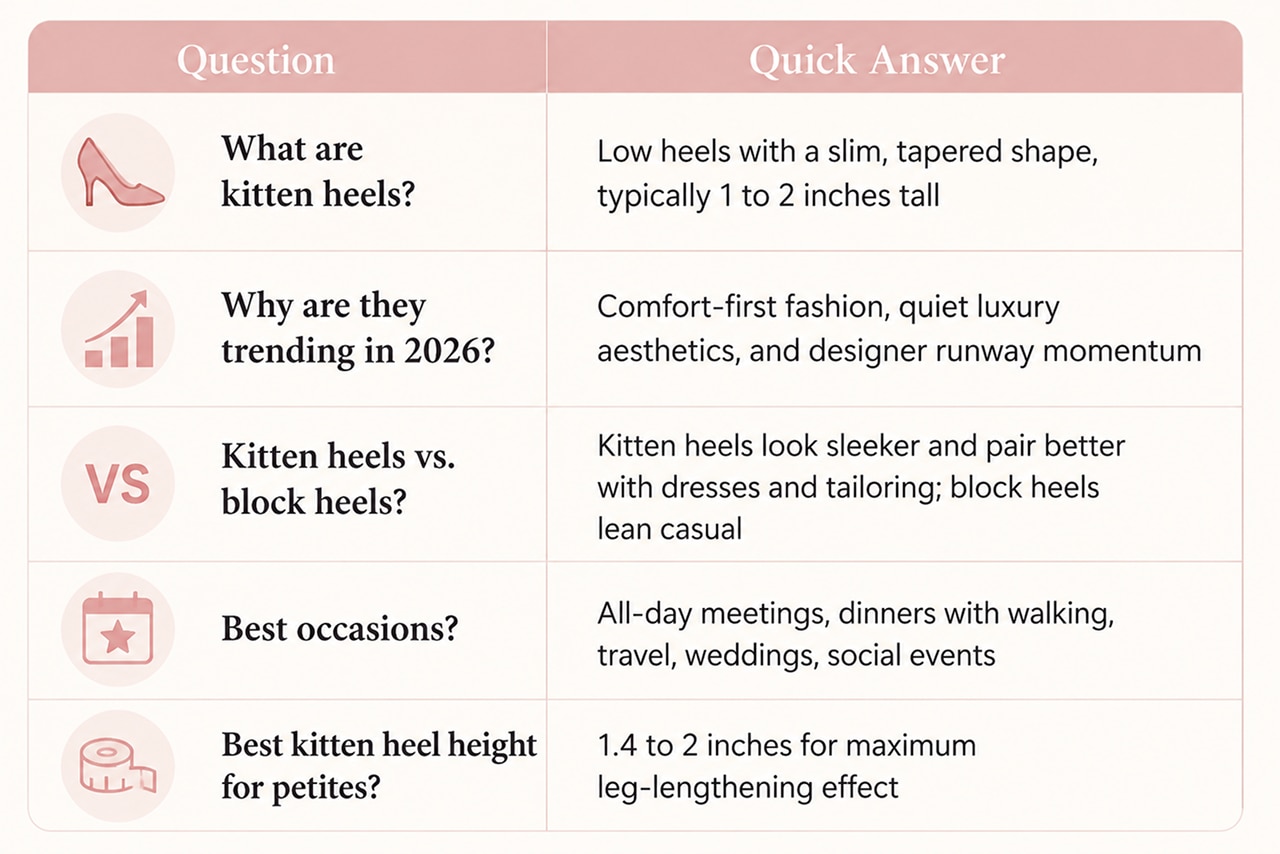
A kitten heel is a low heel between 1 and 2 inches, with a slim, tapered shape that curves slightly inward. The defining feature is not the height alone. The tapered silhouette looks refined compared to a block heel at the same height, and far steadier than a stiletto of the same slimness. Most industry standards cap kitten heels at 2 inches; anything taller enters standard heel territory.
Where the Name Started
Two origin stories compete. The widely cited version dates to the 1950s and 1960s, when this heel height served as a "training heel" for young girls (nicknamed "kittens") transitioning to taller styles. That framing gave kitten heels an unfair reputation as "not serious enough."
The second version is visual: the slim, curved heel profile resembles a cat's paw. This interpretation is gaining ground in 2026, and the training-heel narrative has nothing to do with how kitten heels function in a modern wardrobe.
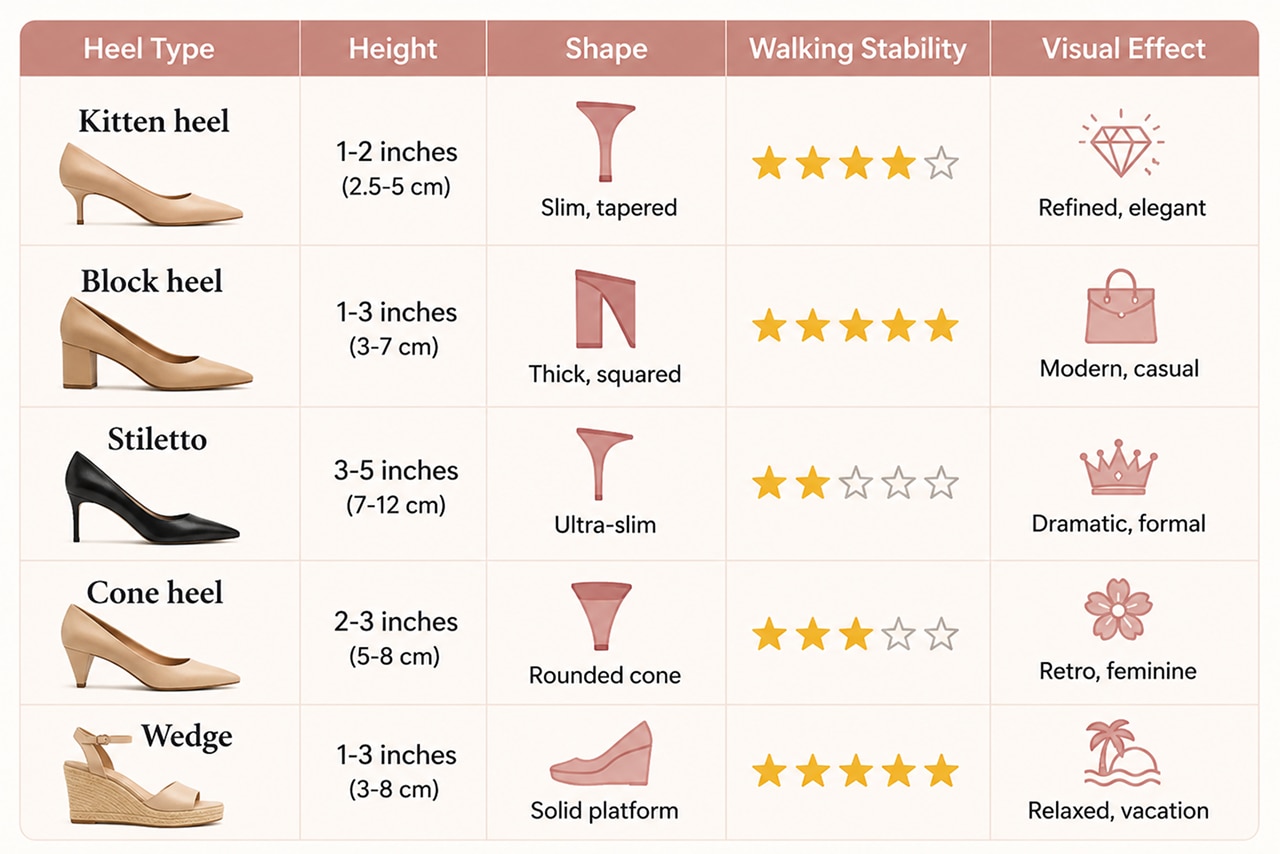
How Kitten Heels Compare to Other Heel Types
Three Things That Set Kitten Heels Apart
Weight distribution. At 2 inches or below, the forefoot absorbs minimal extra pressure compared to flat shoes. Kitten heels are the only heeled shoe type most people can comfortably wear for a full eight-hour day without forefoot fatigue.
Visual line. They preserve the leg-lengthening silhouette that heels create, without the visible instability of a taller shoe. The signal in an outfit: deliberate polish, not "dressed for a gala."
Occasion range. The sub-2-inch height opens up situations where taller heels fail: long walks, full-day conferences, casual restaurants, and travel days that shift from daytime sightseeing to evening dining.
Why Kitten Heels Are Bigger in 2026 Than They Have Been in 20 Years
Kitten heels have had three major moments. Audrey Hepburn and Jacqueline Kennedy made them mainstream in the 1950s and 1960s. They resurfaced in the late 1990s as a minimalist staple. The 2024 to 2026 cycle is the largest comeback yet, with entirely different drivers.
The Flat Shoe Hangover
Post-pandemic, sneakers and flats dominated wardrobes. As social events and offices returned, many women wanted polish again but found their feet had adjusted to flat-shoe comfort. Kitten heels fill that gap: they deliver the visual language of a heel without forcing a full physical readjustment.
Designer Momentum Hit Critical Mass
A trend crosses from "existing" to "everywhere" when multiple top designers back it in the same season. In 2025 and 2026, pointed-toe kitten heels appeared across runways in bold textures, satin finishes, and bow details. That concentrated visibility pushed kitten heels from a niche vintage pick into mainstream buying decisions.
Quiet Luxury Found Its Perfect Shoe
The most durable style narrative of recent years has been the shift from displaying wealth to displaying taste. Kitten heels do not rely on height for impact. They rely on proportion, material quality, and clean lines, which maps directly onto the quiet luxury aesthetic.
Social Media Rewards Real Comfort
On TikTok and Instagram, content showing shoes that perform well over a full day outperforms purely visual outfit posts. A kitten heel wearer can honestly say "I wore these for eight hours and my feet feel fine." That credibility drives purchases faster than any styled photo.
How Kitten Heels Compare to Every Other Heel You Already Own
Kitten Heel vs. Block Heel
Both are comfortable alternatives to stilettos, but they suit different aesthetics. Block heels have a geometric feel that pairs naturally with straight-leg jeans. Kitten heels have a slim profile that reads as polished and works better with dresses, tailored trousers, and midi skirts. For workplace settings, kitten heels tend to match a "refined but not overdressed" tone more closely.
Kitten Heel vs. Stiletto
A stiletto becomes uncomfortable for most people after about two hours of standing or walking. A kitten heel barely changes your center of gravity, so it works in situations that involve real movement: walking to a restaurant, standing through a three-hour reception, spending an evening at a gallery opening. Visually, a kitten heel dials down formality by one level, so the rest of your outfit doesn't need to be in full evening mode.
Kitten Heel vs. Flat Shoes
Even 1 inch of heel height creates a visible improvement in leg proportion. The same outfit styled with a kitten heel registers as more "finished" than with a ballet flat, and the slight elevation shifts posture upright for a cleaner silhouette.
When Kitten Heels Are the Best Option
- Full-day meetings that move from conference room to dinner restaurant.
- Social events with standing and walking, such as art openings and cocktail hours.
- Formal occasions lasting three-plus hours, like weddings or receptions.
- Travel days where you need a shoe that works at a nice restaurant and on a 1.2-mile walk to get there.
How to Style Kitten Heels for Three Different Occasions
Look 1: Office Polished
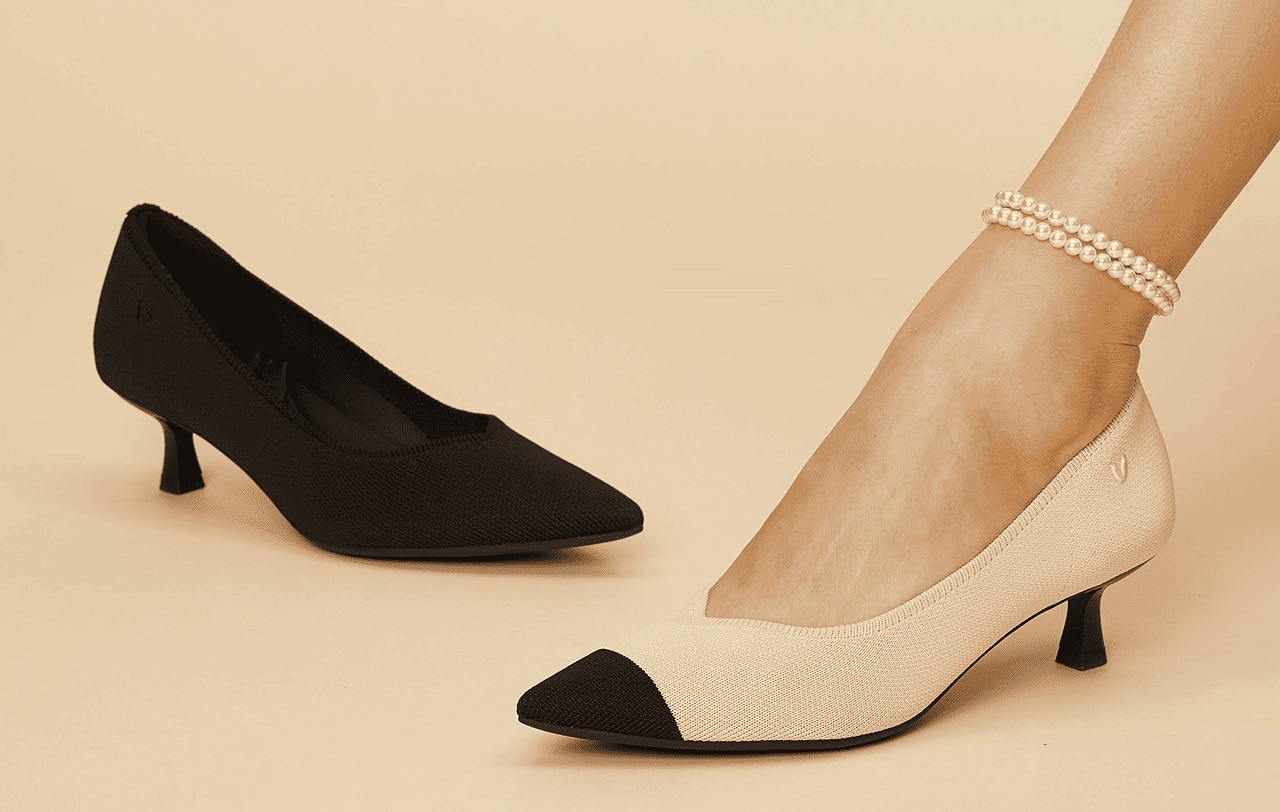
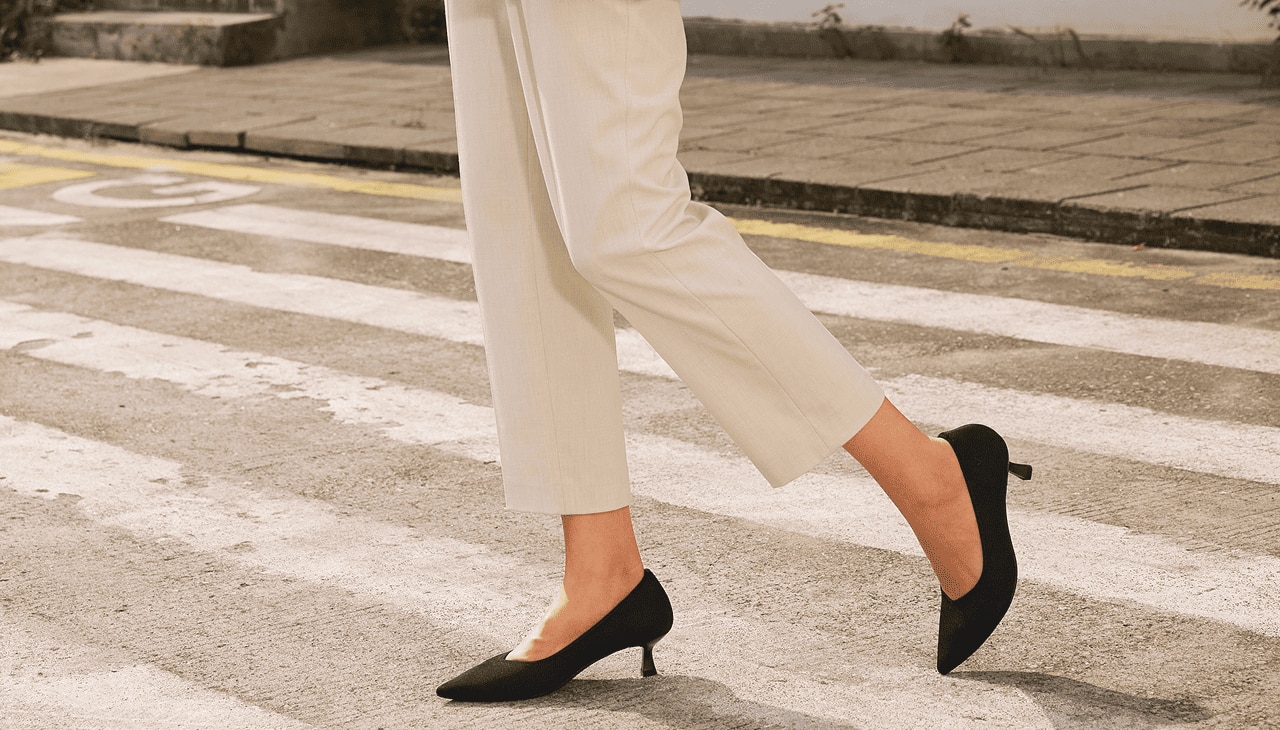
Pair a pointed-toe kitten heel in black or nude with cropped straight-leg trousers and a relaxed silk blouse, half-tucked. Match the shoe color to the trouser color for the longest visual leg line. A nude shoe with any trouser color also creates a smooth transition at the ankle.
The VIVAIA Scarlett pointed-toe kitten heel (1.75 inches, knit upper with arch support, machine washable) fits this formula well. The knit upper is made from recycled plastic bottles.
Look 2: Spring Date or Smart Social
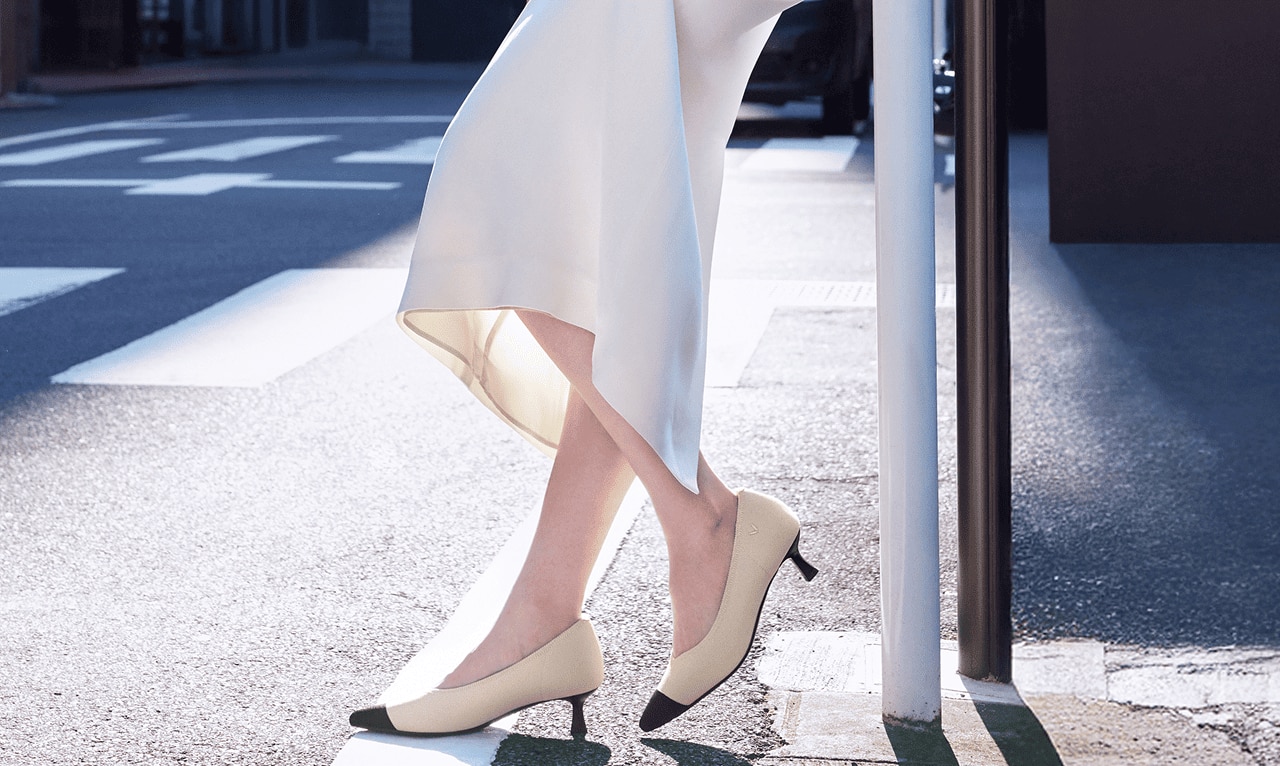
Start with a midi dress or knee-length A-line skirt in a light fabric. Add a white or cream kitten heel at 1 to 1.5 inches. Keep accessories minimal: a small structured handbag or chain bag.
A kitten heel gives a flowing dress a sense of visual lift that a flat shoe cannot provide. White or cream heels maximize the effect by creating a clean transition from skin to skirt. Kitten heels paired with dresses are among the highest-frequency combinations in 2026 street style for exactly this reason.
Look 3: Travel Upgrade
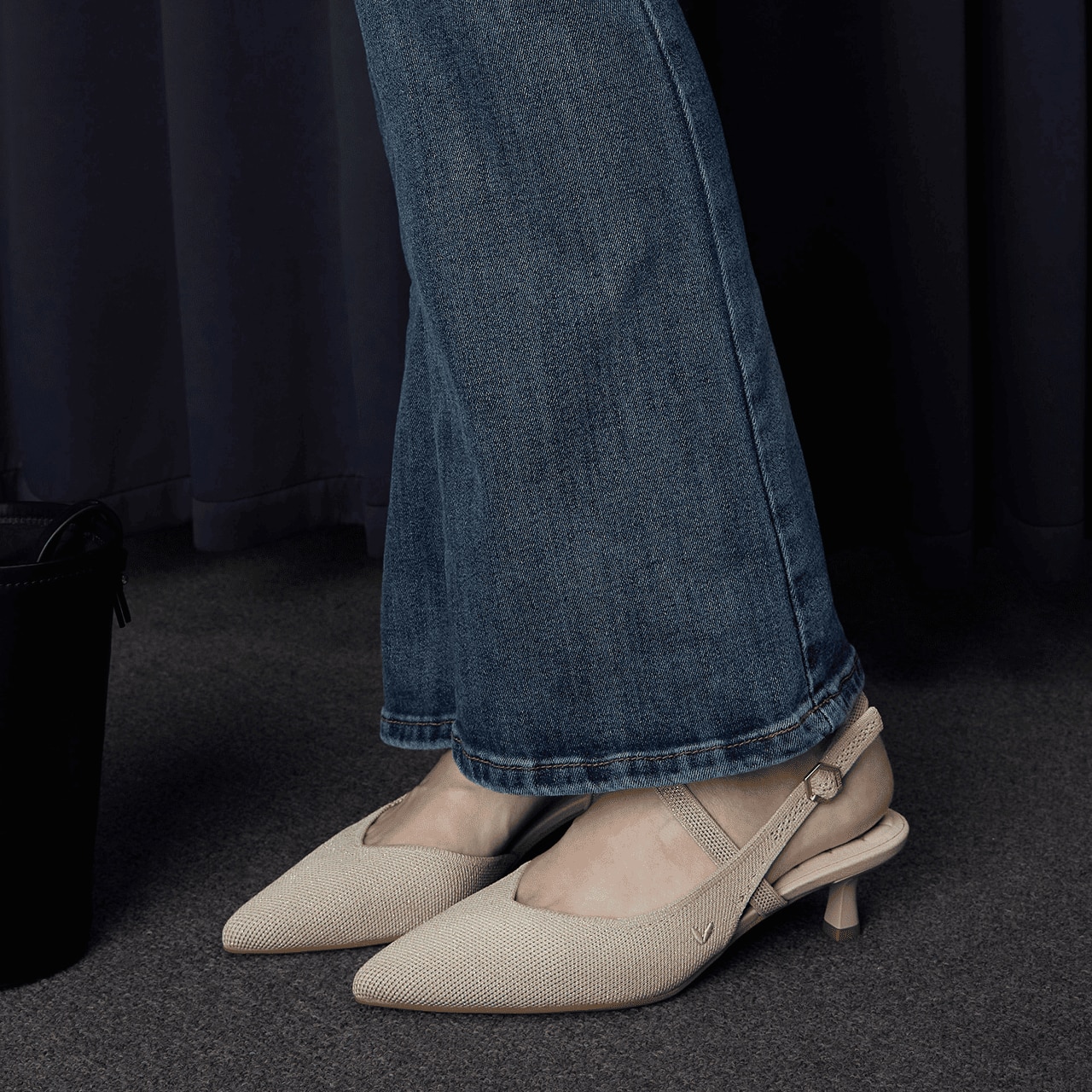
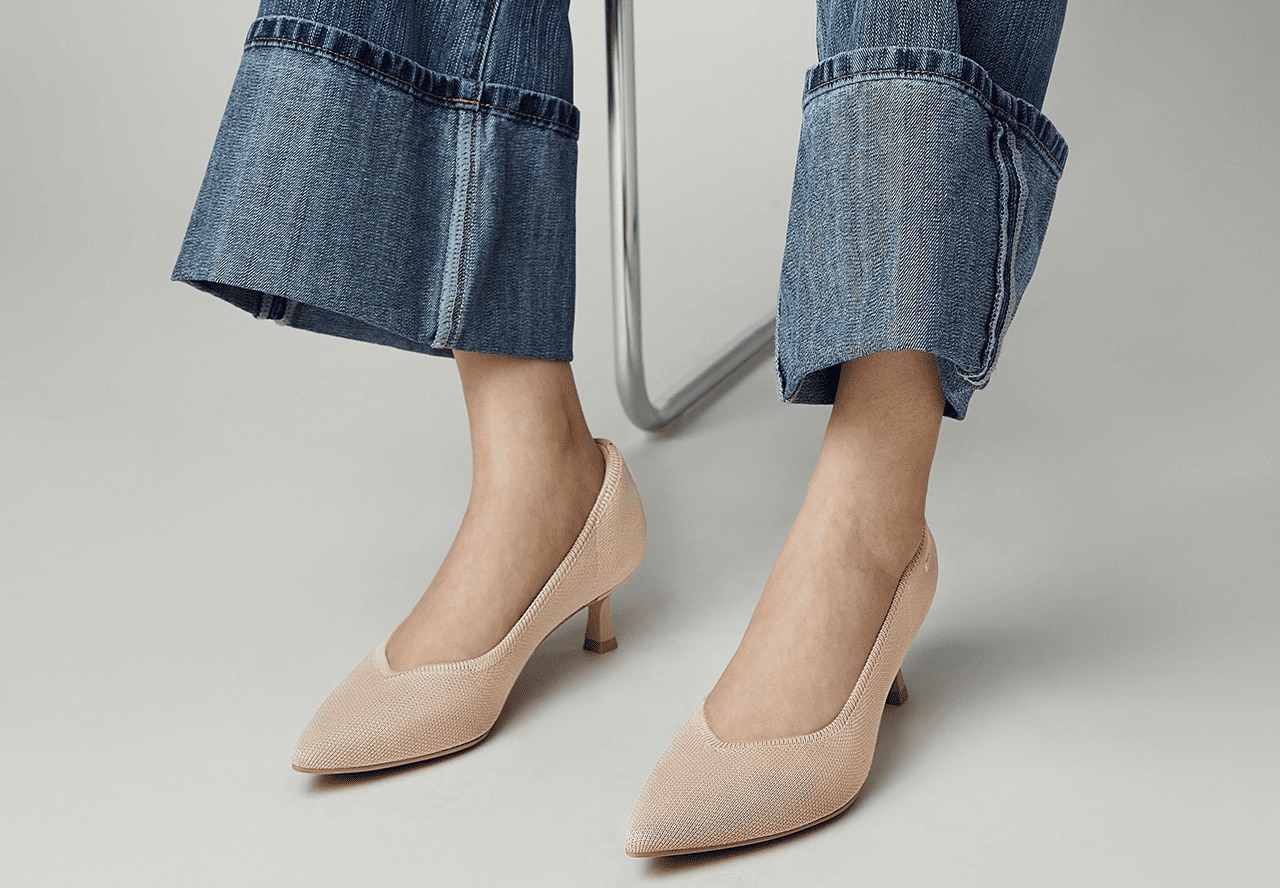
Wide-leg linen trousers (hemmed above the inner ankle) or a long printed skirt, paired with a relaxed cotton or linen top. A nude or light tan kitten heel slingback, no taller than 1.5 inches, completes the outfit.
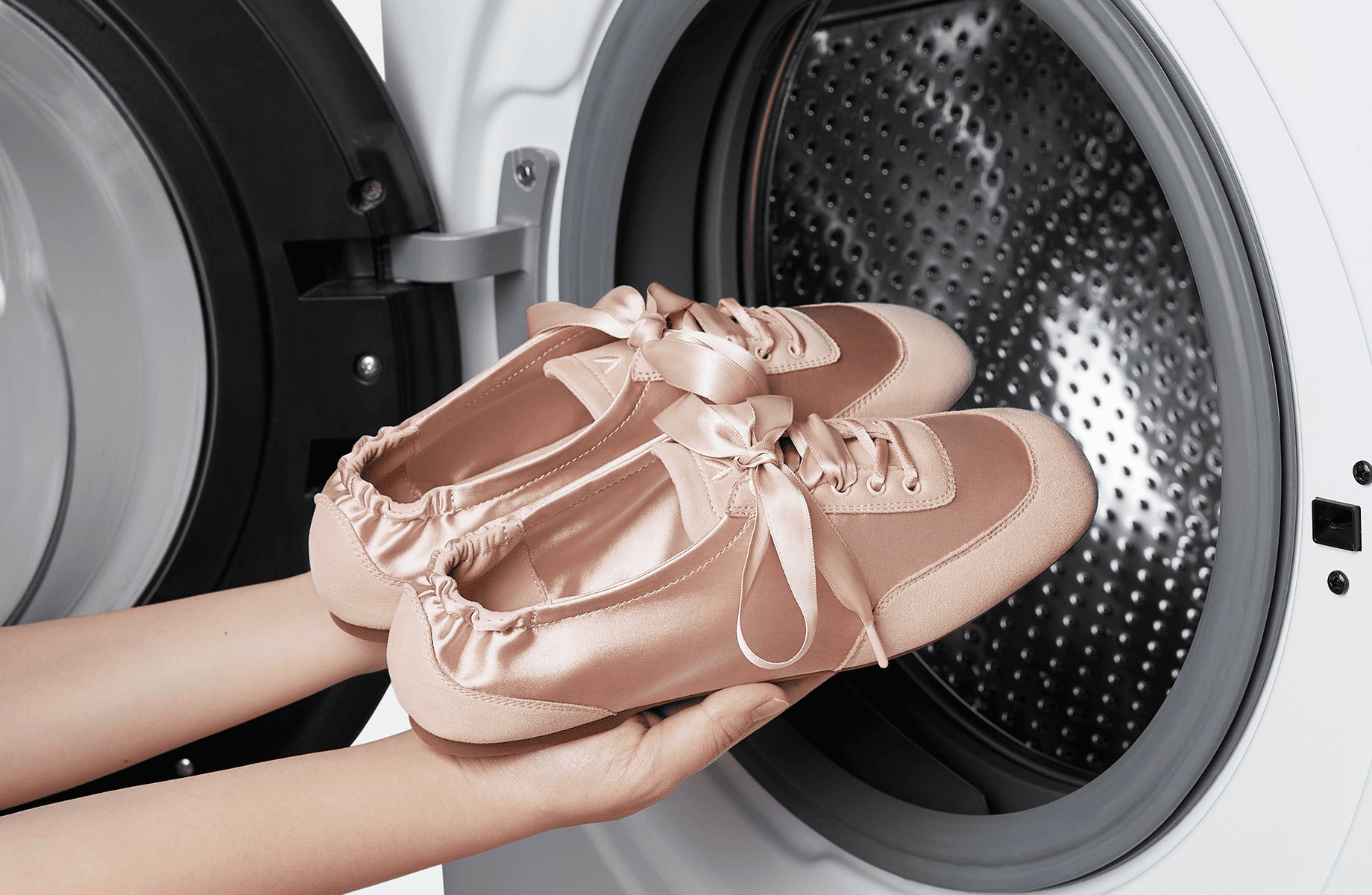
A kitten heel slingback solves the travel packing question: refined enough for a nice dinner, comfortable enough to walk 2 miles. Machine-washable styles add extra travel value. If your shoes get caught in rain or pick up dust, a wash cycle brings them back to clean.
Find Your Kitten Heel
Kitten heels solve a real problem: the desire for polish without the physical cost of a tall heel. Their 2026 return is driven by practical shifts in how women dress, not by short-lived runway novelty. A refined silhouette, true all-day comfort, and cross-occasion versatility make them worth a spot in any shoe rotation. VIVAIA's kitten heel collection, including the Scarlett and Sasha, pairs that comfort with arch support, recycled materials, and washable convenience.
FAQs
Q1: Are kitten heels good for wide feet or bunions?
Yes. Kitten heels put far less pressure on the forefoot than stilettos, making them a better option for wide feet and bunions. Prioritize a square or round toe shape over a narrow pointed toe, and look for knit or soft uppers that flex with foot width rather than pressing against it.
Q2: Can you wear kitten heels on cobblestones or uneven ground?
With some care. Ultra-thin heels can catch in stone gaps. Choose a kitten heel with a base diameter of at least ¼ inch, and opt for slingback styles that secure the heel and reduce shifting on uneven surfaces.
Q3: What is the most flattering kitten heel height for petite women?
For women 5'1" and under, 1.4 to 2 inches gives the strongest leg-lengthening effect while staying in the comfortable kitten heel range. Matching shoe color to trouser or skirt color extends the visual leg line further.
Q4: How do you keep kitten heels from slipping off while walking?
Choose a slingback style with an adjustable strap for the most secure fit. For closed-back kitten heels, adhesive heel grip pads (available at most drugstores) prevent slipping. Heel slippage usually comes from a last-width mismatch, not incorrect sizing, so try a narrower width if available.


© VIVAIA All Rights ReservedTerms of Service - Privacy Policy -