













Common Heel Pain Conditions and Their Diagnosis
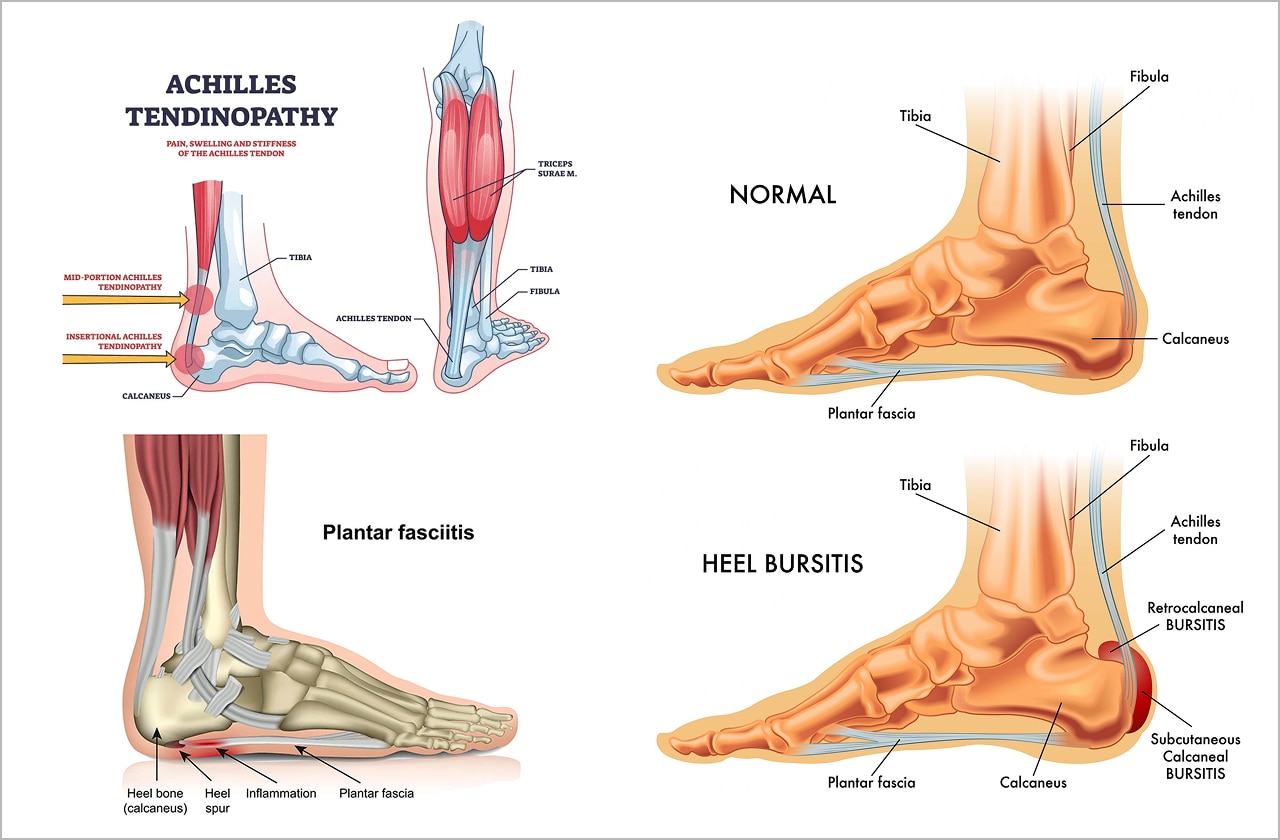
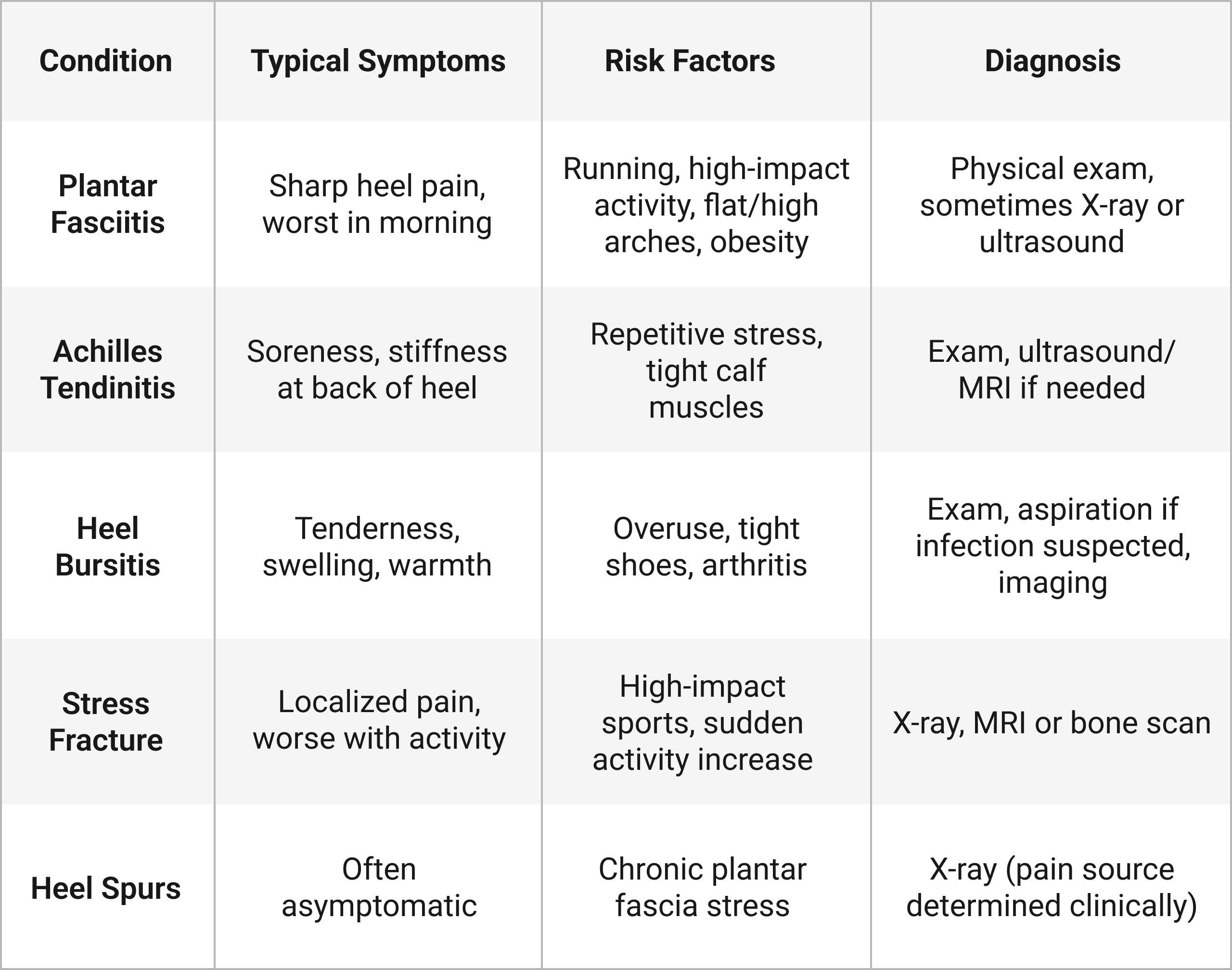
Heel pain is not a single disease but a symptom with many potential causes. Because each condition requires a different approach, an accurate clinical examination—and imaging when necessary—is essential for guiding appropriate treatment.
Treatment of Heel Pain
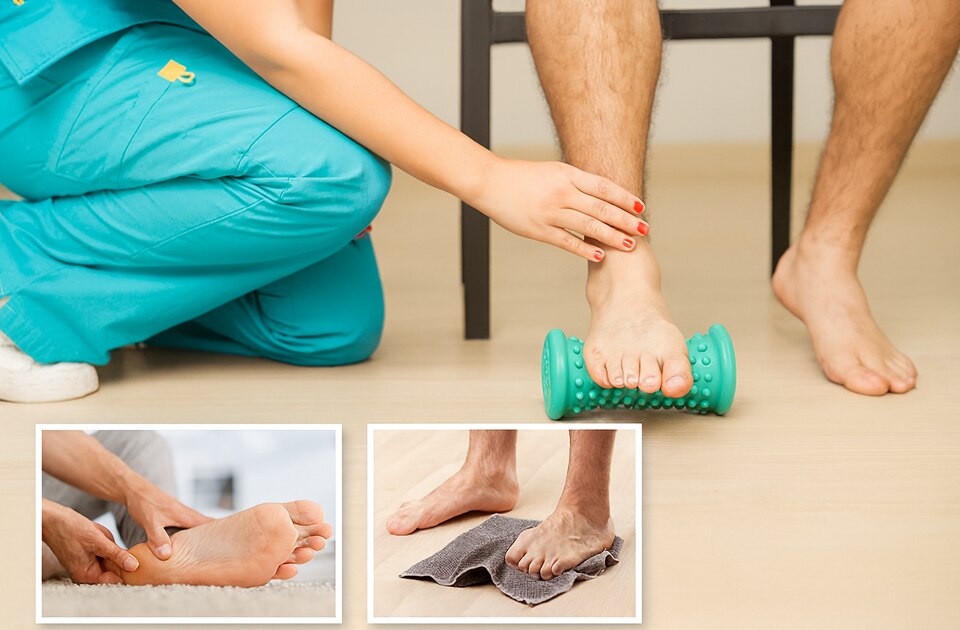
Most heel pain improves with non-surgical care, including:
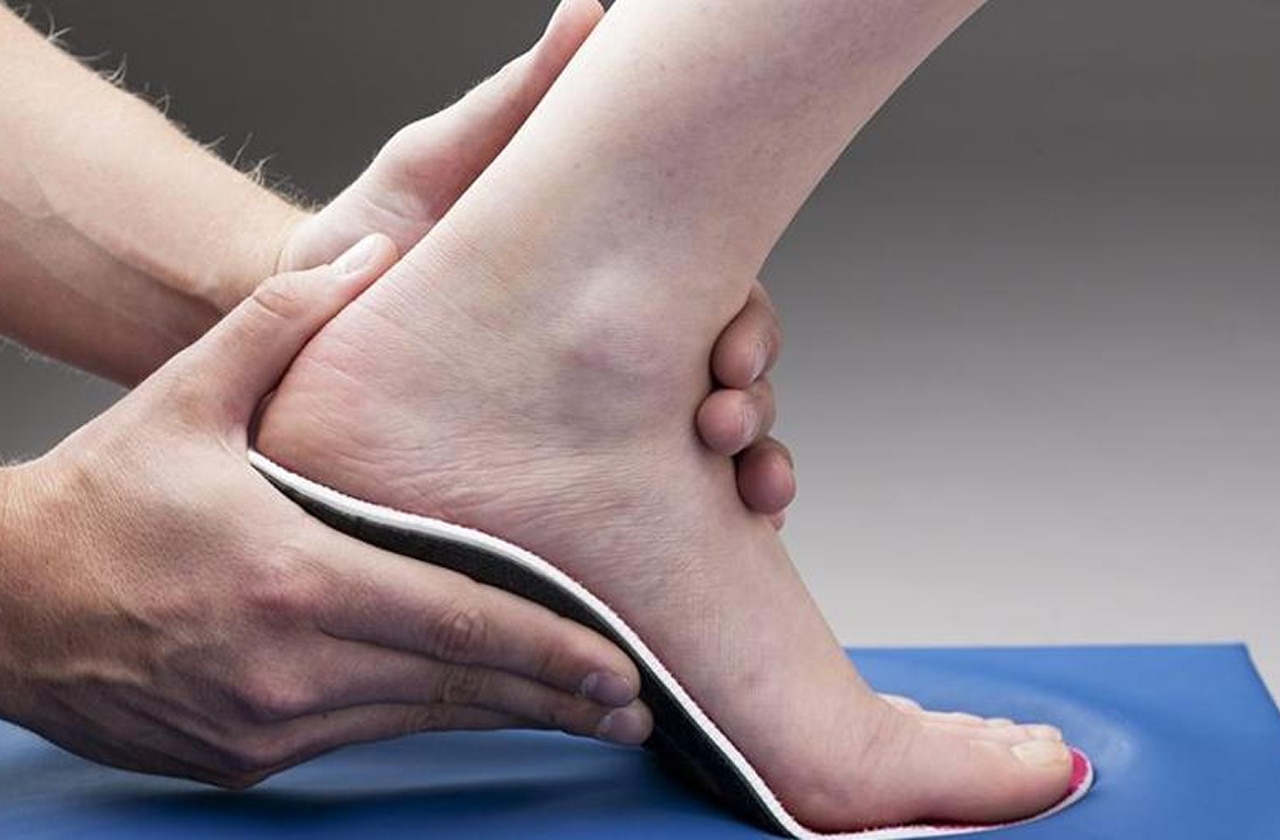
Rest and activity modification: Avoid high-impact activities temporarily.Stretching exercises: Focus on plantar fascia, Achilles tendon, and calf muscles.Footwear and orthotics: Supportive shoes or custom inserts.Ice therapy: Reduce inflammation and pain.Pain medication: NSAIDs for temporary relief.Physical therapy: Manual therapy, strengthening, and sometimes ultrasound therapy.Night splints: Keep plantar fascia and Achilles tendon stretched during sleep.Shockwave therapy or minimally invasive procedures: For chronic cases not responding to conservative care[1][2][3][4][5].When Surgery May Be Considered
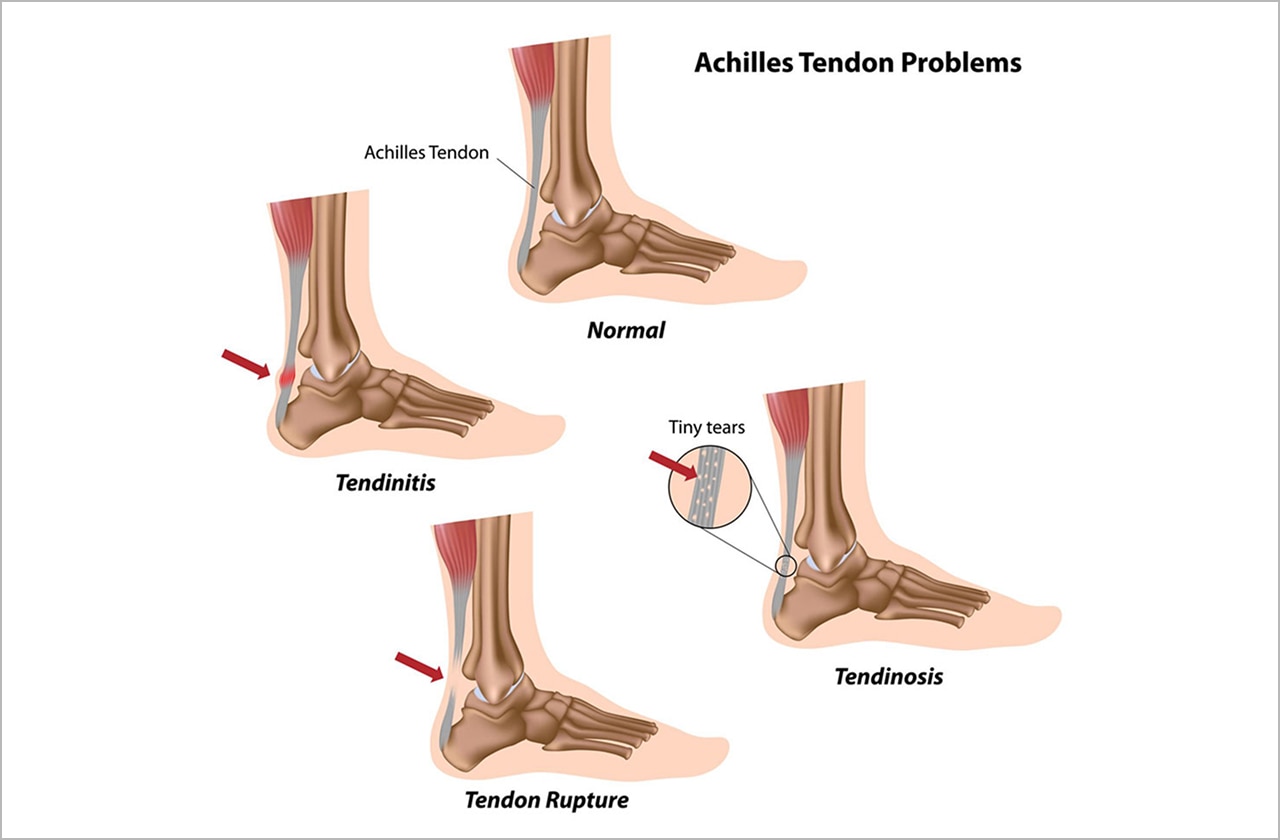
Surgery is considered when either the diagnosis requires it (for example a displaced calcaneal fracture or a high-grade Achilles rupture in some patients) or when persistent, disabling symptoms have not responded to appropriate non-surgical treatment. Typical scenarios include:
1. Recalcitrant plantar fasciitis
Most surgeons consider surgery only after 6–12 months of well-directed non-operative care and when pain still prevents normal activities. Options include plantar fascia release (open, endoscopic or percutaneous) or removal of local impinging tissue.
2. Acute, complete Achilles tendon rupture
Operative repair can lower the risk of re-rupture compared with nonoperative care, but it raises the risk of surgical complications (wound problems, nerve injury). The decision is individualized: surgery is often chosen for younger, athletic patients or those seeking a faster/stronger return to high-demand activities; non-operative functional rehabilitation is an established alternative.
3. Structural or mechanical lesions that will not respond to conservative care
Bisplaced fractures of the calcaneus, painful Haglund deformity with bursitis unresponsive to injections/therapy, or neuromas/nerve entrapment causing heel pain may require targeted surgical procedures.



Heel Pain FAQs
1. How long should I try conservative treatment before considering surgery?
6–12 months of consistent non-surgical treatment is typically recommended[1][2][3].
2. Are heel spurs the cause of pain?
Not usually. Many people have heel spurs without experiencing pain[1][2].
3. Can I still exercise with heel pain?
Low-impact activities like swimming or cycling are usually safe; high-impact activities should be limited until symptoms improve.
4. When should I see a doctor?
Seek evaluation if pain persists beyond 2–3 weeks, worsens, or interferes with walking or daily activities.
5. Can heel pain become chronic if untreated?
Yes, ignoring heel pain can lead to chronic issues, altered gait, and additional musculoskeletal problems[3][5].
References
1. Mayo Clinic. (2024). Plantar fasciitis: Diagnosis & treatment.
2. Mayo Clinic. (2024). Plantar fasciitis: Symptoms and causes. 3. Cleveland Clinic. (2024). Heel pain. 4. Johns Hopkins Medicine. (2024). Plantar fasciitis. 5. Cleveland Clinic. (2024). Heel bursitis.


© VIVAIA All Rights ReservedTerms of Service - Privacy Policy -