










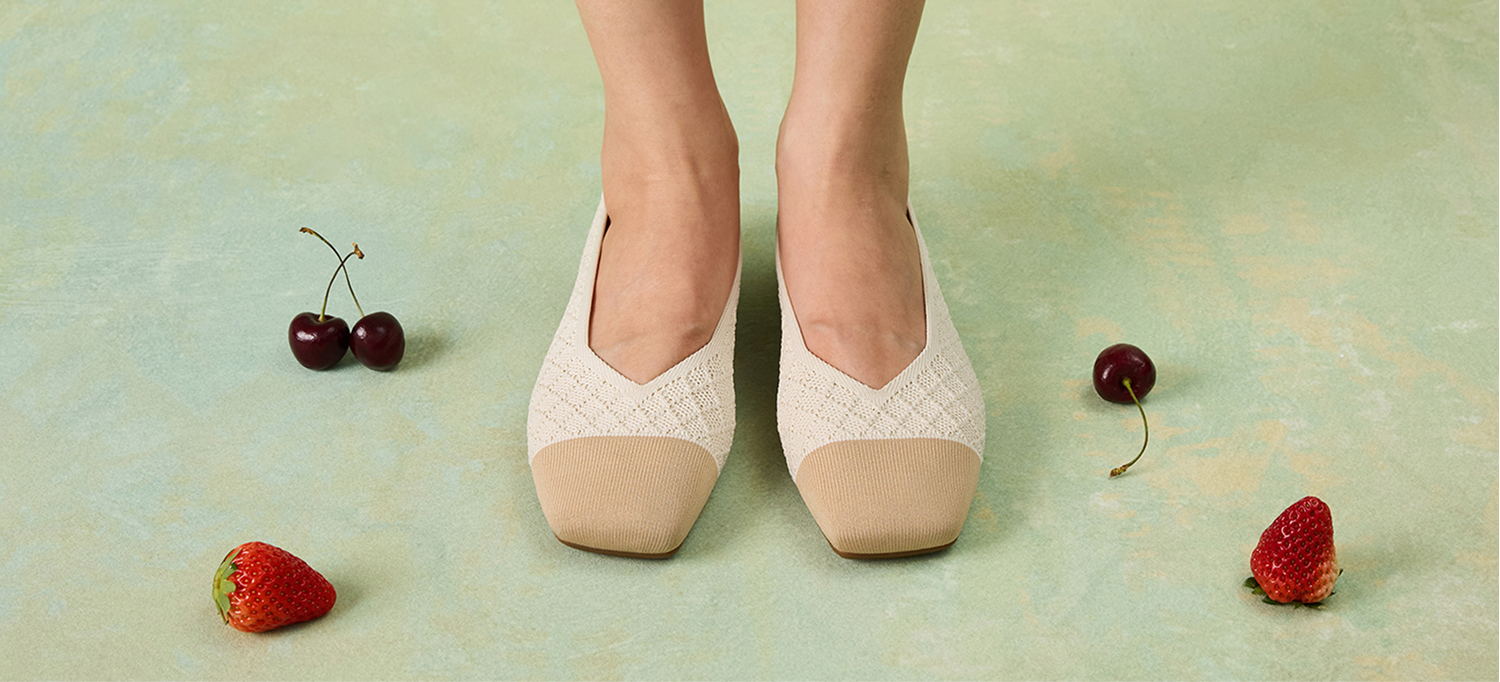
Quick Comparison: Knit Flats vs Leather Flats
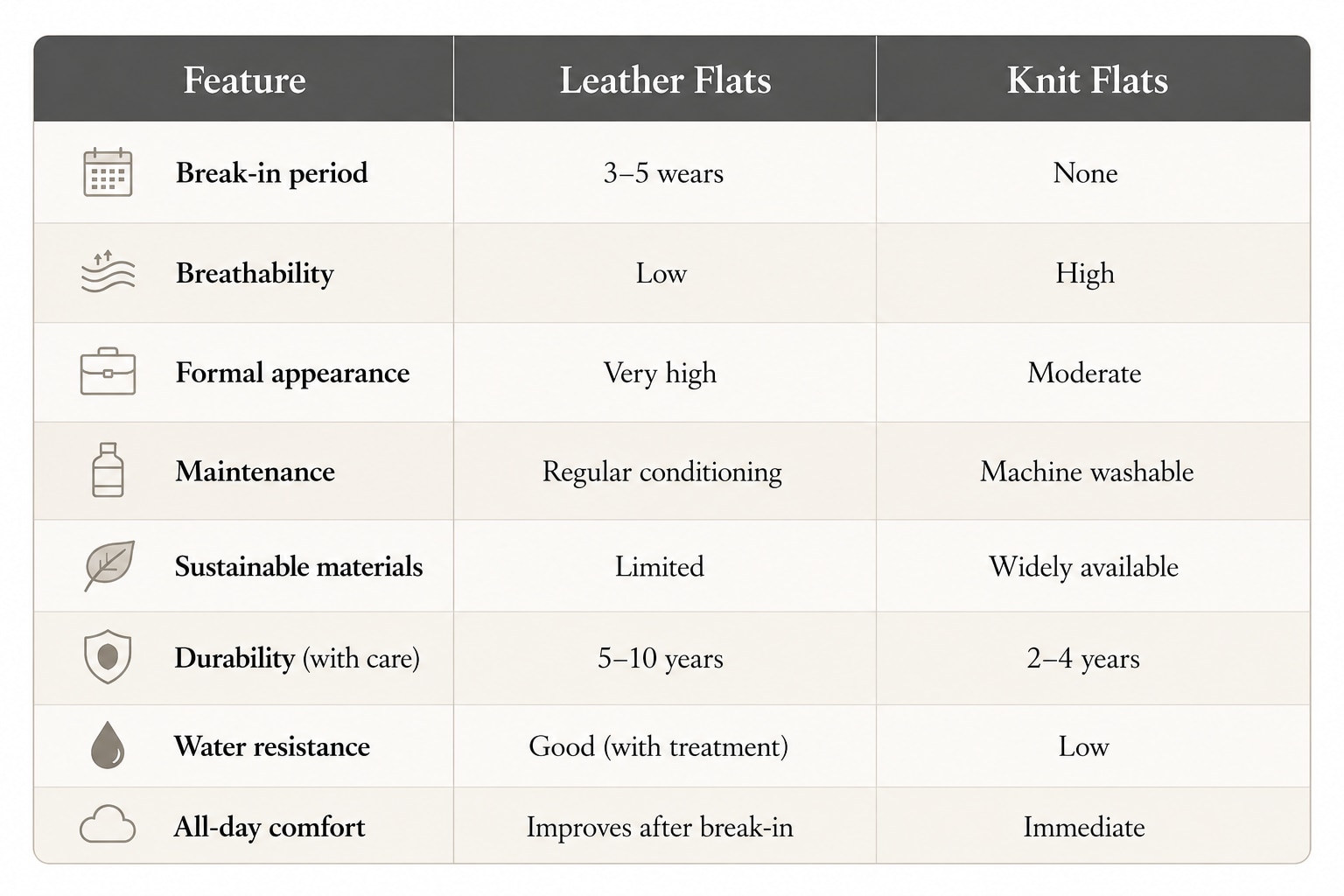
What Do You Actually Get With a Leather Flat?
Leather Advantages
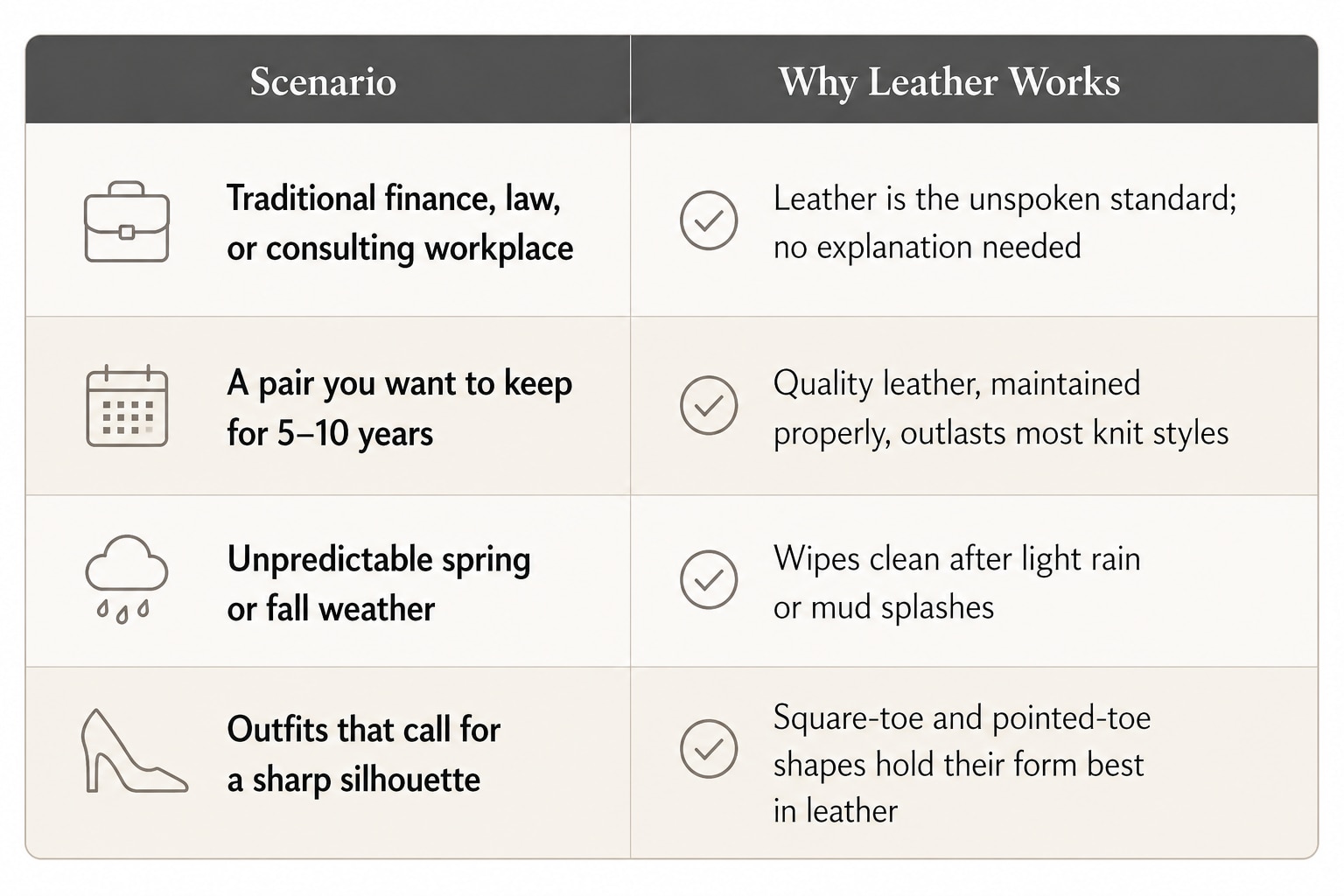
Shape memory. Leather gradually molds to your foot over the first few wears. The fit becomes precise and stays that way. Full-grain leather also develops a patina over time that knit and synthetics don't replicate.
Visual formality. In finance offices, law firms, or formal dinners, leather reads more polished than knit. In those specific environments, it's the material that requires no explanation. For a practical guide to office-ready styles, the comfortable work shoes guide covers both leather and knit options by setting.
Stain and weather resistance. With a waterproofing treatment applied, leather handles light rain and surface scuffs with a quick wipe. No full wash needed.
Leather Drawbacks
Break-in friction is real. New leather causes friction at the ankle, toes, and instep for the first 3–5 wears. That's the material, not a defect. Skip the new pair for any occasion where you'll be on your feet all day.
Heat and moisture accumulate. Leather pores are largely sealed during tanning. In warmer months or after long walks, the inside of a leather shoe gets noticeably hot and stays that way.
Upkeep has a cost. Leather needs regular conditioning, waterproofing spray, and occasional professional treatment after heavy rain or stubborn stains. That's more time and money than any fabric upper.
What Do You Actually Get With a Knit Flat?
Knit Advantages
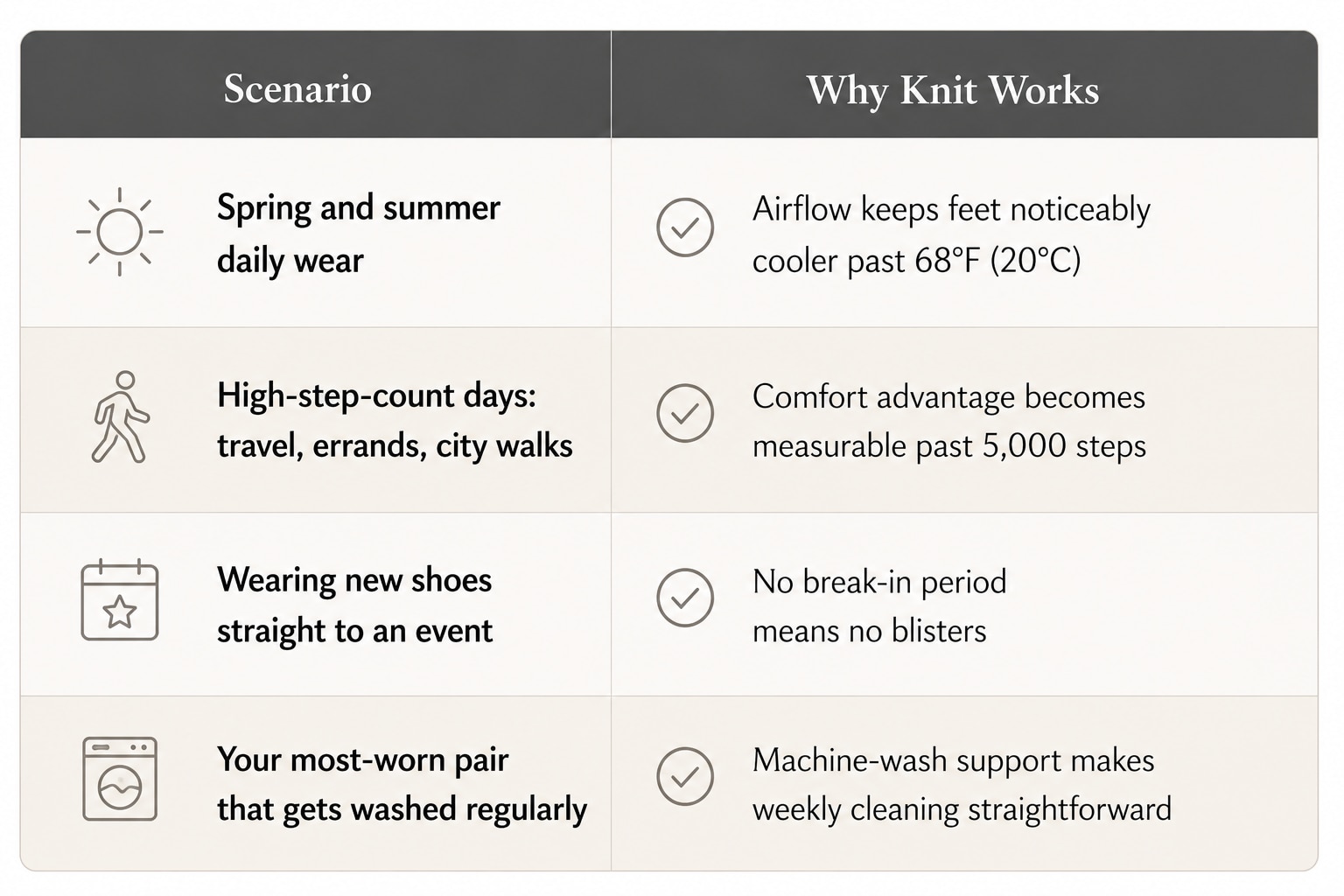
No break-in period. Knit adapts to your foot from the first wear. No stiff phase, no blisters. If you need to wear new shoes to a wedding, an interview, or a first day at work, knit is the lower-risk option.
Stays cooler throughout the day. Micro-gaps between knit fibers allow continuous airflow. Heat builds up much more slowly than inside a closed leather upper. Podiatric health professionals identify breathable uppers as a key factor in reducing foot swelling during extended wear.
Machine washable. Mesh laundry bag, cold gentle cycle, air dry. Leather cannot be cleaned this way under any circumstances.
Lower production waste. Knit uppers are formed directly through weaving, so almost no material is wasted in production. Recycled fibers like metaREPREVE, made from post-consumer plastic bottles, offer traceable sustainability credentials.
Knit Drawbacks
Less formal at a glance. In very traditional settings, knit reads as less polished than leather. That gap is narrowing, but it's still a real consideration for 2026.
Fiber quality determines how long it lasts. Low-grade knit uppers pill, stretch, and fray after repeated wear. High-quality synthetic-fiber knit holds up comparably to mid-range leather. The difference is in the fiber, not the construction method.
When Is Leather the Better Pick?
When Is Knit the Better Pick?
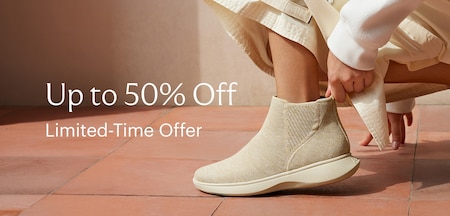
VIVAIA's Margot 3.0 is worth noting here: Eco-Knit upper, machine-wash support, APMA acceptance, and an Artemisia arch support insole for all-day wear.
Do You Need to Choose? Here's How Both Fit Your Wardrobe
The two materials fill different slots in a wardrobe, and most people end up using both.
Leather flats cover formal and investment wear. One or two pairs in neutral colors handle the occasions where the material matters visually. Buy fewer, buy better.
Knit flats cover daily and high-frequency wear. The pair you reach for most, wear longest, and clean most often. In this slot, breathability and easy maintenance matter more than visual formality.
Two scenarios worth considering:
● If your wardrobe is all leather, one quality knit pair added as a commuter shoe will likely become your most-reached-for flat from March through September.
● If your wardrobe is all knit, one quality leather pair covers the formal occasions where knit isn't quite enough yet.
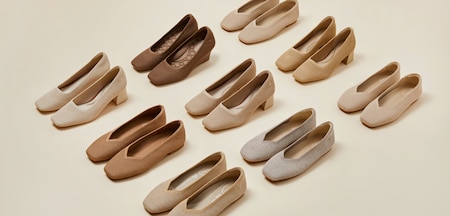
VIVAIA's knit flat collection is designed for high-frequency, everyday wear: breathable, washable, and APMA-accepted.
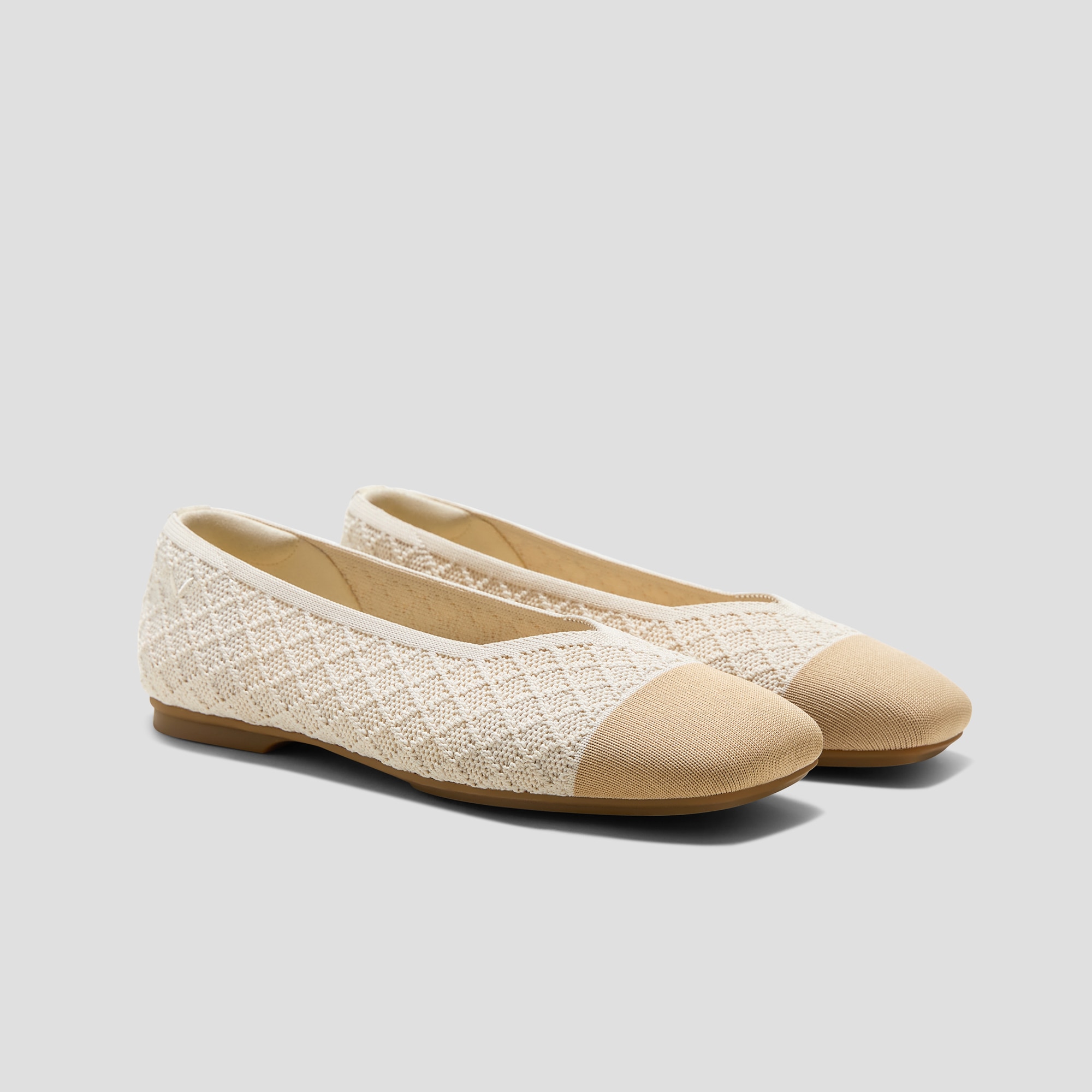
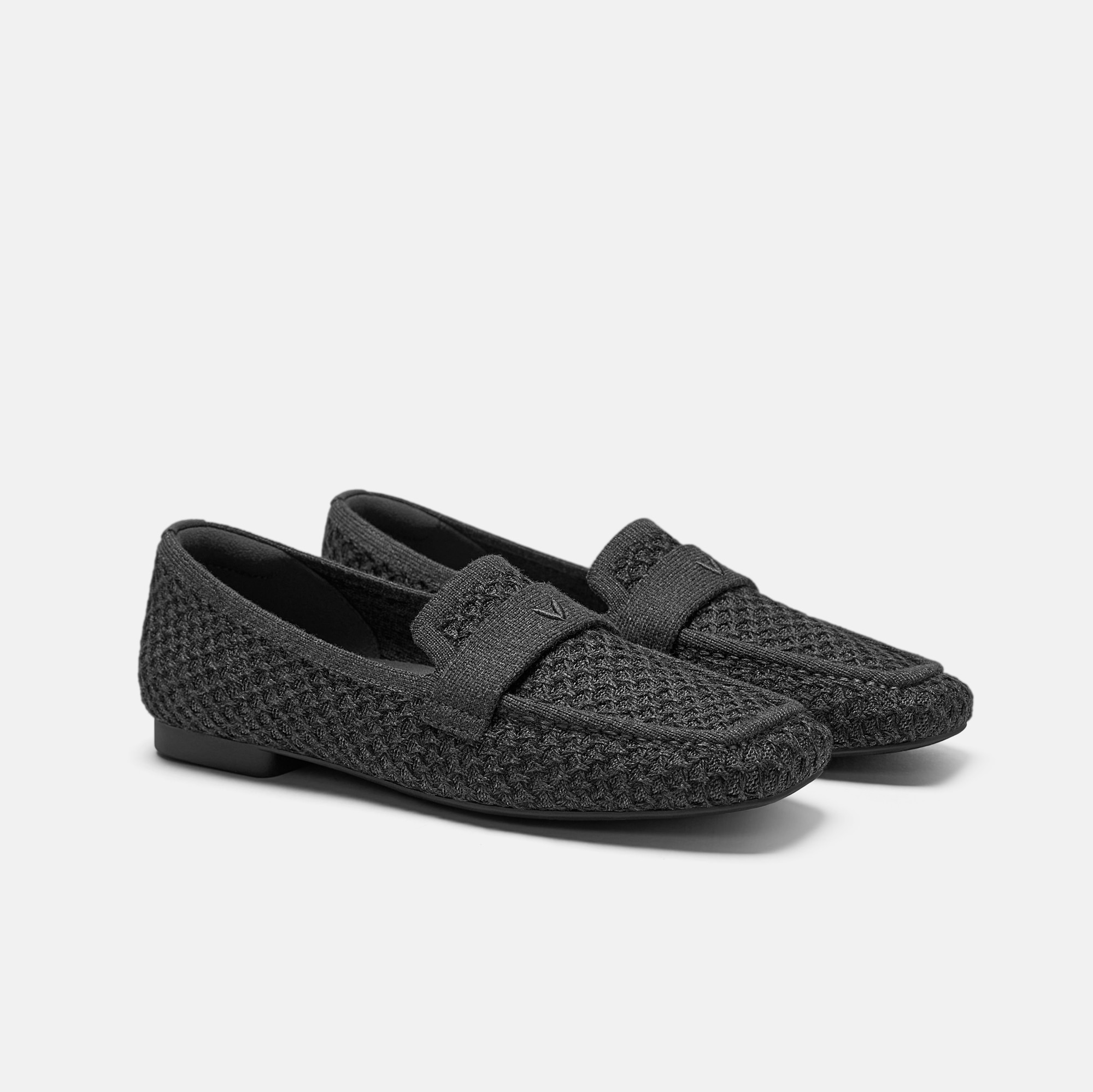
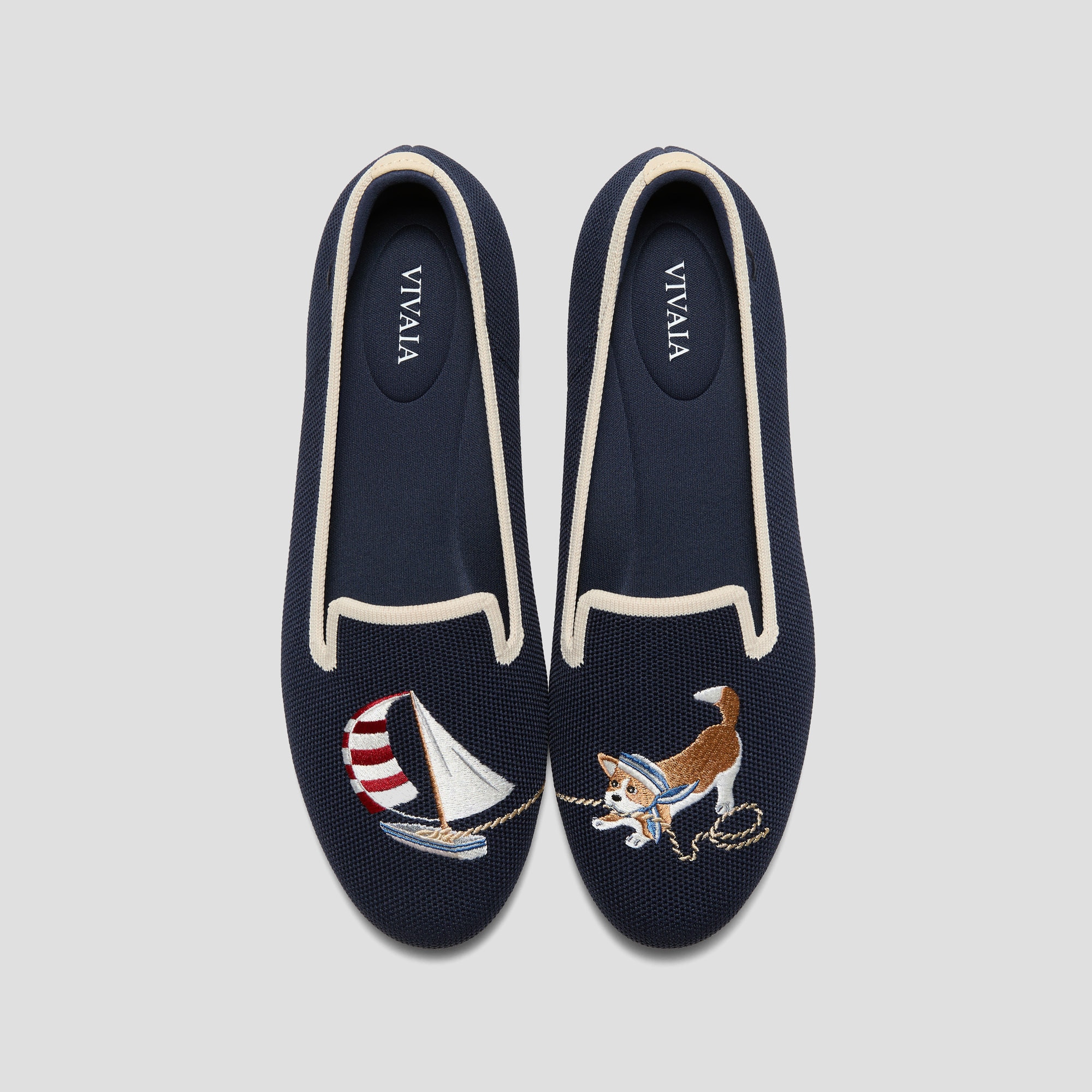

Find Your Next Everyday Flat
Leather and knit aren't competing for the same slot: leather covers formality and longevity, knit covers daily comfort, breathability, and easy upkeep. Most wardrobes work better with both. If you're ready to add a knit flat that holds up to daily wear, VIVAIA's flats collection is a good place to start.
FAQs
Q1: Do Knit Shoes Last as Long as Leather Shoes?
Not quite. Quality leather flats last 5–10 years with proper conditioning; quality knit flats using fibers like REPREVE typically hold up 2–4 years under daily wear. Worn leather can be repaired and polished; a pilled or misshapen knit upper usually can't be restored.
Q2: Can Knit Shoes Get Wet?
It depends on the style. Most knit flats are not waterproof — water passes through fiber gaps quickly, though knit dries faster than leather for the same reason. For light rain, a standard knit flat works just fine.
If you need more protection, we offer two levels of water defense: water-repellent styles that shed light moisture and splashes, and fully waterproof shoes built to handle wet conditions head-on.Q3: Are Knit Shoes Professional Enough for the Office?
Yes, for most workplaces. Tech, media, and business-casual environments accept knit flats, especially structured styles like square-toe or Mary Jane silhouettes. Traditional finance or law offices are where leather is the lower-risk visual call.
Q4: Is Vegan Leather More Sustainable Than Knit?
They address sustainability differently. Plant-based alternatives like cactus or mycelium leather have raw-material advantages, though durability varies. Recycled polyester knit like REPREVE offers traceable sourcing, near-zero production waste, and proven durability at scale. Trimco Group's analysis of recycled polyester confirms that REPREVE reduces greenhouse gas emissions and diverts plastic waste from landfill at a measurable scale.



© VIVAIA All Rights ReservedTerms of Service - Privacy Policy -