







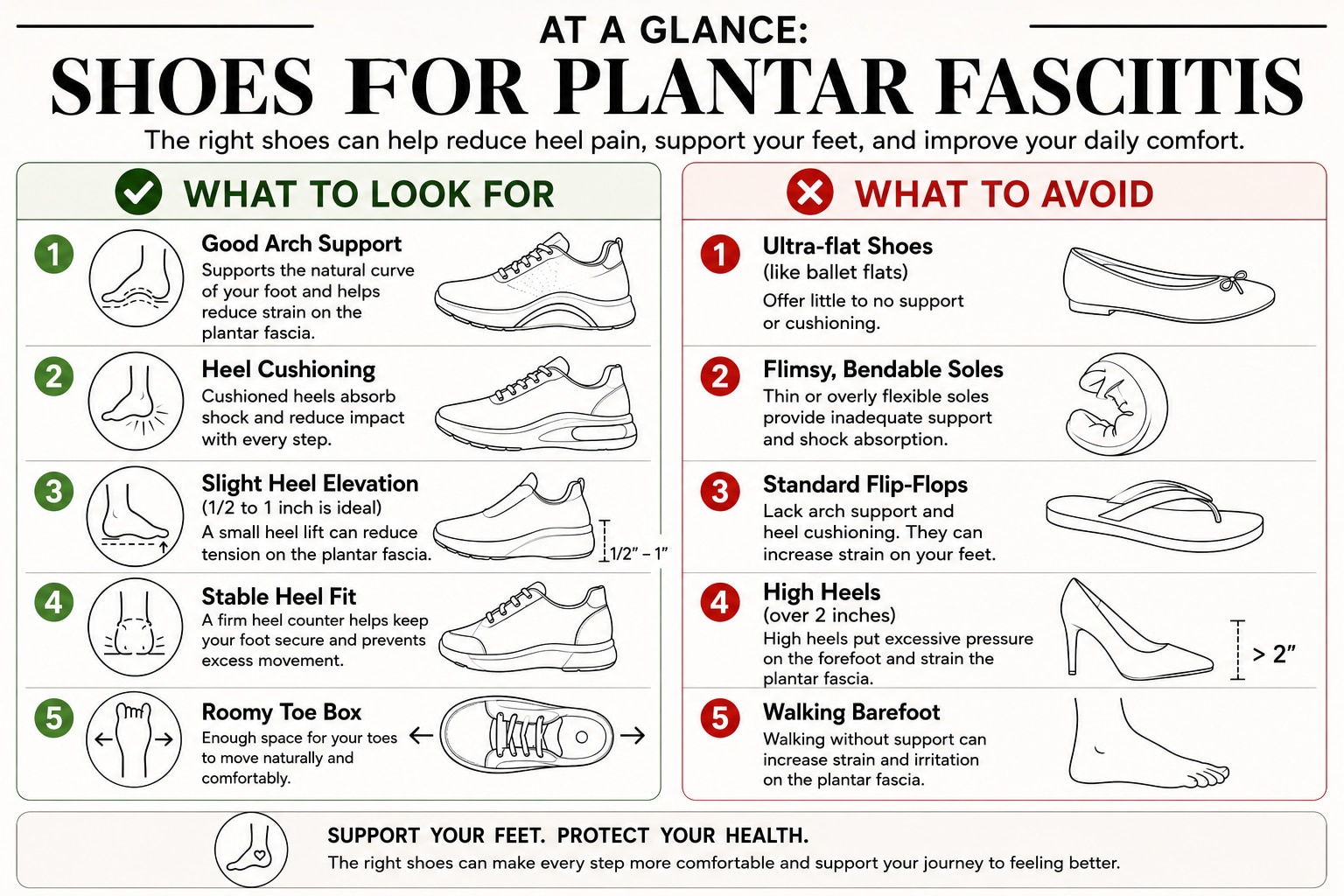
At a Glance: Shoes for Plantar Fasciitis
What You Need
● Good arch support
● Heel cushioning
● Slight heel elevation (1/2 to 1 inch is ideal).
● Stable heel fit
● Roomy toe box
What to Avoid
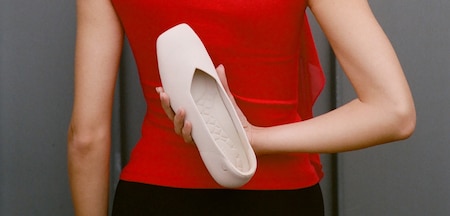
● Ultra-flat shoes (like ballet flats)
● Flimsy, bendable soles
● Standard flip-flops
● High heels (over 2 inches)
● Walking barefoot
What Plantar Fasciitis Does to Your Feet
What Is It?
The plantar fascia is a thick band of tissue under your foot that acts like a shock absorber. When it gets overworked or strained, it tears slightly and becomes inflamed.
Who Gets It?
According to the American Academy of Family Physicians (AAFP), about 10% of people get it during their lifetime, and it is most common in women between 40 and 60.
The Pain Pattern
● Mornings: Sharp pain during your first steps out of bed (the tissue tightens overnight).
● After Resting: Sharp pain when standing up after sitting for a long time.
● Late Afternoon: The sharp pain turns into a dull, steady ache.
The Takeaway for Shoes
Your shoes must provide constant support to ease tissue tension all day long, not just when your feet actively hurt.
What Plantar Fasciitis Needs From Your Shoes
Arch Support
Arch support reduces how far the plantar fascia stretches with every step.
Flat feet and high arches both increase fascia tension without support. Good arch support is a contoured shape matching the foot's natural curve.
A flat insole, on the other hand, no matter how soft, does not provide this.
Dr. Pamela Mehta emphasizes this point:
"Also good heel support is really good as well. Flat shoes ... are not gonna give you a lot of heel support or arch support" (Mayo Clinic).
Heel Cushioning
The heel strike is the highest-impact moment in your stride. A cushioning layer at the heel absorbs that force so the inflamed fascia doesn't take the full hit. EVA foam or PU foam provides real energy return. A thick rubber sole looks substantial but offers almost zero shock absorption.
Heel Stability
When your heel shifts inside the shoe, it creates sideways pull on the plantar fascia. A snug heel counter, padded heel lining, or slingback strap all reduce this movement and protect the inflamed tissue.
Slight Heel Elevation
A completely flat shoe holds the plantar fascia at its maximum stretch position. A small heel rise of 1/2 to 1 inch relaxes the fascia slightly and reduces standing tension.
Many podiatrists recommend avoiding ultra-flat ballet flats for plantar fasciitis, and suggest shoes with a modest drop from heel to toe.


What Makes Plantar Fasciitis Worse
● Ultra-thin soles (under 5 mm) offer zero cushioning for heel impact.
● Completely flat, unsupported shoes maximize fascia stretch with every step.
● Narrow, pointed toe boxes shift toe alignment and change how the arch distributes weight.
Why Many Fashionable Shoes Fail Plantar Fasciitis
Soft Does Not Equal Supportive
Some shoes marketed as "comfortable" add thicker memory foam or softer linings. Softness distributes pressure across the foot, but a flat memory foam insole does nothing to support the arch. Without a contoured shape, the fascia still stretches fully at every step.
Thin Soles Look Sleek but Remove All Protection
A 3 mm sole creates the clean, minimal look fashion flats are known for. That visual decision eliminates any room for cushioning or support. Traditional ballet flats often have almost no material between your foot and the ground.
APMA Certification Is Rare in Fashion Footwear
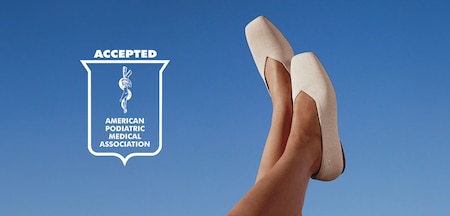
The American Podiatric Medical Association (APMA) Seal of Acceptance means a product has been reviewed by podiatrists and found to promote foot health. Some fashion brands have never pursued this certification, meaning there's no independent verification of their foot-health claims.
If you want styles that have cleared that bar, VIVAIA’s APMA Accepted Shoes collection includes styles that fit naturally into everyday wardrobes. The Square-Toe Margot V-Cut Flats (Margot 3.0) work well if you want a refined flat for commuting or daily wear, while the Walker Pro Hybrid Penny Loafers (Ivana) offer a more structured option for office and smart-casual outfits.
What to Look for Instead
A shoe that works for plantar fasciitis combines: a contoured arch insole (not flat foam), a sole with EVA or PU foam cushioning, a slight heel rise (1/2 to 1 inch), a toe box wide enough to let toes spread, and a flexible upper that doesn't creAate pressure points.
Shoe Styles for Plantar Fasciitis Without Sacrificing Style
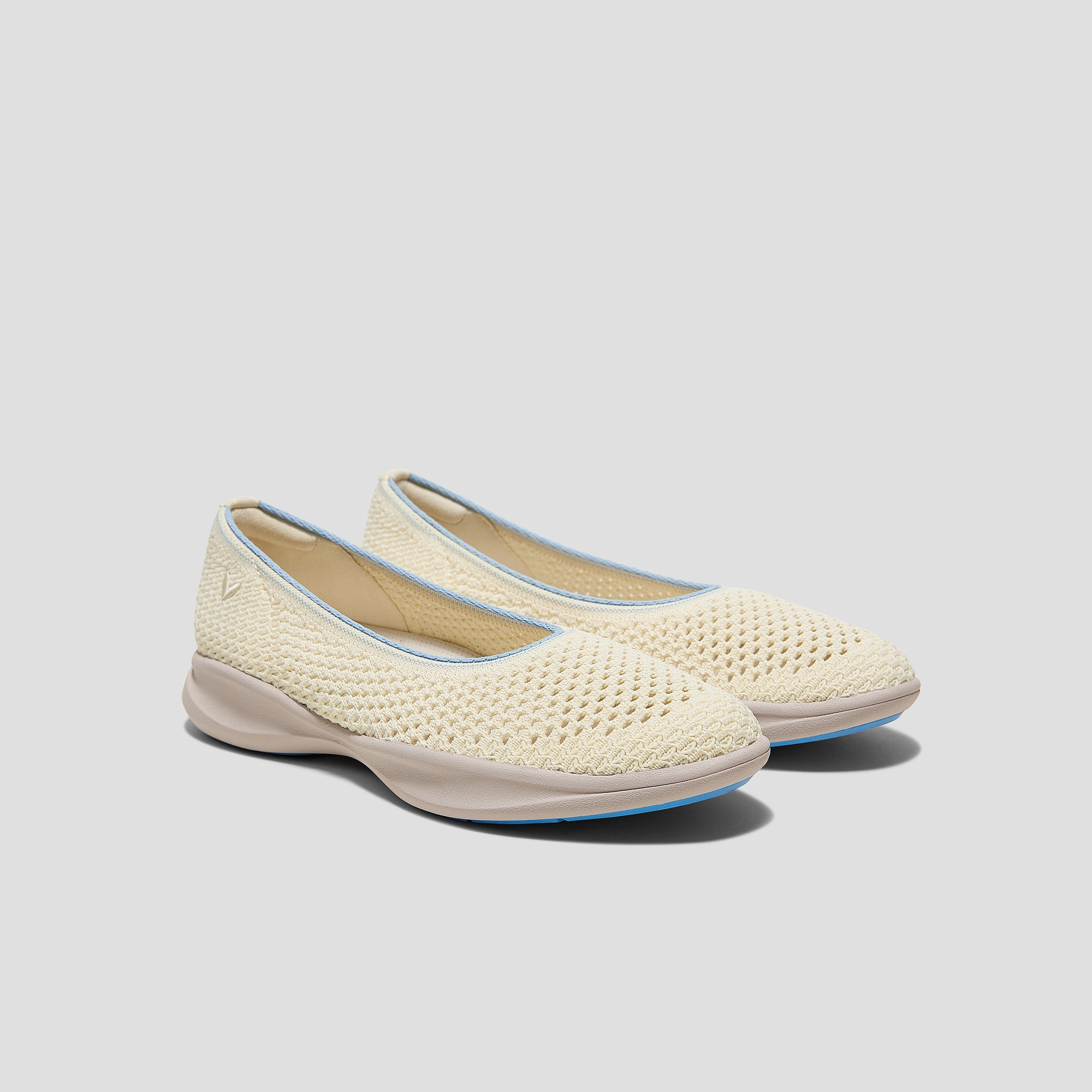
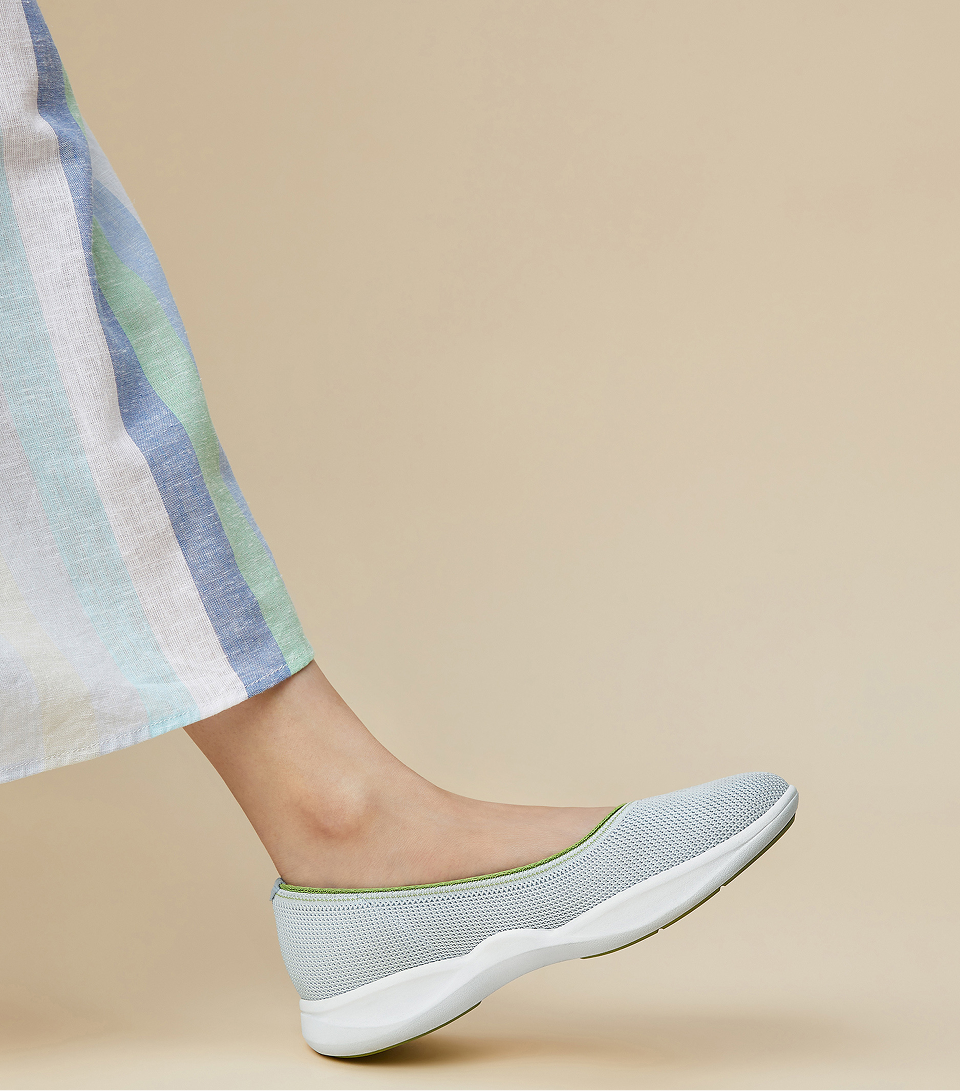
Knit Flats With Contoured Arch Support
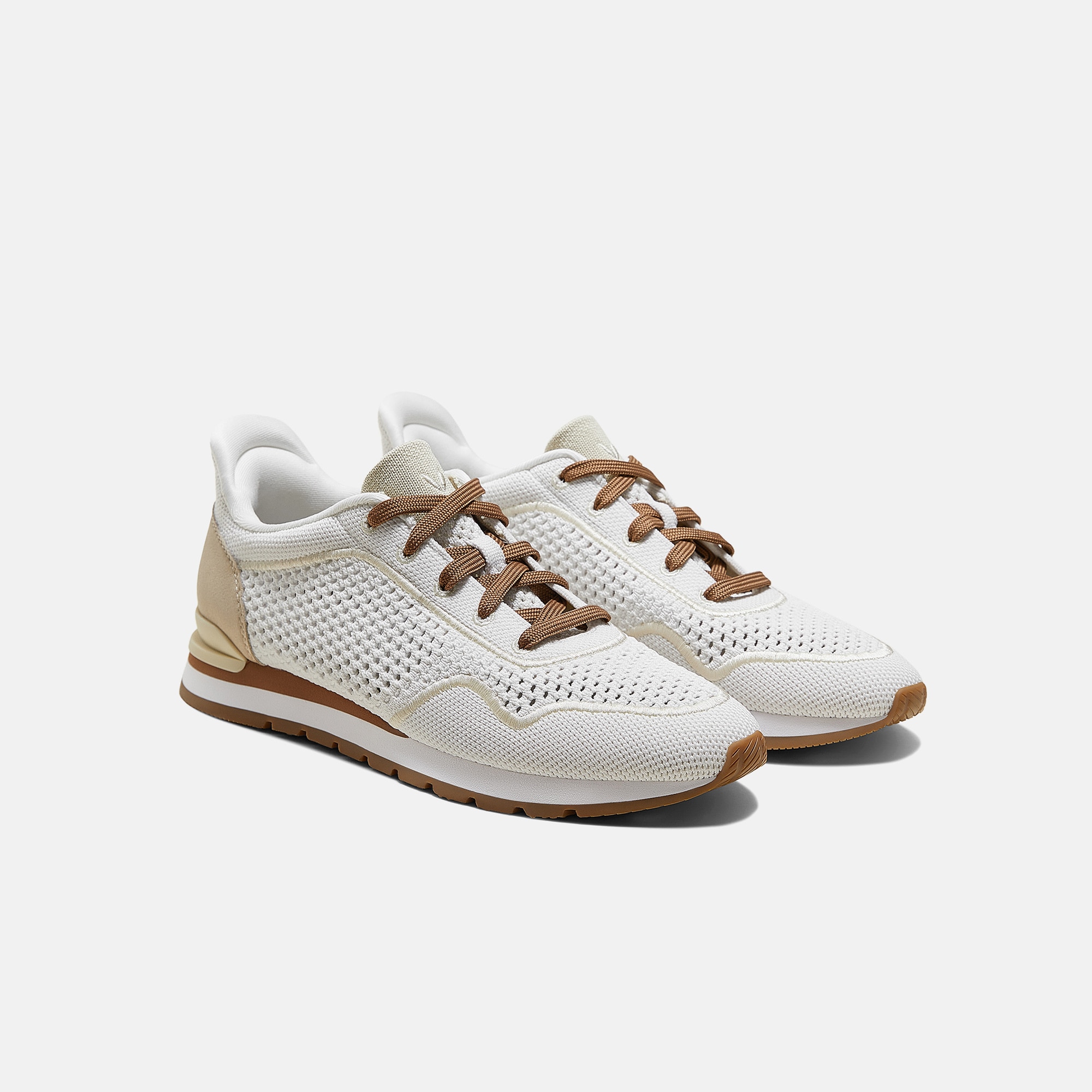
A knit flat with a structured insole is one of the most plantar-fasciitis-friendly options in fashion footwear right now.
The knit upper stretches gently across the foot without creating localized pressure. If the insole has a visible arch contour and the sole includes EVA or similar cushioning, the shoe provides real support.
Choose a square-toe or round-toe version for adequate forefoot space.
● Avoid: traditional ballet flats with soles under 5 mm. They look similar but offer no structural support.
● Best for: daily commuting, office wear, weekends.
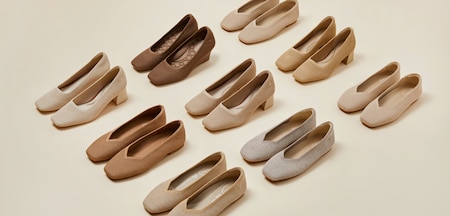
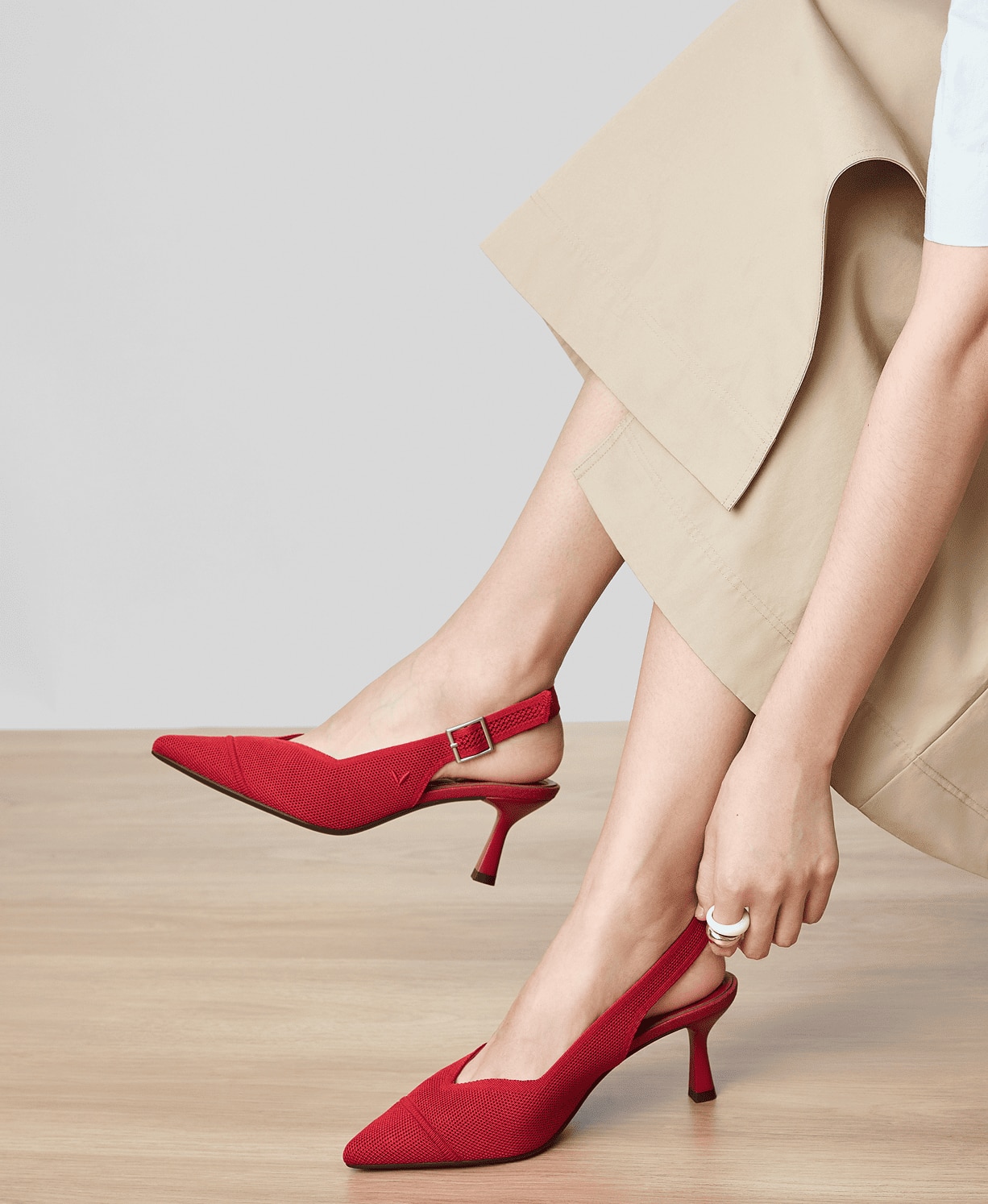
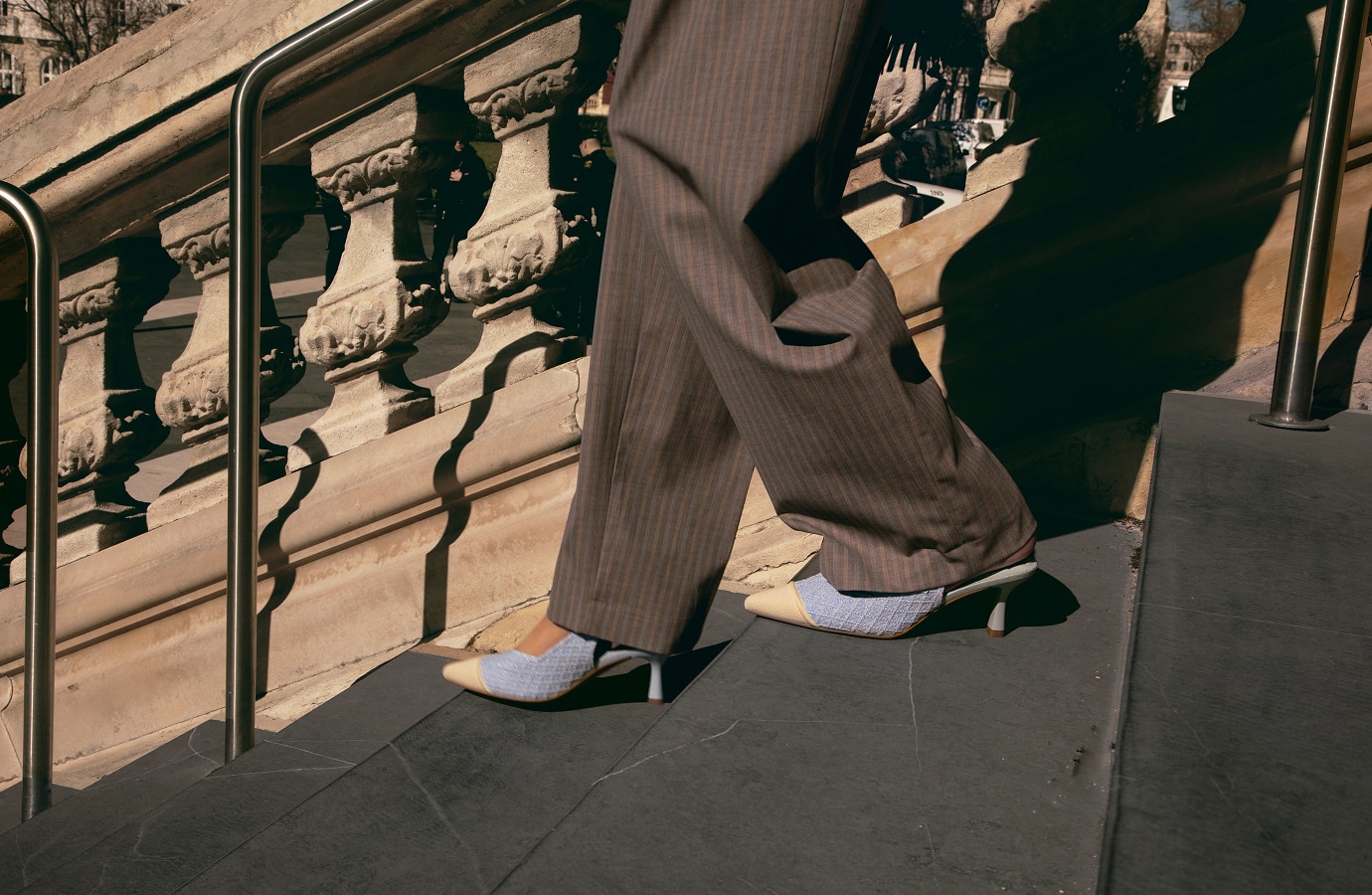
Kitten Heel Slingbacks (1 to 1 3/4 inches)
A low heel in the 1 to 1 3/4 inches range puts the plantar fascia in a slightly relaxed position. The slingback strap stabilizes the heel and prevents shifting. Forefoot pressure stays manageable for all-day wear at this height.
● Avoid: stilettos above 2 3/8 inches, where forefoot pressure cancels out any fascia relief.
● Best for: workplace, social events, evening dinners.
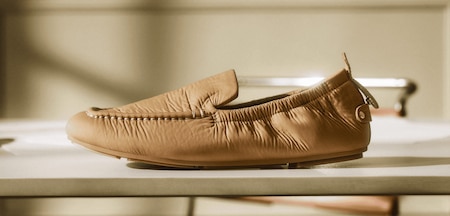
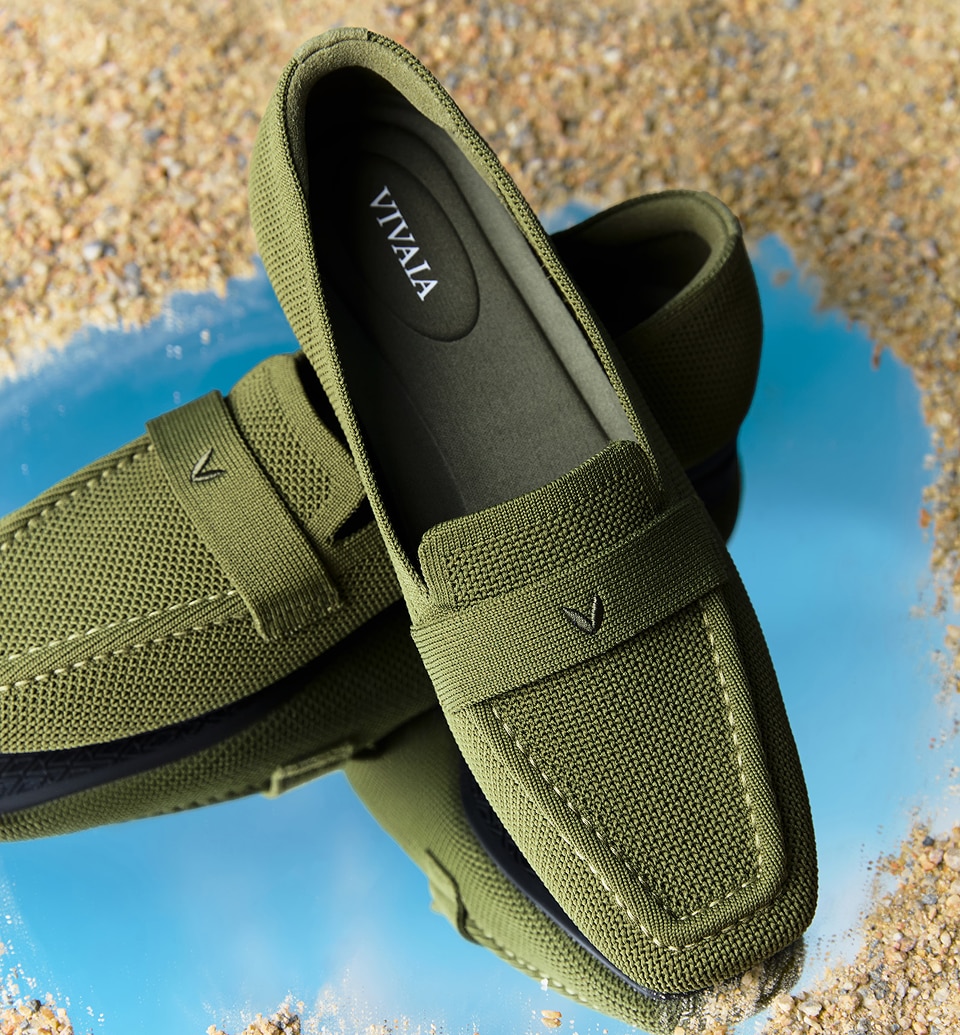
Square-Toe Loafers With Cushioned Soles
A loafer's structure wraps the heel and midfoot, reducing lateral movement. Square-toe versions give the forefoot room to spread.
When the sole includes EVA cushioning (not flat leather or rubber), these offer solid day-long support.
● Avoid: leather-soled loafers with rigid, flat construction.
● Best for: office settings, smart casual, long standing days.
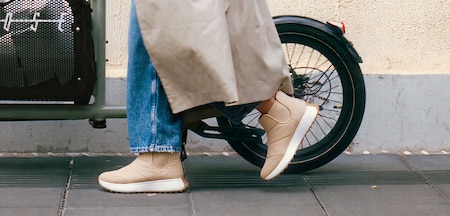
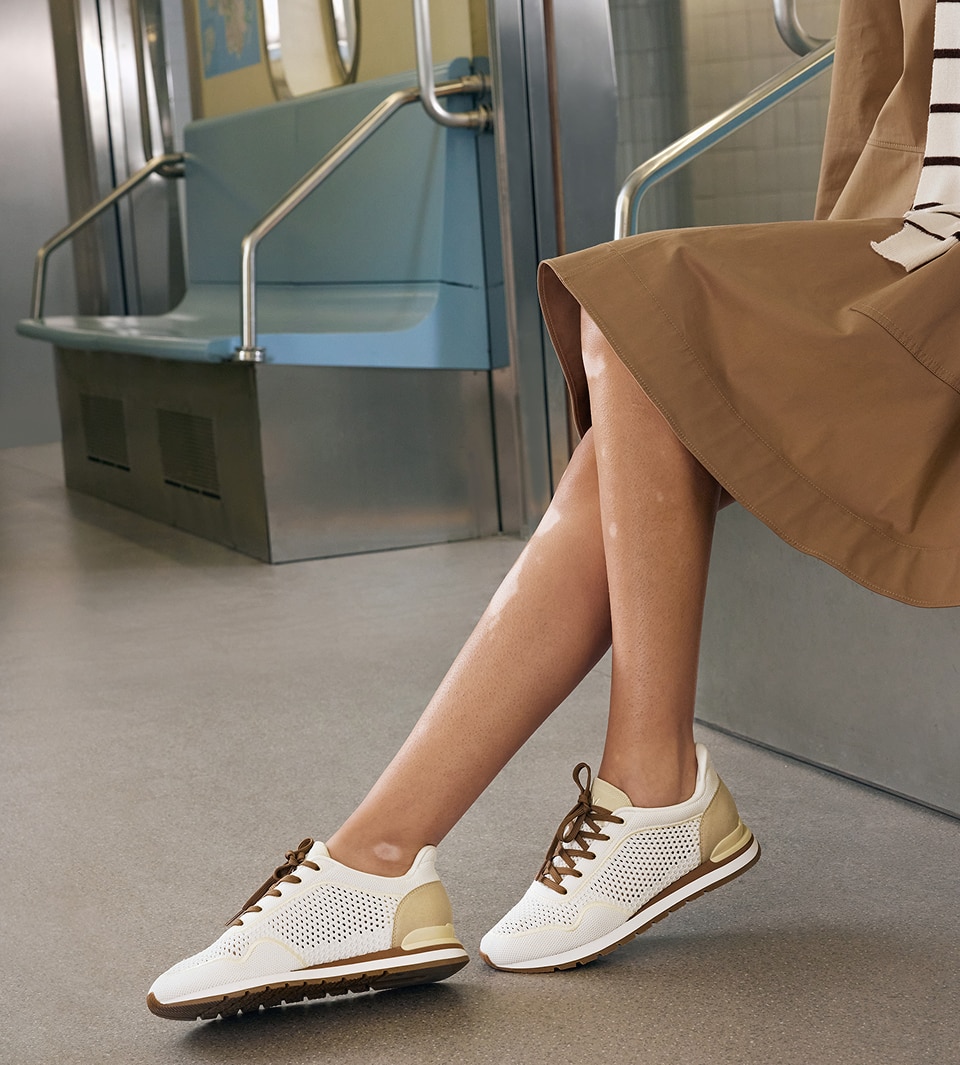
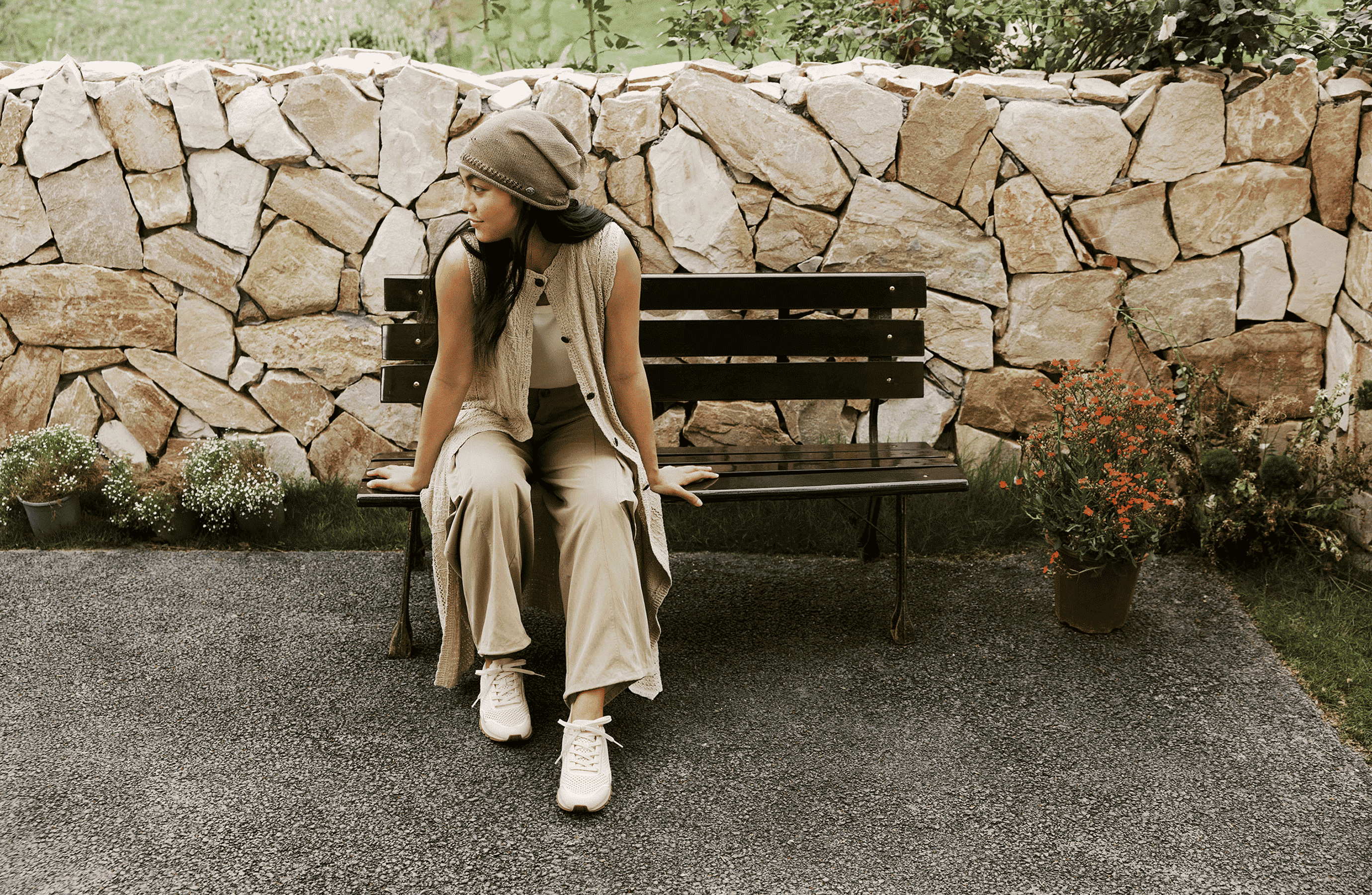
Sneakerinas (Sneaker-Soled Fashion Shoes)
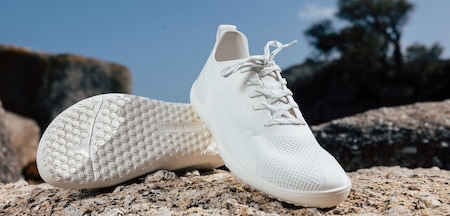
Sneakerinas combine a fashion-shoe upper with a sneaker-level sole. The cushioning and arch support built into sneaker platforms make these the closest a fashion shoe gets to athletic-shoe comfort.
Knit uppers add breathability, and the wider last also benefits feet that need extra toe room.
● Best for: travel, long walking days, weekends.
Five Things to Check When Buying Shoes for Plantar Fasciitis
1. Check the Insole Contour
Turn the shoe over and look at the insole from the side. If it's completely flat, arch support is minimal regardless of material softness. A useful insole has a visible curve at the arch area.
2. Press the Sole for Rebound
Push your thumb into the center of the sole. If it compresses and bounces back, there's a cushioning layer inside (typically EVA or PU foam). If it feels hard with no give, it's likely solid rubber with almost no shock absorption.
3. Look for APMA Acceptance
The APMA Seal of Acceptance is not a marketing label. Products carrying this seal have been evaluated by podiatrists. For stylish shoes for plantar fasciitis, it's the most reliable third-party indicator of verified foot-health support.
4. Check if the Insole Is Removable
A removable insole lets you swap in a custom orthotic if your foot needs a different arch profile. Fixed insoles limit you to a single arch design.
5. Read Buyer Reviews for Foot Pain Keywords
Search product reviews for "plantar fasciitis," "arch pain," or "heel pain." Real feedback from people with similar conditions is more reliable than product descriptions. Look for comments about comfort after several hours of wear, not first impressions.
Why VIVAIA is a Top Choice for Plantar Fasciitis
If you need shoes that combine orthopedic-level support with modern aesthetics, VIVAIA delivers. Several styles, including the Margot Mary Jane and the Ivana loafer, have earned the APMA Seal of Acceptance, meaning they have been independently evaluated and approved by podiatrists to promote good foot health.
● Podiatrist-Approved Support: Features contoured insoles with 3x arch support to actively reduce stretch on the plantar fascia.
● Maximum Shock Absorption: High-rebound PU foam and EVA forefoot cushioning absorb the impact of every step.
● Essential Stability: A built-in TPU shank prevents the shoe from twisting or bending in the middle, protecting inflamed tissue.
● Pain-Free Fit: Flexible knit uppers and a roomy square-toe design make them incredibly wide-foot friendly.
● All-Day Freshness: Unique Artemisia Argyi herbal insoles keep feet dry and comfortable.
Backed by countless buyer reviews praising their all-day comfort, VIVAIA proves that continuous fascia support can look just as good as it feels.
Start With the Right Pair
Plantar fasciitis does not mean choosing between your feet and your style. In 2026, supportive footwear, like knit flats, kitten heel slingbacks, cushioned loafers, and sneakerinas, happens to be at the forefront of fashion. You can wear beautifully designed shoes that actually heal and protect your feet.
Find your right pair at VIVAIA.
FAQs
Q1: Can the right shoes cure plantar fasciitis?
No. Shoes cannot reverse existing inflammation. They can reduce daily irritation to the fascia, giving it a chance to heal naturally. Proper footwear is the single most impactful daily intervention for managing symptoms. If pain persists after 3 to 4 weeks in supportive shoes, consult a podiatrist about custom orthotics or physical therapy.
Q2: Are memory foam insoles good for plantar fasciitis?
Not always. Memory foam distributes pressure evenly, but a flat memory foam insole does not support the arch. For plantar fasciitis, an insole with a contoured arch shape matters far more than softness alone. If the memory foam insole has a 3D arch profile, it can be helpful. If it's flat, the benefit is limited.
Q3: Should you wear shoes at home if you have plantar fasciitis?
Yes. Walking barefoot on hard floors (tile, wood) puts the plantar fascia under full body weight with no cushioning, which often worsens morning heel pain. Wear supportive house shoes or soft-soled sneakers indoors, especially on hard surfaces.
Q4: Can high heels permanently worsen plantar fasciitis?
A single occasion won't cause lasting damage. Frequent, prolonged wear of heels above 2 3/8 inches can shorten the Achilles tendon and keep the plantar fascia under chronic stress, leading to repeated flare-ups and longer recovery. If you need a heel, keep it under 1 1/2 inches with cushioning at the heel, and limit how long you wear them in a single day.

© VIVAIA All Rights ReservedTerms of Service - Privacy Policy -